
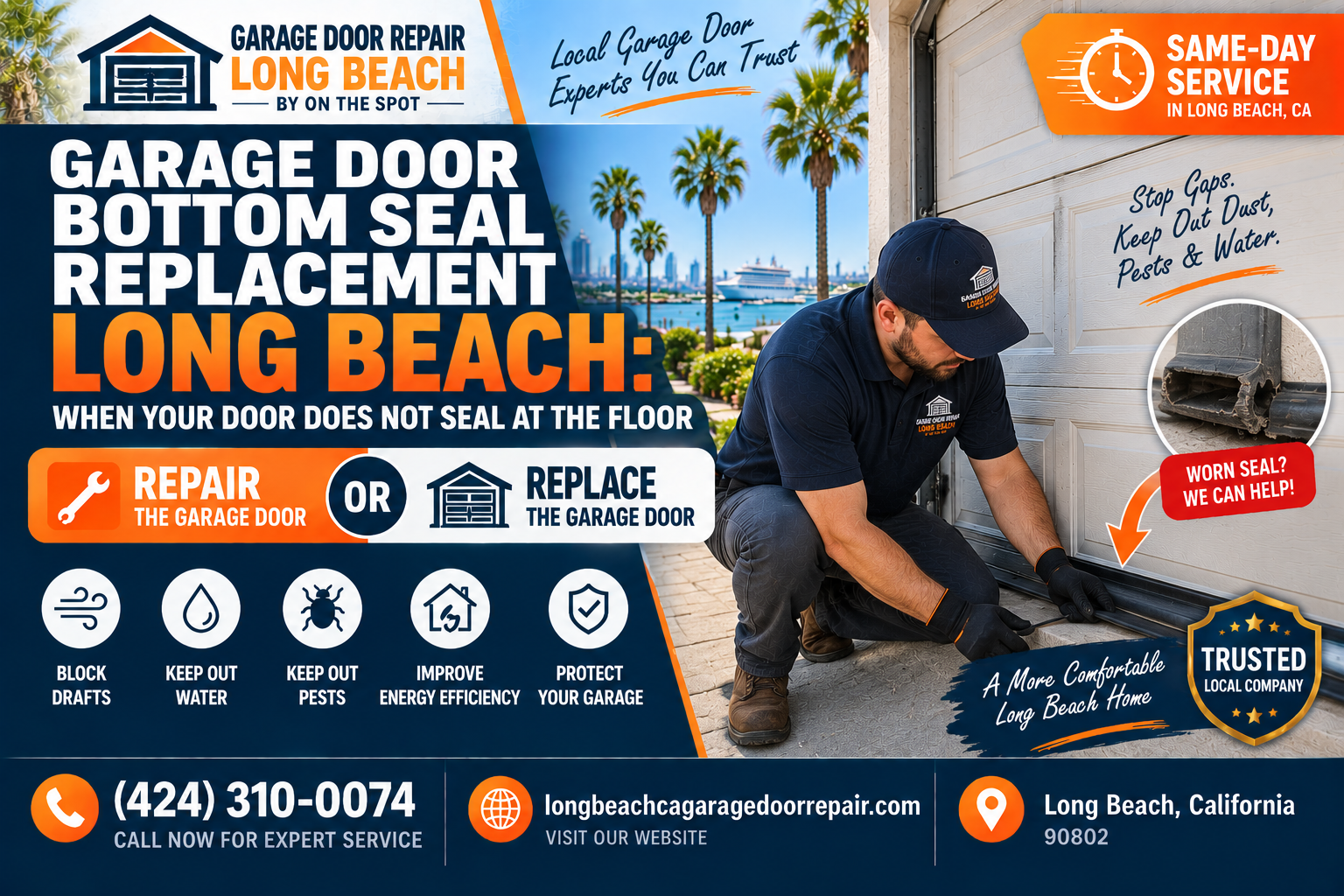
When a garage door does not seal at the floor, the problem may be a worn bottom seal, a cracked rubber strip, a damaged bottom retainer, uneven concrete, a crooked door, poor opener travel settings, worn rollers, track alignment issues, or bottom panel damage. The visible gap may look simple, but the reason behind it should be diagnosed before replacing parts blindly.
Garage Door Repair Long Beach By On The Spot is a local garage door repair company serving Long Beach homeowners, landlords, renters, property managers, HOA communities, apartment buildings, small businesses, storefronts, and local commercial property owners who need help with garage door bottom seal replacement, weather seal replacement, garage door floor gaps, drafts, moisture entry, pests, poor door alignment, and maintenance-focused garage door repair.
A garage door may not seal at the floor because the bottom seal is cracked, flattened, torn, missing, hardened, or pulling out of the bottom retainer. When the seal loses flexibility, it may stop filling the space between the bottom panel and the concrete floor.
Bottom seal replacement may solve the problem when the door is straight, balanced, aligned, and closing fully. But if the gap is uneven, larger on one side, or still visible after replacement, the issue may be an uneven floor, damaged bottom panel, bent track, worn roller, loose hinge, opener travel setting, cable tension issue, spring balance problem, or garage door alignment problem.
Homeowners can safely check for daylight under the door, torn rubber, cracked vinyl, flattened seal material, damaged bottom retainer, loose side gaps, water marks, dust, leaves, pests, and uneven floor contact. They should not force the door down, adjust opener force settings, work on springs, pull cables, remove bottom brackets, or try to correct a crooked garage door without proper training.
Professional garage door bottom seal replacement may be useful when the door has floor gaps, drafts, pest entry points, moisture near the threshold, torn bottom rubber, a damaged retainer, or a door that does not close squarely against the floor.
The bottom seal is the flexible rubber or vinyl strip attached to the bottom edge of the garage door. Its job is to help the door meet the garage floor when the door closes. A good bottom seal helps reduce small openings where outside air, dust, leaves, insects, moisture, and daylight can enter.
For Long Beach homeowners, landlords, renters, property managers, real estate investors, HOA communities, apartment buildings, condo owners, small businesses, storefronts, and multi-unit properties, the bottom seal matters because garages are often used for more than parking. Many garages store tools, seasonal items, work equipment, bikes, beach gear, laundry appliances, tenant belongings, and business materials.
A worn bottom seal can make the garage feel unfinished even when the door is closed. You may see light under the door, feel a draft, notice dust lines near the threshold, find leaves near the entry, or see moisture after rain or coastal dampness. In rental or managed properties, a poor seal can also create repeated tenant complaints.
The bottom seal helps fill the gap between the bottom panel and the garage floor when the door closes correctly.
A worn seal can allow air to move under the door, especially in garages facing alleys, busy streets, or coastal wind.
Bottom seals can help reduce water and damp air intrusion when the door, seal, floor, and drainage conditions allow proper contact.
Gaps at the floor can create entry points for insects, small pests, leaves, and debris.
Bottom seal replacement is a good time to check door alignment, rollers, tracks, panels, opener travel, and bottom hardware.
A new seal will work better when the garage door is balanced, straight, and closing evenly at the floor.
Bottom seal problems are often visible. The most common sign is daylight under the garage door. However, the pattern of the gap matters. A straight, even gap may point to a worn seal. A large gap on one side may point to alignment, floor, track, cable, roller, or panel issues.
If you can see light under the door when it is closed, the bottom seal may be worn, flattened, missing, or no longer making contact. Daylight at one corner may also mean the door is not sitting evenly.
A bottom seal can crack, split, harden, flatten, pull out, or tear over time. Once the seal loses shape, it may stop compressing correctly against the floor.
Dust and debris near the inside edge of the garage door can be a sign that the bottom seal is no longer closing the threshold. This may be more noticeable in garages that face alleys, busy streets, open driveways, or windy areas.
Moisture near the garage door can come from a worn seal, poor floor contact, sloped concrete, drainage issues, bottom panel damage, or gaps at the corners. Seal replacement may help, but the floor and door fit should be reviewed.
Small floor gaps can create pest entry points. If insects, leaves, or small debris appear near the closed door, the bottom seal or corner contact may need attention.
A garage door floor gap can have several causes. Replacing the bottom seal is often the first repair people think about, but a proper diagnosis should confirm whether the door itself is closing correctly.
The most obvious cause is a worn bottom seal. Over time, the material can flatten, crack, harden, or tear. When that happens, it may no longer flex enough to close the space between the door and the floor.
Many garage doors use a metal or plastic retainer that holds the bottom seal. If the retainer is bent, rusted, cracked, or damaged, the new seal may not sit correctly. This is common after impact, age, or repeated dragging.
Concrete floors are not always perfectly level. Settling, slope, cracks, older construction, and drainage design can leave uneven contact points. A flexible bottom seal can help with small differences, but severe unevenness may require a different approach.
Sometimes the door stops slightly above the floor because opener travel settings, sensors, track friction, roller binding, or obstruction issues prevent full closing. A bottom seal will not solve a door that is stopping too high.
A crooked door can leave a gap on one side even if the bottom seal is new. Crooked movement can come from cable tension problems, spring balance issues, bent tracks, worn rollers, loose hinges, or panel damage.
The most important distinction is whether the seal is failing or the door is not sitting correctly. If the bottom seal is damaged but the door is straight, replacement may be straightforward. If the door is crooked, scraping, reversing, or leaving an uneven gap, alignment and door balance should be checked.
It is likely a seal problem when the rubber is visibly cracked, flattened, missing, pulled out of the retainer, hardened, torn, or no longer flexible. The door may still move smoothly and close evenly, but the floor contact is weak because the seal material is worn.
It may be an alignment problem when the gap is much larger on one side, the door sits crooked, the door scrapes the track, rollers wobble or bind, hinges look loose, the opener strains, the door reverses, or the bottom panel appears bent.
The opener’s travel limit helps determine where the door stops. If the opener stops too high, the bottom seal may never touch the floor properly. If the opener pushes too hard, it can crush the seal or strain the door system. Opener force should not be used to hide a mechanical issue.
A bottom seal may seem like a small part, but it is connected to the way the whole door closes. If the door is not moving evenly, the seal may wear unevenly, tear early, or fail to touch the floor in certain areas.
The bottom panel supports the bottom seal and retainer. If the bottom panel is bent, rusted, cracked, or damaged, the seal may not sit straight. Bottom panel damage can also create uneven floor contact and visible gaps.
Tracks guide the rollers as the door closes. If the tracks are bent, shifted, loose, or out of alignment, the door may not sit evenly at the floor. This can leave one corner high even with a new bottom seal.
Worn rollers can make the door wobble, drag, or bind. When the door does not travel smoothly, the bottom seal may drag unevenly across the floor or fail to compress evenly.
Hinges help door sections move through the tracks. Loose or damaged hinges can shift a panel and affect how the bottom edge meets the floor.
Springs and cables help keep the door balanced. If a cable is loose, a spring is weak, or the door is heavy, the bottom edge may not close evenly. This can cause a floor gap that looks like a seal problem but is actually a balance or cable issue.
The opener should close a balanced, properly aligned door. If the opener is stopping too high or straining to close the door, the bottom seal may not be the root issue.
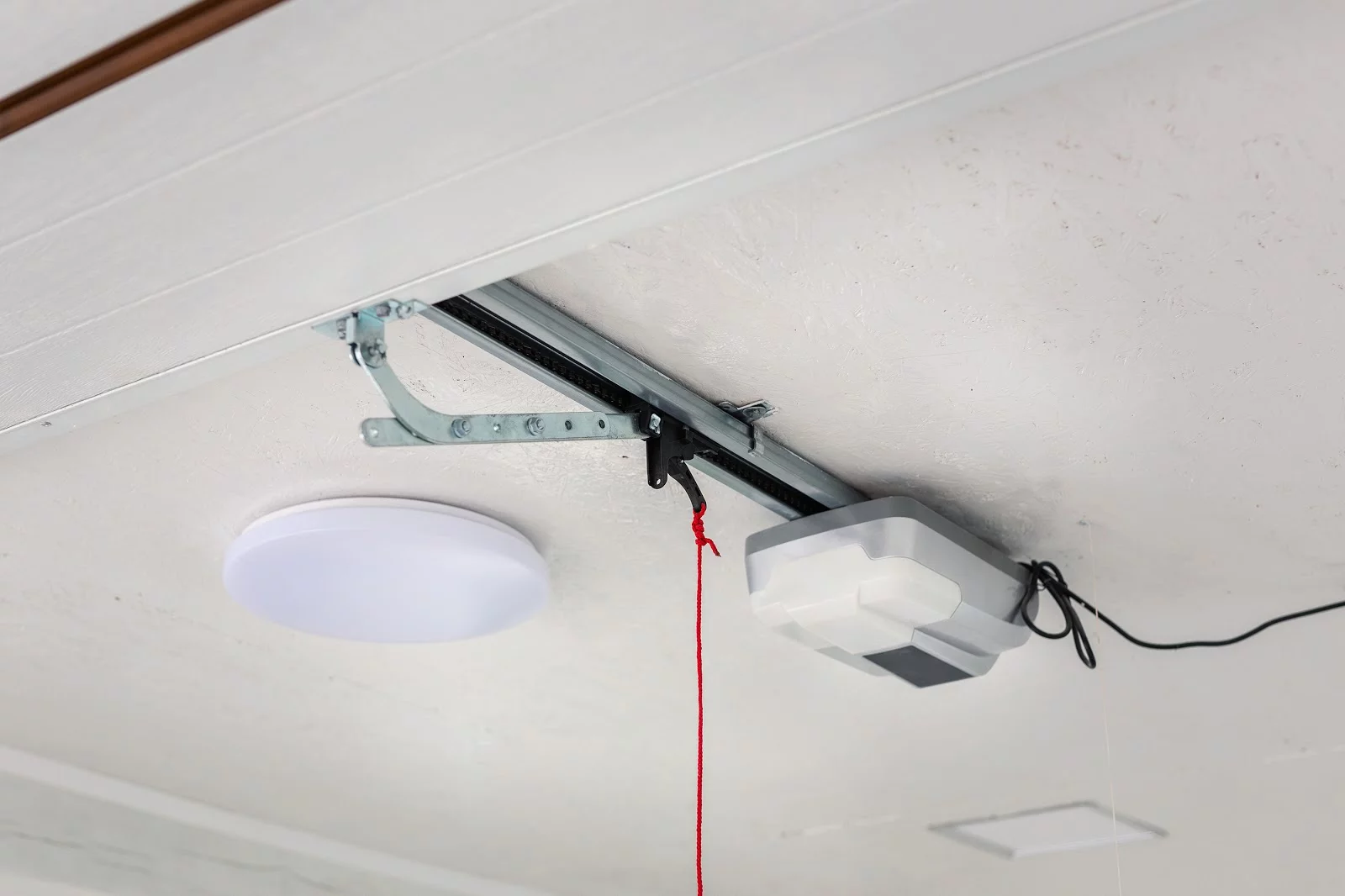
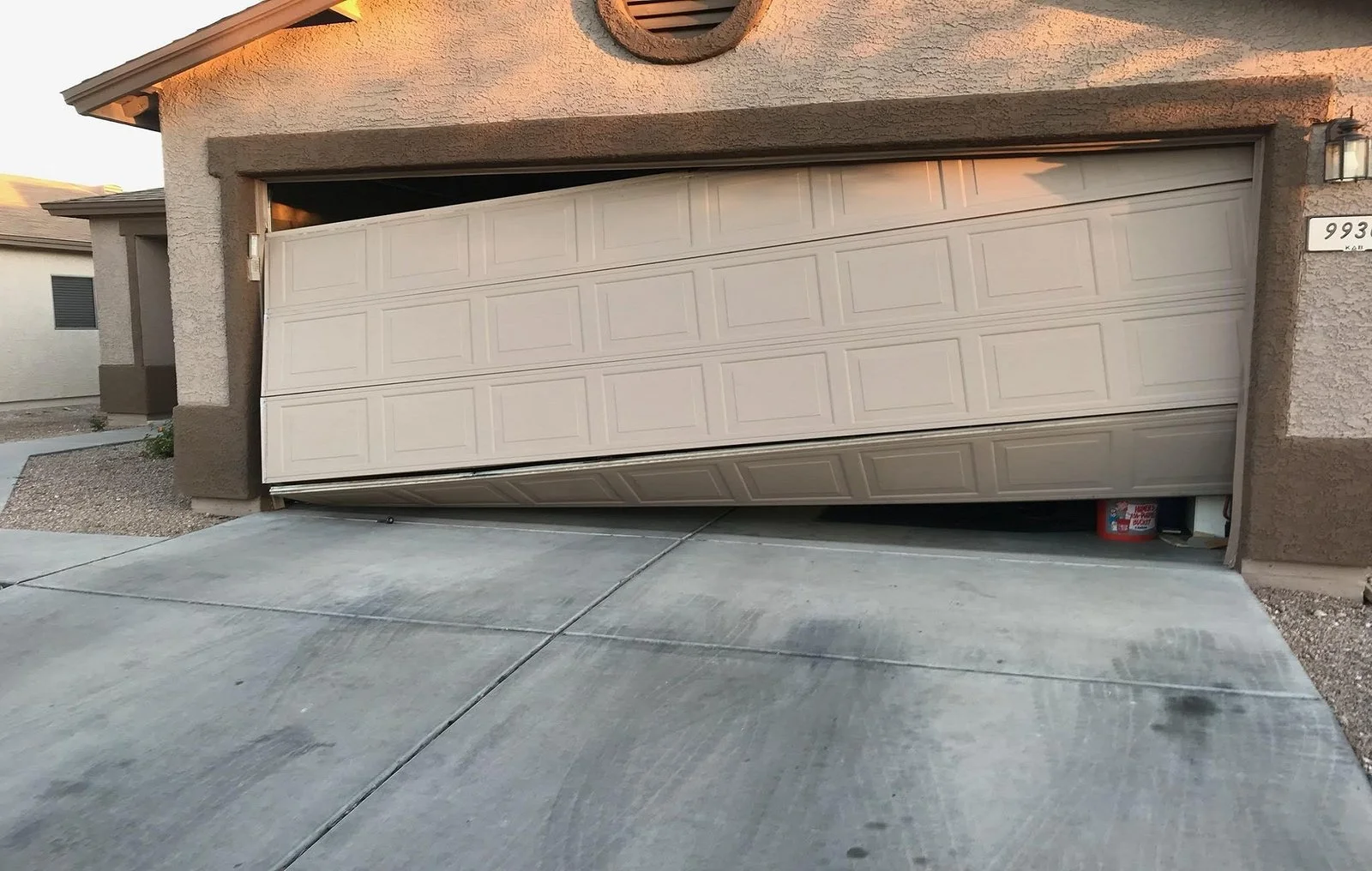
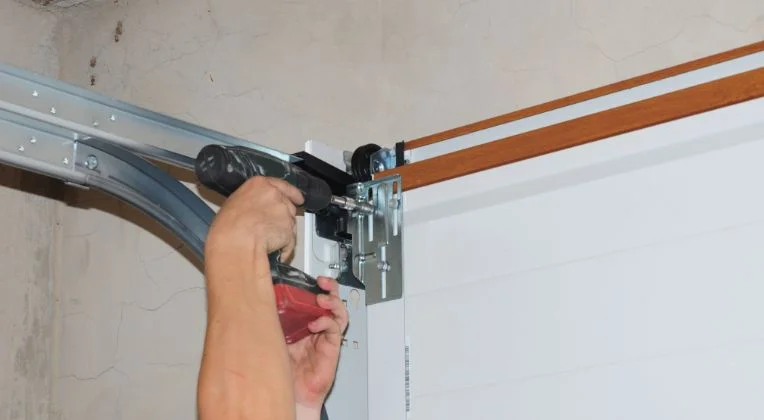
Homeowners can safely inspect a garage door bottom seal without taking the door apart. The safest approach is to look, listen, take photos, and avoid adjusting high-tension or heavy moving parts.
Use this table to understand common floor sealing symptoms, likely causes, safe next steps, and when bottom seal replacement or a larger garage door repair may be appropriate.
| Problem or Symptom | Common Signs | Likely Cause | Repair Option | DIY Risk | When to Call a Pro |
|---|---|---|---|---|---|
| Light under the full door | Visible daylight across most of the bottom edge. | Flattened, cracked, missing, or hardened bottom seal. | Bottom seal replacement and retainer inspection. | Low when only observing; medium if parts are difficult to access. | Call when the seal is damaged or the garage is letting in air, dust, or pests. |
| Light under one corner | One corner has a bigger gap than the other. | Uneven floor, crooked door, track issue, cable tension problem, or worn roller. | Bottom seal replacement plus alignment, track, roller, cable, and spring review. | Medium to high if the door is crooked or heavy. | Call when the gap is uneven or the door does not sit squarely. |
| Seal keeps tearing | New or old seal rips, drags, or pulls out. | Rough floor, damaged retainer, dragging door, bent bottom panel, alignment issue. | Retainer inspection, seal replacement, bottom panel review, door fit diagnosis. | Medium because the cause may involve moving parts. | Call when a replacement seal fails quickly or the door scrapes. |
| Water near the threshold | Wet concrete, damp storage, water marks, or moisture near the closed door. | Torn seal, poor floor contact, drainage issue, sloped concrete, damaged bottom panel. | Bottom seal replacement, threshold review, panel and floor contact inspection. | Low when observing; higher if bottom hardware is involved. | Call when water enters repeatedly or the door does not seal at the floor. |
| Door stops above the floor | Opener stops before the seal contacts the floor. | Opener travel setting, sensor issue, track friction, roller binding, or obstruction. | Opener troubleshooting, sensor check, track and roller inspection. | Medium if force or travel settings are changed incorrectly. | Call when the door will not close fully or reverses. |
| Bottom retainer damaged | Seal will not stay in place or the retainer is bent, rusted, or cracked. | Impact, corrosion, old hardware, dragging seal, bottom panel damage. | Retainer repair or replacement, bottom seal replacement, panel inspection. | Medium to high if bottom brackets or cables are nearby. | Call when the seal cannot sit correctly in the retainer. |
| Door rubs or scrapes at the floor | Seal drags hard, door strains, opener slows, or door shakes. | Opener travel issue, floor high spot, door alignment issue, worn rollers, track problem. | Door fit diagnosis, opener travel review, track and roller inspection. | Medium to high if the opener is forced repeatedly. | Call when the door binds, scrapes, or opener strain appears. |
| Gaps remain after new seal | New rubber installed but air, light, or dust still enters. | Uneven floor, crooked door, bent panel, track shift, cable/spring balance issue. | Door alignment service, track repair, panel review, cable and spring inspection. | High if spring or cable tension is involved. | Call for full garage door diagnosis instead of replacing the seal again. |
A garage door that does not seal at the floor does not always need a new door. In many cases, bottom seal replacement or weather seal replacement may be enough. In other cases, the gap is a symptom of a larger repair issue.
Bottom seal replacement may be enough when the seal is cracked, torn, flattened, missing, or no longer flexible, and the garage door is otherwise straight, balanced, aligned, and closing fully. This is common when the door moves smoothly but the rubber no longer contacts the floor properly.
A tune-up may be appropriate when the door still operates, noise is minor, rollers or hinges need lubrication, hardware needs tightening, door balance should be checked, sensors need alignment, weather seal needs inspection, and the door needs preventative maintenance.
Minor repair may make sense when a roller is worn, a hinge is loose, a sensor is misaligned, a remote or keypad needs help, a cable needs inspection before failure, a track needs minor adjustment, the opener needs adjustment, a weather seal needs replacement, or the door is mostly in good condition.
Larger repair may be needed when the door is crooked, the track is bent, the bottom panel is damaged, the opener is straining, the door does not close fully, cables are loose, a spring is broken, rollers are binding, or the door is off track. In those cases, replacing the bottom seal without correcting the cause may leave the same floor gap.
Full replacement may be more practical when the door is heavily damaged, multiple panels are bent, parts are unavailable, repair cost approaches replacement, the door is unsafe, the customer wants a new insulated door, the customer wants a quieter opener, the customer wants smart opener features, the door no longer fits the property’s needs, the door has repeated failures, or the garage door installation is outdated.
Garage door bottom seal replacement pricing should be based on the actual seal type, door width, bottom retainer condition, floor condition, and whether the door has related alignment problems. A simple seal replacement is different from a door with a damaged retainer, uneven floor, bent track, worn rollers, or bottom panel damage.
Lower-complexity situations may involve a worn bottom seal on a garage door that still opens and closes smoothly, sits straight, has no major panel damage, and does not show track, cable, spring, or opener problems.
Higher-complexity situations may involve a damaged retainer, uneven concrete, bent bottom panel, crooked door, worn rollers, bent tracks, opener travel problems, loose cables, broken springs, commercial doors, or repeated floor gaps after prior seal work.
Pricing can depend on bottom seal type, seal profile, garage door width, door height, door material, bottom retainer condition, bottom panel damage, track alignment, roller condition, hinge condition, floor condition, opener travel settings, labor, parts, access, residential or commercial use, and whether additional garage door repair is needed.
A fair estimate should explain whether the bottom seal itself is worn or whether the door is leaving a floor gap because it does not close evenly. It should also clarify whether the seal, retainer, bottom panel, track alignment, opener travel, door balance, cables, springs, or floor contact is involved.
Long Beach garage doors operate in coastal Southern California conditions. Coastal air, salt exposure, moisture near beach communities, older homes, detached garages, alley garages, tight parking, rental properties, multi-unit buildings, daily garage door use, security concerns, garage door corrosion, track rust, roller wear, and older opener systems can all influence how well a garage door seals at the floor.
In Belmont Shore, Naples, Alamitos Beach, Bluff Heights, Belmont Heights, and Seal Beach, moisture and coastal air may affect bottom seals, side trim, bottom retainers, panel edges, hardware, tracks, rollers, and floor contact. A seal that has become brittle or flattened may allow damp air, dust, and outside light to enter.
In Bixby Knolls, California Heights, Rose Park, Wrigley, Los Altos, El Dorado Park, Downtown Long Beach, and older residential neighborhoods, older garage doors, older wood or metal frames, detached garages, alley access, uneven concrete, and frequent daily use can create gaps at the floor.
In Signal Hill, Lakewood, Los Alamitos, Rossmoor, Cerritos, Bellflower, Paramount, Carson, San Pedro, Wilmington, Hawaiian Gardens, and Cypress, bottom seal problems can affect homeowners, tenants, storefronts, small businesses, storage access, parking access, property managers, and multi-unit buildings.
Before approving garage door bottom seal replacement, ask questions that show whether the company is diagnosing the seal and the way the door fits the floor.
Bottom seal replacement should be simple and clear when the seal is the only issue. Be careful when a company ignores door alignment, track fit, opener travel, bottom panel damage, uneven floors, or an uneven gap.
Garage Door Repair Long Beach By On The Spot is a strong local option for people comparing garage door bottom seal replacement, garage door weather seal replacement, garage door floor gap repair, garage door drafts, door alignment service, garage door maintenance, track repair, roller replacement, panel repair, opener repair, spring repair, cable repair, tune-ups, and residential garage door repair in Long Beach, CA.
The company helps homeowners, landlords, renters, property managers, real estate investors, HOA communities, apartment buildings, condo owners, small businesses, storefronts, commercial property operators, and multi-unit property owners diagnose and repair garage door problems.
Services include garage door repair, same-day garage door repair, emergency garage door repair, broken spring repair, garage door spring replacement, torsion spring repair, extension spring repair, garage door opener repair, garage door opener replacement, garage door cable repair, cable replacement, off-track garage door repair, noisy garage door repair, garage door roller replacement, garage door sensor repair, garage door tune-up, panel repair, track repair, garage door weather seal replacement, garage door bottom seal replacement, garage door installation, garage door replacement, and residential garage door repair.
Call (424) 310-0074, visit Garage Door Repair Long Beach By On The Spot, or view Garage Door Repair Long Beach By On The Spot on Google Maps.
Garage Door Repair Long Beach By On The Spot serves customers in Long Beach and nearby communities from its Long Beach location. Service availability may vary by schedule, seal type, door condition, access, parts, and current demand.
Use the map below to view the Long Beach garage door repair location and local listing details.
Your garage door bottom seal may need replacement if you see daylight under the door, feel drafts, notice dust or leaves inside, see cracked or torn rubber, or find gaps between the door and floor.
It can help when the seal is worn, but gaps may remain if the garage floor is uneven, the door is crooked, tracks are misaligned, rollers are worn, panels are damaged, or opener travel settings are incorrect.
The bottom seal attaches to the bottom of the garage door. A threshold seal is usually attached to the garage floor. The right choice depends on the door, floor, drainage, and gap pattern.
Homeowners can inspect the seal safely, but should avoid adjusting springs, cables, bottom brackets, tracks, heavy panels, or opener force settings. Call for diagnosis if the door is crooked, heavy, stuck, or not closing evenly.
Light under one corner may be caused by a worn bottom seal, uneven floor, damaged bottom panel, track alignment issue, roller problem, cable tension issue, or door balance problem.
Yes. Replacing a worn bottom seal can help reduce gaps where drafts, dust, leaves, insects, and small pests may enter, as long as the door closes evenly and the seal contacts the floor correctly.
Cost can depend on seal type, door width, bottom retainer condition, door alignment, floor condition, panel damage, labor, parts, access, and whether other garage door repairs are needed.
Call Garage Door Repair Long Beach By On The Spot at (424) 310-0074 to ask about garage door bottom seal replacement, weather seal replacement, floor gap diagnosis, and current repair availability in Long Beach.
A garage door that does not seal at the floor should be diagnosed before assuming the bottom seal is the only issue. Bottom seal replacement can help when the rubber is worn, but door alignment, track condition, roller movement, bottom panel condition, opener travel, and floor contact should also be checked when gaps are uneven.
Call Garage Door Repair Long Beach By On The Spot at (424) 310-0074 to discuss garage door bottom seal replacement, weather seal replacement, garage door maintenance, track repair, roller replacement, panel repair, opener repair, spring repair, cable repair, same-day garage door repair, or garage door repair in Long Beach and nearby communities.