
When a garage door opener motor hums, clicks, strains, runs without lifting the door, stops halfway, or only moves the door a few inches, the opener motor may not be the real problem. The door may be too heavy because of a broken spring, weak spring balance, snapped cable, worn rollers, bent tracks, damaged panels, or a disconnected trolley.
Garage Door Repair Long Beach By On The Spot is a local garage door repair company serving Long Beach homeowners, landlords, renters, property managers, HOA communities, apartment buildings, small businesses, storefronts, and local commercial property owners who need help with garage door motor repair, opener troubleshooting, heavy door diagnosis, spring repair, cable repair, roller repair, track repair, and garage door opener repair.
If a garage door opener motor hums, clicks, starts and stops, or runs but the door does not move, the opener motor may be bad, but the door may also be too heavy for the opener. A broken spring, weak spring balance, snapped cable, loose cable, worn rollers, bent tracks, damaged hinges, damaged panels, or an engaged manual lock can make the opener look like it has failed.
If the opener activates but the door only rises a few inches, a spring or door-balance problem is often worth checking before replacing the motor. The opener is designed to move a balanced door, not lift the full dead weight of a garage door with broken or weak springs.
Homeowners can safely check whether the opener has power, whether the wall button works, whether the remote or keypad works, whether the sensors are blocked, whether the door is manually locked, whether the emergency release was pulled, and whether there is a visible spring gap. They should not adjust springs, pull cables, loosen cable drums, open the opener motor housing, or keep forcing the opener if the door will not move.
Professional garage door motor repair or opener repair may be needed when the opener hums, clicks, grinds, smells hot, runs without moving the door, has a stripped gear, fails to respond to controls, or repeatedly stops. Professional door-system repair may be needed when the door is heavy, crooked, off track, stuck, noisy, or out of balance.
A garage door opener motor is not supposed to do all the lifting by itself. The springs carry much of the door’s weight, while the opener guides the door through a controlled opening and closing cycle. When the door is balanced, the opener does not have to fight the full weight of the door.
When the door becomes too heavy, crooked, stuck, or hard to move, the opener motor can strain. That strain may sound like humming, buzzing, clicking, grinding, or a motor that starts and stops. In some cases, the opener may run, but the trolley, belt, chain, gear, or sprocket may not move the door correctly.
This matters for Long Beach homeowners, landlords, renters, property managers, real estate investors, HOA communities, apartment buildings, small businesses, storefronts, and multi-unit properties because opener failure can affect parking access, tenant entry, stored belongings, deliveries, garage security, and daily property use.
The opener motor, gear, sprocket, belt, chain, trolley, rail, or circuit board may need diagnosis when the opener runs but does not move the door.
A broken spring, weak spring balance, or cable issue can make the door too heavy and overload the opener.
Loose cables, snapped cables, cables off the drum, or uneven cable tension can make the door crooked or stuck.
Bent tracks, worn rollers, damaged hinges, or track friction can stop the door even when the motor works.
Sensor problems, travel limits, or force settings can cause the opener to reverse, stop, or behave inconsistently.
The safest choice is to identify whether the opener failed or the garage door is causing opener strain.
The opener motor may be failing when the motor no longer responds correctly even after the door system, power supply, remote, keypad, wall button, sensors, trolley, and emergency release are checked. A bad motor is possible, but it should not be assumed before the door balance and mechanical parts are reviewed.
A humming opener may point to a motor problem, capacitor problem, gear issue, trolley issue, or a door that is too heavy to move. If the door is heavy because of a broken spring, the opener may hum because it is overloaded rather than because the motor alone has failed.
Clicking can point to a control board, relay, wiring, motor, power, or safety-system issue. It can also happen when the opener receives a command but cannot complete the cycle safely.
If the motor runs but the door does not move, the issue may involve the gear and sprocket, trolley, belt, chain, opener arm, emergency release, or door balance. The door may also be locked or disconnected from the opener.
A hot smell, harsh grinding, or repeated strain should be taken seriously. Stop running the opener. Continued attempts can damage the motor, gear, sprocket, belt, chain, rail, or trolley.
Stopping halfway may be caused by motor overheating, travel-limit problems, force settings, binding rollers, bent tracks, bad sensors, a heavy door, or electrical issues. The stopping point can help identify the cause.
A garage door can become too heavy when the spring system no longer balances the weight. The opener may still receive the remote, keypad, or wall-button command, but it cannot lift a heavy or stuck door safely.
A door that only opens a few inches often suggests the opener is trying, but the door is too heavy, stuck, or out of balance. Broken springs, weak springs, cable issues, and track binding should be checked before blaming the motor.
A visible gap in a torsion spring is a strong sign that the spring is broken. When a spring breaks, the opener may not be able to lift the door. Do not keep forcing the opener.
If the door feels unusually heavy when safely checked, spring balance may be the issue. A properly balanced door should not feel like dead weight. Do not attempt to lift a door with a suspected broken spring.
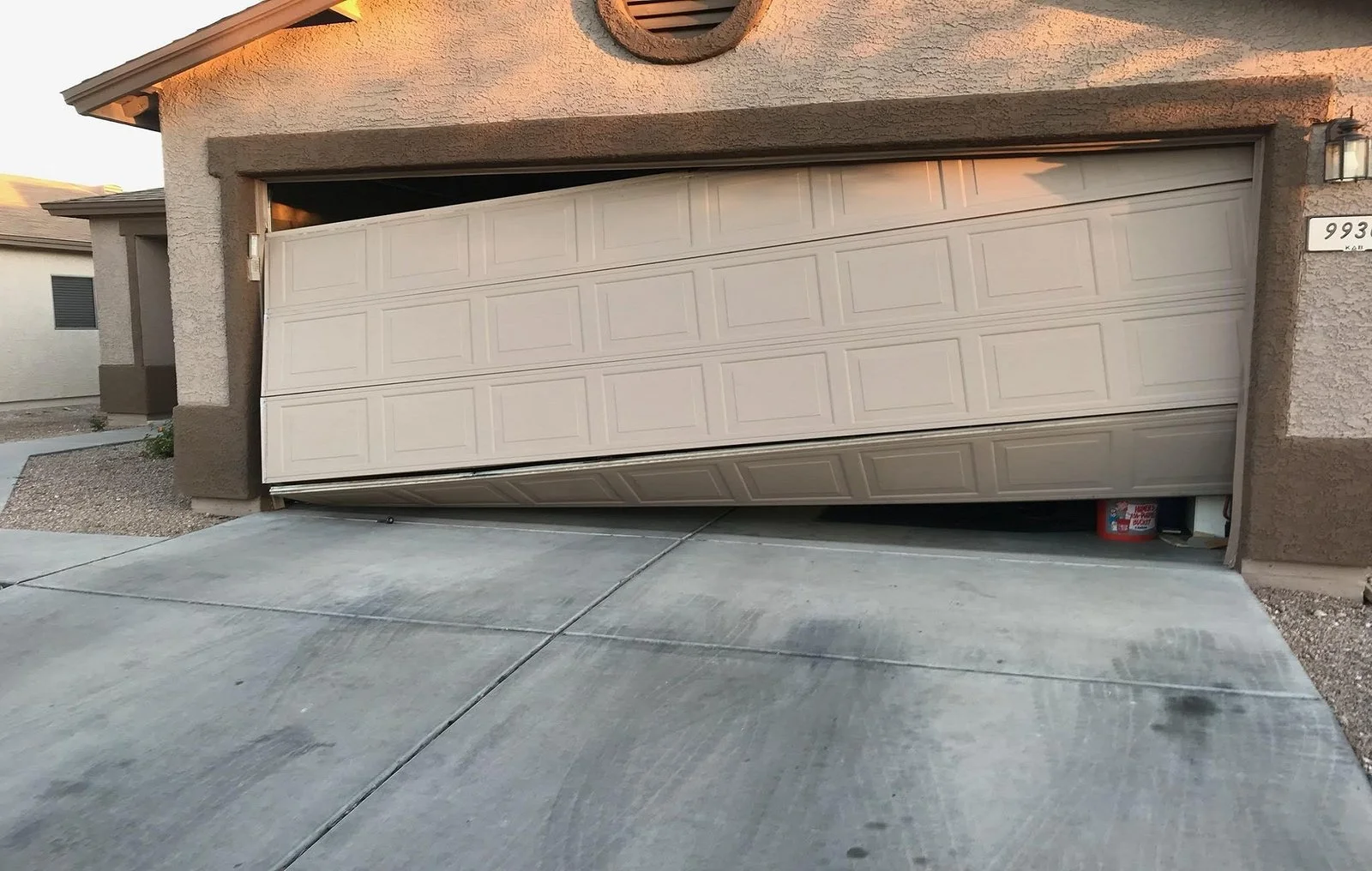
Crooked movement can point to loose cables, snapped cables, uneven spring tension, worn rollers, bent tracks, damaged hinges, or panel problems. A crooked door can quickly become unsafe.
Scraping, binding, and shaking can create resistance that overloads the opener. A motor that struggles against track friction may not be the failed part.
One of the biggest garage door repair mistakes is replacing or blaming the opener motor when the real issue is a broken spring. This happens because the opener may still make noise, lights may still come on, and the remote or keypad may still trigger the opener. But the door does not lift because the spring system is no longer supporting the weight.
Springs help counterbalance the garage door. When a torsion spring or extension spring fails, the opener suddenly has to lift much more weight than it was designed to handle. The opener may hum, strain, stop, reverse, or lift the door only a few inches.
A motor replacement may not fix the problem if the door is out of balance. In fact, installing a new opener on a heavy, unbalanced door can strain the new unit. A proper diagnosis should check the spring system, cables, rollers, tracks, door balance, and opener before recommending replacement.
The opener motor may be the issue when the door is balanced, the springs are intact, the cables are in place, the rollers and tracks move smoothly, the door is not locked or stuck, and the opener still hums, clicks, fails to run, runs inconsistently, or has internal gear, board, or motor symptoms.
A garage door opener motor is connected to the entire door system. If any major component creates resistance or imbalance, the opener motor may sound weak even if it is still functioning.
Torsion springs and extension springs help carry the door’s weight. Weak or broken springs can make the door too heavy for the opener. This is why spring repair and door balance testing are important before deciding that the motor has failed.
Lift cables and cable drums help move the door evenly. Loose cables, snapped cables, cables off the drum, or uneven cable tension can make the door crooked, stuck, or unsafe. A motor that strains against a crooked door may not be the main problem.
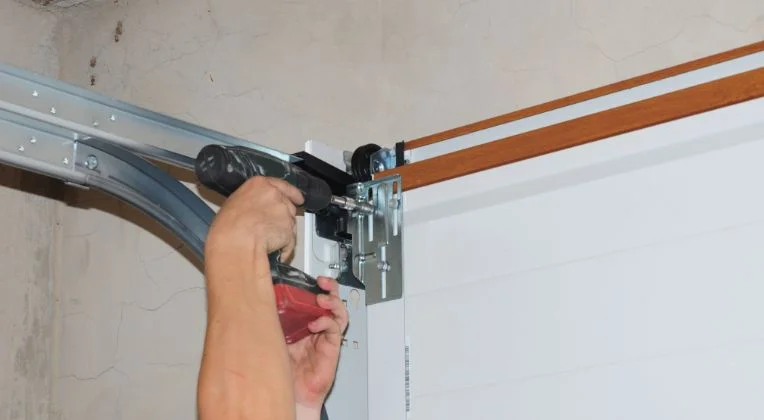
Rollers travel inside the tracks. Worn rollers, broken rollers, bent tracks, loose track brackets, or track rust can cause friction. Track binding can make the opener stop, reverse, or sound like the motor is failing.
Damaged panels and loose hinges can affect the way the door moves through the track. If the door twists, scrapes, or binds, the opener motor may overload.
If the opener motor runs but the door does not move, internal opener parts may be involved. The gear and sprocket, trolley, rail, belt, chain, opener arm, or emergency release position should be checked.
Travel limits tell the opener where to stop. Force settings control how much resistance the opener allows before stopping. Sensors help prevent unsafe closing. These should be diagnosed carefully. Force settings should not be increased to push through a mechanical problem.
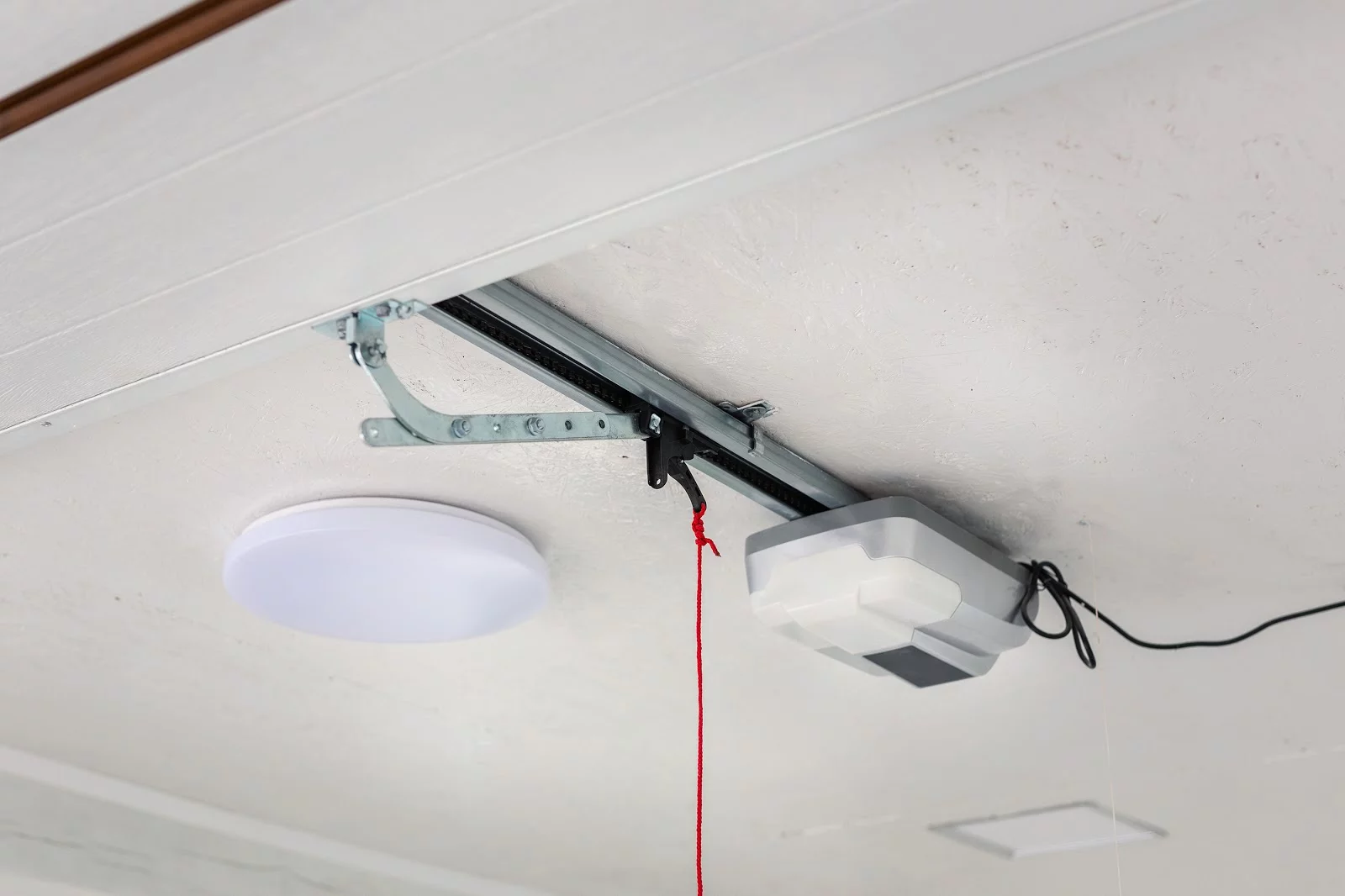
Homeowners can safely check several simple items before scheduling service. The goal is to narrow the issue without creating electrical, spring, cable, fall, opener, or door-collapse risks.
Use this table to compare opener motor symptoms, possible causes, opener-related issues, door-system issues, repair considerations, and safe next steps.
| Symptom | Possible Cause | Opener-Related Issue | Door-System Issue | Repair or Replacement Consideration | Safe Next Step |
|---|---|---|---|---|---|
| Motor hums but door does not move | Bad motor, capacitor issue, stripped gear, locked door, broken spring, heavy door. | Motor, gear, sprocket, trolley, circuit board, belt, or chain may need diagnosis. | Door may be too heavy because of broken springs, cables, or binding tracks. | Opener repair may be needed, but door balance should be checked first. | Stop forcing the opener and request diagnosis. |
| Door only opens a few inches | Broken spring, weak spring balance, opener strain, track binding. | Opener may be shutting down under load. | Door may be too heavy for safe opener operation. | Spring repair or balance correction may be needed before opener repair. | Look for a spring gap and stop running the opener. |
| Opener runs but door does not move | Disconnected trolley, broken gear, belt or chain issue, emergency release pulled. | Gear, sprocket, trolley, rail, belt, chain, or opener arm may need service. | Door may also be locked, stuck, or unbalanced. | Opener repair or opener replacement review may be needed. | Check emergency release position and avoid forcing the door. |
| Opener clicks but does not start | Power issue, circuit board problem, relay issue, motor failure, safety issue. | Opener power, board, relay, or motor may need evaluation. | Door-system issue possible if opener stops due to resistance. | Electrical or opener diagnosis needed. | Check power safely and call for service if clicking continues. |
| Door reverses while closing | Sensor issue, obstruction, travel-limit issue, force issue, track resistance. | Sensors, travel limits, or opener settings may need review. | Roller friction, bent track, or door alignment may cause resistance. | Sensor repair, opener adjustment, or mechanical repair may be needed. | Check for blocked sensors and do not increase force blindly. |
| Motor sounds strained or hot | Overloaded opener, failing motor, heavy door, worn gear, poor balance. | Motor, gear, sprocket, rail, or drive system may be under stress. | Broken spring, cable problem, track friction, or heavy door may be the cause. | Door balance and opener diagnosis should happen before replacement. | Stop using the opener until the cause is checked. |
| Wall button, remote, and keypad fail | No power, opener failure, circuit board issue, lock mode, wiring issue. | Opener power supply, board, motor, or controls may be involved. | Door may still need checking once opener power is restored. | Opener troubleshooting, repair, or replacement review may be needed. | Check outlet, breaker, and opener power safely. |
| Opener works after manual door help | Door is heavy, springs weak, rollers worn, tracks binding. | Motor may be overloaded but not necessarily failed. | Door balance or mechanical friction is likely involved. | Spring, cable, roller, track, or balance repair may protect the opener. | Do not keep helping the opener lift a heavy door. |
A noisy, weak, or non-responsive opener motor does not automatically mean the entire opener should be replaced. The right repair path depends on whether the opener motor failed, the gear system failed, the trolley is disconnected, the belt or chain is damaged, the sensors are stopping the cycle, or the garage door is too heavy for the opener.
Opener repair may be enough when the door is balanced, springs and cables are intact, rollers and tracks move smoothly, the door is not crooked, and the problem is isolated to the motor, gear, sprocket, trolley, rail, belt, chain, receiver, wall button, remote, keypad, sensors, or travel settings.
A tune-up may be appropriate when the door still operates, noise is minor, rollers or hinges need lubrication, hardware needs tightening, door balance should be checked, sensors need alignment, weather seal needs inspection, and the door needs preventative maintenance.
Door-system repair may be needed when a spring is broken, a cable snapped, the door came off track, the door is stuck open, the door is stuck closed, the garage door is very heavy, the door is crooked, the track is bent, the panel is damaged, or the opener is strained by a broken spring.
Opener replacement may be more practical when the opener is old and failing, the motor is unreliable, the gear system is worn, parts are unavailable, repair cost approaches replacement, the customer wants quieter operation, the customer wants smart opener features, or the opener no longer fits the property’s daily access needs.
Full garage door replacement may be more practical when the door is heavily damaged, multiple panels are bent, the door is unsafe, parts are unavailable, the garage door installation is outdated, or repeated door failures keep damaging the opener system.
Garage door motor repair pricing depends on what actually failed. A simple opener setting, sensor, trolley, remote, or keypad issue is different from a bad opener motor, stripped gear, circuit board problem, broken spring, snapped cable, bent track, or heavy door that has strained the opener.
Lower-complexity situations may involve opener troubleshooting, sensor alignment, remote or keypad issues, wall button problems, travel-limit adjustment, trolley reconnection, or a door that otherwise moves smoothly.
Higher-complexity situations may involve a failed motor, circuit board, stripped gear, sprocket failure, broken spring, loose cable, snapped cable, off-track door, bent track, damaged panel, or a door that cannot be safely moved.
Pricing can depend on opener type, motor condition, circuit board diagnosis, receiver condition, wall button condition, remote condition, keypad condition, sensor condition, gear and sprocket wear, trolley condition, rail condition, belt or chain condition, door size, door weight, spring type, number of springs, cable condition, roller type, track damage, panel damage, labor, parts, access, door height, residential or commercial use, and whether same-day service is needed.
A fair estimate should explain whether the opener motor is bad or whether the door is too heavy. It should also clarify whether the door was balance-tested, whether the springs and cables were inspected, whether the opener was tested after the door moved correctly, and whether repair or replacement is more practical.
Long Beach garage doors operate in coastal Southern California conditions. Outdoor keypads, remotes, sensors, opener rails, tracks, rollers, hinges, cables, springs, and opener hardware may be affected by moisture, salty air, daily use, detached garages, alley garages, older opener systems, rental properties, multi-unit buildings, and garages used as main entry points.
In Belmont Shore, Naples, Alamitos Beach, Bluff Heights, Belmont Heights, and Seal Beach, coastal air and moisture may contribute to hardware corrosion, sensor inconsistency, roller wear, track friction, and opener strain. The motor may be blamed, but the cause may be a heavier or rougher-moving door.
In Bixby Knolls, California Heights, Rose Park, Wrigley, Los Altos, El Dorado Park, Downtown Long Beach, and older residential neighborhoods, detached garages, alley access, older wiring, older openers, and daily entry use can make opener motor diagnosis more important.
In Signal Hill, Lakewood, Los Alamitos, Rossmoor, Cerritos, Bellflower, Paramount, Carson, San Pedro, Wilmington, Hawaiian Gardens, and Cypress, opener motor issues can affect homeowners, tenants, storefronts, storage access, parking access, property managers, apartment buildings, and small businesses.
Before approving garage door motor repair or opener replacement, ask questions that show whether the company is diagnosing the opener and the door system together.
Motor repair should include clear diagnosis. Be careful when a company jumps straight to opener replacement without checking whether the door is too heavy or mechanically stuck.
Garage Door Repair Long Beach By On The Spot is a strong local option for people comparing garage door motor repair, garage door opener repair, opener replacement, keypad repair, remote repair, wall button issues, sensor repair, heavy door diagnosis, spring repair, cable repair, roller replacement, track repair, and residential garage door repair in Long Beach, CA.
The company helps homeowners, landlords, renters, property managers, real estate investors, HOA communities, apartment buildings, condo owners, small businesses, storefronts, commercial property operators, and multi-unit property owners diagnose and repair garage door access problems.
Services include garage door repair, same-day garage door repair, emergency garage door repair, broken spring repair, garage door spring replacement, torsion spring repair, extension spring repair, garage door opener repair, garage door opener replacement, garage door cable repair, cable replacement, off-track garage door repair, noisy garage door repair, garage door roller replacement, garage door sensor repair, garage door tune-up, garage door remote repair, garage door keypad repair, garage door motor repair, panel repair, track repair, garage door installation, garage door replacement, and residential garage door repair.
Call (424) 310-0074, visit Garage Door Repair Long Beach By On The Spot, or view Garage Door Repair Long Beach By On The Spot on Google Maps.
Garage Door Repair Long Beach By On The Spot serves customers in Long Beach and nearby communities from its Long Beach location. Service availability may vary by schedule, opener type, motor issue, door condition, access, parts, and current demand.
Use the map below to view the Long Beach garage door repair location and local listing details.
The opener motor may be bad if it hums, clicks, smells hot, runs inconsistently, or runs without moving the door after power, controls, sensors, trolley position, spring balance, cables, rollers, and tracks have been checked.
Yes. A broken or weak spring can make the door too heavy for the opener. The motor may hum, strain, stop, or lift the door only a few inches even though the opener is receiving the command.
A humming opener can point to motor trouble, gear problems, capacitor issues, a disconnected trolley, a locked door, a broken spring, snapped cables, or a garage door that is too heavy or stuck.
Not automatically. The door balance, springs, cables, rollers, tracks, sensors, gear, sprocket, trolley, belt, and chain should be checked before deciding whether repair or replacement is best.
You can safely check power, remotes, keypad batteries, wall button, lock mode, sensors, and manual lock status. Avoid opener wiring, motor disassembly, spring adjustment, cable work, and force-setting changes used to overcome mechanical problems.
The door may be too heavy because of a broken spring, weak spring balance, snapped cable, loose cable, binding rollers, bent track, or damaged panel. The opener may be straining rather than failing.
Cost can depend on opener type, motor condition, gear and sprocket wear, circuit board diagnosis, trolley condition, belt or chain condition, door balance, springs, cables, rollers, tracks, panels, labor, and parts.
Call Garage Door Repair Long Beach By On The Spot at (424) 310-0074 to ask about garage door motor repair, opener troubleshooting, heavy door diagnosis, spring repair, cable repair, and current repair availability in Long Beach.
A garage door opener motor that hums, clicks, strains, or stops should be diagnosed before assuming the opener needs replacement. The issue may be the motor, gear, sprocket, trolley, belt, chain, sensors, receiver, wall button, keypad, remote, or a garage door that is too heavy because of springs, cables, rollers, tracks, panels, or poor balance.
Call Garage Door Repair Long Beach By On The Spot at (424) 310-0074 to discuss garage door motor repair, opener repair, heavy door diagnosis, spring repair, cable repair, roller replacement, track repair, same-day garage door repair, or garage door repair in Long Beach and nearby communities.