
How Much Does Garage Door Spring Replacement Cost in Long Beach, CA? (2026 Pricing Guide)
If your garage door suddenly became extremely heavy, stopped opening, made a loud bang, or now lifts only a few inches before stopping, a broken or weakened garage door spring may be the problem.
This Long Beach pricing guide explains garage door spring replacement cost, torsion versus extension springs, one-spring versus two-spring systems, labor considerations, related repairs, safety concerns, and the factors that can change the final repair quote.
Garage Door Repair Long Beach By On The Spot provides garage door spring repair and replacement for customers in Long Beach and nearby communities. Because the correct spring depends on door weight, spring specifications, system design, cable condition, and other factors, a diagnosis-specific estimate is more useful than assuming every garage door spring replacement has the same price.
How Much Does Garage Door Spring Replacement Cost in Long Beach, CA?
For planning purposes, garage door spring replacement commonly falls within the low-to-mid hundreds of dollars, but there is no single correct price for every garage door in Long Beach.
The amount you pay depends heavily on whether your door uses a torsion spring or extension springs, whether the system has one or two springs, the required spring size, the weight of the door, labor, cable and drum condition, door height, access, and whether another component was damaged when the spring failed.
For many standard residential systems, consumers may encounter spring-replacement estimates in roughly the $180 to $350 range, while dual-spring systems, heavier doors, special spring specifications, high-cycle springs, commercial doors, damaged cables, or additional repairs can increase the total.
These numbers are planning guidelines, not guaranteed quotes. A technician should inspect the actual door and identify the correct spring specification before providing the final price.
If your garage door spring is visibly broken or the door suddenly feels extremely heavy, avoid repeatedly forcing the garage door opener. The opener is not designed to compensate for a spring that is no longer counterbalancing the weight of the door.
Why Garage Door Spring Replacement Cost in Long Beach Can Vary
One of the biggest misconceptions about garage door spring replacement is that every spring is essentially the same. In reality, the spring is part of a carefully balanced mechanical system. Its job is to counterbalance the weight of the garage door so the door can travel smoothly and the opener does not have to lift the full unsupported weight.
Two garage doors that look nearly identical from the street can require different spring systems. One may be a lightweight single-car steel door. Another may be a wide insulated double door. A third may contain wood overlays, glass sections, reinforcement struts, replacement panels, or other additions that increase its weight.
The spring needs to match those mechanical requirements. That is why comparing only an advertised “spring replacement price” can be misleading.
A better garage door spring estimate should tell you what spring configuration your door uses, which spring failed, what replacement specification is proposed, whether one or two springs are involved, whether the cables and drums remain usable, and whether another problem has developed because the door operated with insufficient spring support.
Spring Specification
Wire size, spring length, diameter, lifting requirement, system design, and expected cycle requirements can affect the replacement spring.
Garage Door Weight
Large, insulated, wood, custom, glass-heavy, reinforced, or oversized doors may require substantially different spring configurations.
System Condition
Cables, drums, rollers, tracks, bearings, hinges, opener strain, and door alignment can affect the total repair scope.
Urgency can also influence the service situation. A door that is safely closed and does not block transportation may allow normal scheduling. A door stuck open, a vehicle trapped inside, a door hanging crooked, or loose cables may require more immediate attention.
Torsion Springs vs. Extension Springs
Most residential garage door spring systems use either torsion springs or extension springs. Both help counterbalance the garage door, but they work differently and use different hardware.
Torsion Garage Door Springs
A torsion spring is commonly mounted above the garage door opening on a metal shaft. As the garage door closes, the spring winds and stores mechanical energy. When the door opens, the spring releases that energy in a controlled way and helps rotate the shaft and cable drums.
The lift cables connect the lower portion of the garage door to the drums. When properly balanced, the spring, shaft, drums, and cables work together to support the door throughout its movement.
Some torsion systems have one spring. Others have two. The correct number and specification depend on the garage door.
Extension Garage Door Springs
Extension springs are generally mounted along the horizontal tracks. Instead of winding around a shaft, they stretch when the garage door closes and contract as the door opens.
Older homes and older garage door systems may still use extension springs. These systems can include pulleys, cables, safety cables, track hardware, and other components that need inspection when a spring fails.
Why Spring Type Changes the Price
Torsion and extension spring systems require different parts and service procedures. Cost may also change based on whether the job involves a simple replacement, multiple springs, additional cables, worn drums, bearings, pulley components, or a conversion from one spring system to another.
What Affects Garage Door Spring Replacement Cost in Long Beach?
1. Number of Garage Door Springs
A garage door that uses one torsion spring requires a different repair scope from a door that uses two torsion springs. Two-spring systems naturally require additional material and installation work.
If one spring breaks on a two-spring system, ask whether the remaining spring is also being recommended for replacement and why.
2. Required Spring Size
Garage door springs are selected based on mechanical requirements rather than appearance. Wire diameter, length, inside diameter, spring configuration, door weight, and other specifications influence which spring should be installed.
A repair company should not simply select a spring because it physically fits on the shaft.
3. Garage Door Weight
Door weight is one of the most important considerations. A lightweight single-car steel door and a large insulated wooden garage door may require completely different spring solutions.
Door weight may be affected by insulation, glass, decorative overlays, reinforcement, replacement panels, or modifications performed after the original installation.
4. One-Car vs. Two-Car Garage Door
A wider garage door generally weighs more and may require multiple springs or heavier spring specifications. However, width alone does not determine the correct replacement.
5. Torsion vs. Extension Springs
The spring design affects the hardware involved, how the system is serviced, and which related parts should be inspected.
6. Standard vs. Higher-Cycle Spring
Some homeowners ask about spring options designed for greater cycle life. Higher-cycle options can make sense for doors used frequently, but the spring still needs to be properly matched to the garage door.
7. Garage Door Cable Condition
When a spring breaks, a lift cable may become loose or may leave the cable drum. A damaged, frayed, snapped, or improperly seated cable can change the repair scope.
A technician should inspect the cables rather than assuming a spring replacement automatically solves every mechanical issue.
8. Cable Drum Condition
On a torsion system, lift cables wrap around drums located near the ends of the torsion shaft. Damaged or improperly seated drums can affect cable travel and door balance.
9. Center and End Bearing Condition
The torsion shaft needs to rotate properly. Bearings that are badly worn, damaged, or binding can create additional resistance.
Not every spring replacement requires new bearings, but they may be inspected while the spring system is being evaluated.
10. Garage Door Track Problems
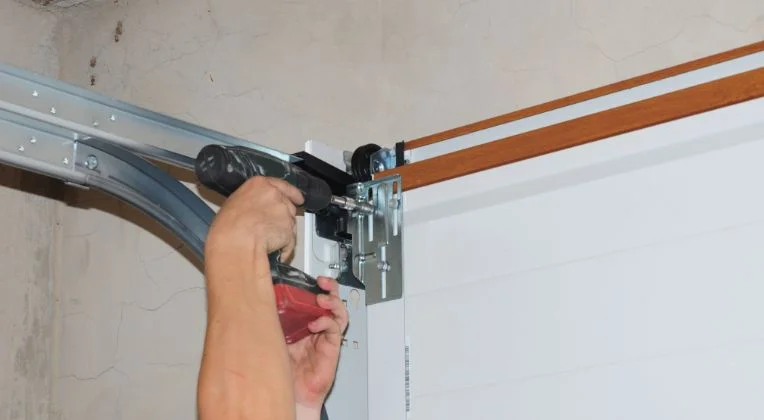
A bent or misaligned track can create resistance even after the springs are replaced. A complete diagnosis should determine whether the track itself is contributing to poor operation.
11. Roller Condition
Worn rollers can create noise, vibration, and resistance. If the garage door is difficult to move even after proper spring balance is restored, roller condition may need attention.
12. Garage Door Panel Damage
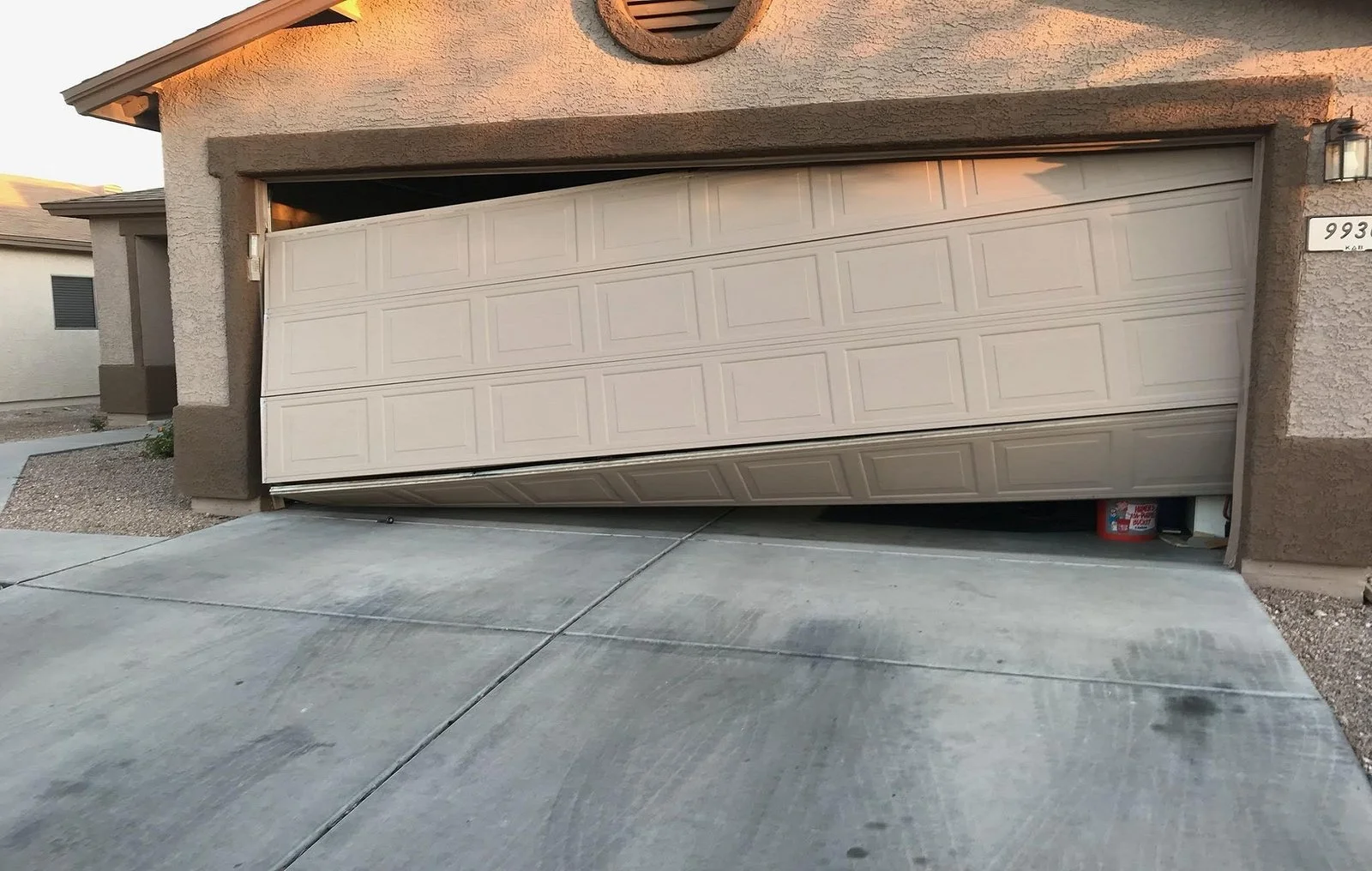
A broken spring does not automatically mean the garage door panels need replacement. However, if the door dropped suddenly, twisted, became stuck, or continued operating while severely unbalanced, panel damage may be present.
13. Garage Door Opener Strain
A broken spring can make the garage door extremely heavy. If the electric opener continues attempting to lift the door, additional strain may be placed on the opener motor, gear, trolley, chain, belt, or other components.
This does not mean every broken spring requires a new garage door opener. The spring system and door balance should be corrected before deciding whether the opener itself is damaged.
14. Garage Door Height
Tall garage doors and special lift configurations can require different spring, cable, drum, and track arrangements. These systems may not fit ordinary residential pricing assumptions.
15. High-Lift or Custom Door Systems
A custom lift arrangement, unusually heavy garage door, specialty application, or commercial-type system can require additional work or specialized components.
16. Work Area and Accessibility
The technician needs safe access to the spring system. Built-in shelving, overhead storage, unusually low ceilings, obstacles, or other restrictions can affect the repair process.
17. Routine vs. Urgent Repair
Scheduling may differ when a garage door is safely closed compared with a door that is stuck open, preventing vehicle access, or creating a security concern.
Ask whether any price difference is related to routine, same-day, emergency, or special scheduling.
18. Residential vs. Commercial Systems
Commercial garage doors may be heavier, larger, and used far more frequently than ordinary residential doors. Spring specifications and labor should therefore be based on the actual commercial door rather than residential assumptions.
Should You Replace One Garage Door Spring or Both?
If your garage door uses two torsion springs and one breaks, you may be asked whether you want to replace only the broken spring or both springs.
The correct decision depends on the configuration of the door, the condition of the remaining spring, how the replacement spring will be matched, and how many operating cycles the springs have already experienced.
When two springs were installed at approximately the same time and have operated together for the same number of cycles, the remaining spring has generally experienced similar wear.
That does not mean replacing both springs is automatically required in every situation. It does mean the remaining spring deserves consideration before the repair is approved.
If Only One Spring Is Replaced
Ask how the replacement will be matched to the existing spring, what condition the remaining spring is in, and whether the completed door will be balance-tested.
If Both Springs Are Replaced
Ask why both are recommended, what spring specifications are being installed, whether all labor is included, and how final door balance will be verified.
Signs Your Garage Door Spring May Be Broken
Loud Bang
A torsion spring can make a sharp noise when it breaks. If the door stops operating normally immediately afterward, inspect the spring visually from a safe location.
Visible Spring Gap
A broken torsion spring may show a visible separation between the coils.
Door Suddenly Feels Heavy
The loss of spring assistance makes the actual weight of the garage door much more noticeable.
Opener Moves Door Only a Few Inches
The opener may begin moving the door but stop because the spring is no longer supporting the load.
Door Is Crooked
Unequal spring or cable tension may cause the garage door to lift unevenly.
Loose or Hanging Cable
A broken spring can allow lift cables to become loose or leave their proper position on the drums.
Broken Garage Door Spring vs. Bad Garage Door Opener
A garage door that does not open properly does not automatically have a bad garage door opener.
The opener depends on the spring system to counterbalance much of the door's weight. If the spring breaks, the opener may suddenly be asked to move a much heavier load than it normally handles.
Possible symptoms include the garage door lifting only a few inches, the opener humming or straining, the door stopping mid-travel, unusual noises, or the door refusing to move.
Those symptoms can be mistaken for a failed opener motor.
However, opener problems can also occur independently. The opener motor, gear, sprocket, trolley, rail, belt, chain, remote, wall control, travel limits, force settings, or safety sensors may develop their own problems.
The useful diagnostic question is therefore not simply, “Does the opener work?” It is, “Is the door mechanically balanced before the opener is evaluated?”
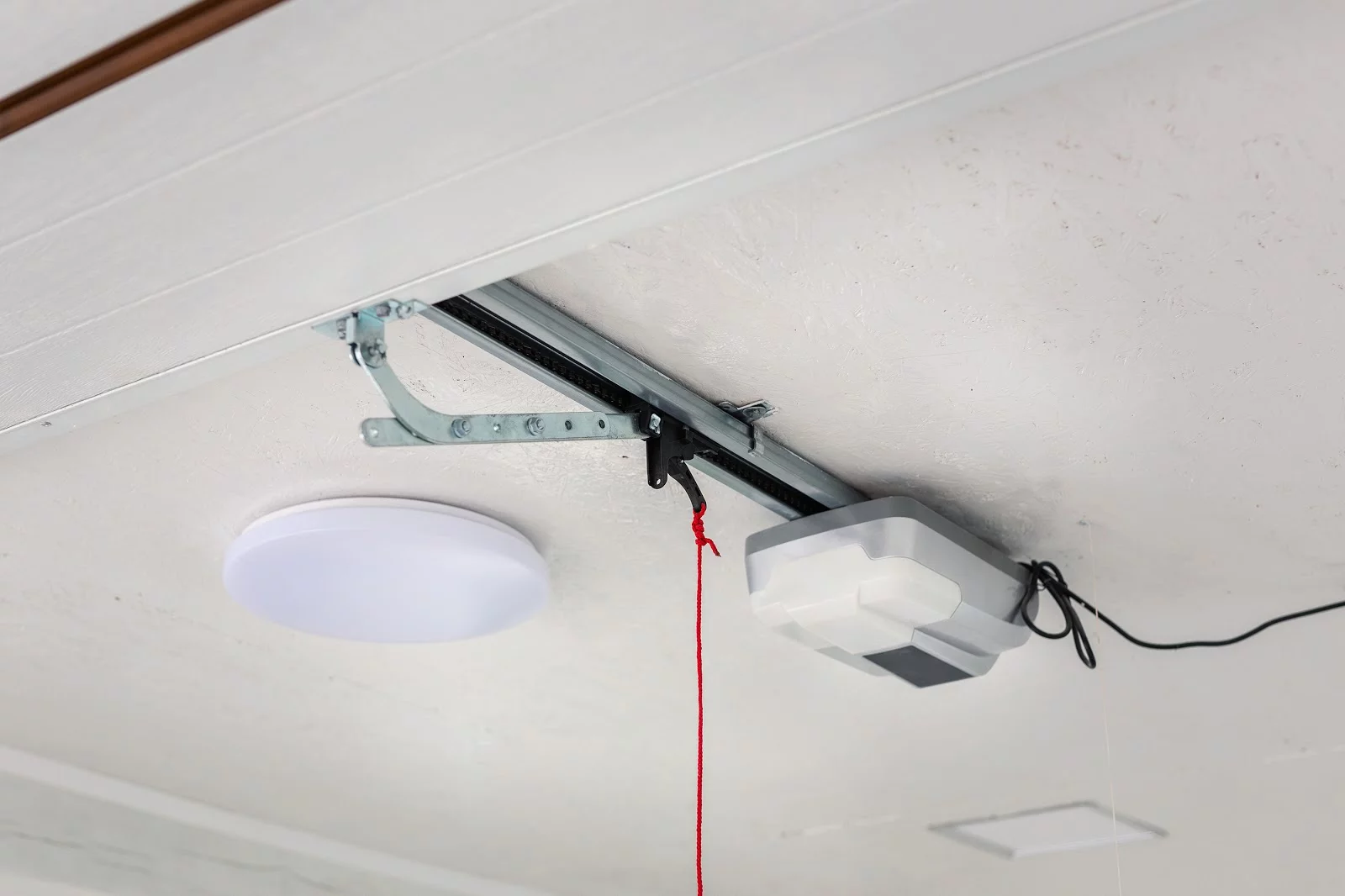
If opener repair is actually required, you can also review the company's garage door opener repair service.
Safe Checks Homeowners Can Make Before Calling
With a possible spring failure, visual observations are more useful than hands-on repair attempts. You can often provide useful diagnostic information without touching the spring system.
Checks You Can Make From a Safe Position
- Look above the garage door for a visible gap in a torsion spring.
- Look alongside the horizontal tracks for an extension spring that appears separated.
- Observe whether the garage door is sitting level.
- Look for a loose, hanging, frayed, or displaced cable.
- Check whether rollers appear to remain inside the tracks.
- Listen for humming, grinding, clicking, or repeated opener attempts.
- Check whether the garage door opener is plugged in.
- Check remote batteries if the door otherwise appears mechanically normal.
- Check keypad batteries if appropriate.
- Look for blocked safety sensors.
- Check whether the garage door has been manually locked.
- Look for obviously bent garage door tracks.
- Look for visibly damaged hinges or panels.
- Observe whether the opener light flashes.
- Take photos of the spring, cables, door position, and track system.
What You Should Not Attempt
- Do not adjust or replace garage door springs yourself.
- Do not loosen spring winding cones.
- Do not remove bottom brackets.
- Do not pull, rewind, cut, or reposition lift cables.
- Do not loosen garage door cable drums.
- Do not force a crooked garage door.
- Do not force an off-track garage door.
- Do not repeatedly press the garage door opener.
- Do not stand underneath a damaged garage door.
- Do not increase opener force to overcome a mechanical problem.
- Do not attempt to lift a heavy garage door with a broken spring.
- Do not disassemble the garage door opener motor unnecessarily.
If your vehicle is trapped, tell the garage door repair company when you call. Avoid trying to defeat a broken spring system simply to get the vehicle out.
Garage Door Spring Replacement Cost Factors at a Glance
| Cost Factor | How It Affects Price | Lower-Cost Scenario | Higher-Cost Scenario | Question to Ask |
|---|---|---|---|---|
| Number of Springs | Changes parts and labor requirements. | Single correctly matched spring. | Two-spring system or system conversion. | How many springs does my garage door require? |
| Spring Specification | Wire size and lifting requirements affect the correct replacement. | Common residential specification. | Heavy-duty, high-cycle, or custom spring. | What spring specification are you installing? |
| Door Weight | Heavier doors need more lifting capacity. | Light single-car sectional door. | Wood, insulated, glass, overlay, or heavy double door. | Was my door weight considered? |
| Spring Type | Torsion and extension systems use different components. | Straightforward like-for-like replacement. | Conversion or unusual system. | Do I have torsion or extension springs? |
| Cable Condition | Damaged cables may require additional repair. | Cables remain intact. | Frayed, snapped, loose, or off-drum cable. | Were both lift cables inspected? |
| Drums and Bearings | Worn supporting hardware can affect operation. | Existing parts remain serviceable. | Damaged drum, bearing, or shaft components. | Are the drums and bearings still usable? |
| Tracks and Rollers | Resistance can remain after spring replacement. | Tracks straight and rollers smooth. | Bent track, worn rollers, or alignment problems. | Will you test smooth door travel? |
| Garage Door Opener | The broken spring may have strained the opener. | Opener operates normally after spring repair. | Motor, gear, trolley, chain, or belt is damaged. | Will you test the opener after balancing the door? |
| Accessibility | Restricted working space may affect labor. | Clear access to spring system. | Storage, low ceiling, or difficult access. | Does access change the labor charge? |
| Scheduling | Urgent service may differ from routine scheduling. | Flexible standard appointment. | Urgent or emergency service need. | Is this standard, same-day, or emergency pricing? |
Spring Repair, Tune-Up, Upgrade, or Full Garage Door Replacement?
When Spring Replacement Usually Makes Sense
If the garage door itself remains structurally sound and the main failure is a broken or worn spring, spring replacement may restore proper counterbalance without replacing the entire garage door.
The cables, drums, bearings, rollers, tracks, hinges, and garage door opener should still be checked for related damage or excessive wear.
When Additional Repair May Be Needed
A spring failure can sometimes be accompanied by loose cables, damaged cable drums, worn rollers, track problems, cracked hinges, or opener strain.
Any additional recommendation should be explained separately. The homeowner should understand why the part is needed and how it relates to safe door operation.
When a Higher-Cycle Spring May Be Worth Discussing
A higher-cycle spring may be worth discussing for garage doors that operate frequently. This may be relevant to households that use the garage as their primary entry, apartment buildings, landlords, rental properties, or other doors that experience a large number of operating cycles.
Cycle rating should not replace correct spring sizing. A spring must still properly counterbalance the garage door.
When a Tune-Up Is Appropriate
A tune-up may be appropriate if the spring is still intact and the door operates but has minor noise, lubrication needs, loose hardware, sensor alignment concerns, or general maintenance issues.
A tune-up does not repair a broken garage door spring.
When Full Garage Door Replacement May Make More Sense
Complete garage door replacement may deserve consideration when the door has severe structural damage, several badly bent panels, repeated failures, major track damage, obsolete components, or a repair scope that approaches the practical cost of replacing an aging door.
Some homeowners may also consider replacement because they want a new insulated door, quieter operation, a different appearance, improved functionality, or a door better suited to current property needs.
To discuss broader repair or replacement options, visit Garage Door Repair Long Beach By On The Spot.
Why Local Long Beach Garage Door Conditions Matter
Long Beach contains a wide mix of garage types, home ages, neighborhood layouts, rental properties, multi-unit buildings, coastal homes, detached garages, alley-access garages, and commercial properties.
These local conditions can affect inspection, maintenance, access, and repair decisions.
Coastal Air and Salt Exposure
Homes closer to Belmont Shore, Naples, Alamitos Beach, and other coastal neighborhoods can experience more moisture and salt exposure than properties farther inland.
Over time, moisture can contribute to corrosion on metal garage door components such as springs, cables, tracks, hinges, fasteners, and other hardware.
This does not mean coastal exposure is automatically the cause of every spring failure. Garage door usage, spring sizing, age, installation, maintenance, and cycle fatigue also matter.
Older Long Beach Homes
Some Long Beach homes have older detached garages, unusual ceiling configurations, limited headroom, tilt-up doors, extension-spring systems, or previous modifications.
Those setups may require different repair strategies than newer standard sectional garage doors.
Alley-Access Garages
Some properties have garages accessible through alleys or narrow parking areas. If the garage door is stuck closed with a vehicle inside or stuck open where security is a concern, access becomes an important part of the service situation.
Rental Properties and Multi-Unit Buildings
Landlords and property managers may be coordinating the repair remotely. Photos of the garage door, spring area, cables, tracks, and opener can help describe the problem before the appointment.
Doors serving multi-unit properties can also experience frequent daily use, increasing the importance of spring, cable, roller, hinge, and opener maintenance.
Garage Door Used as the Main Entrance
Many households use the garage more frequently than the front door. Every open-and-close movement adds another operating cycle to the spring system.
A high-use garage door may deserve additional discussion about preventive maintenance and spring cycle expectations.
Garage Door Repair Long Beach By On The Spot serves customers throughout Long Beach, including Belmont Shore, Naples, Bixby Knolls, California Heights, Downtown Long Beach, Alamitos Beach, Belmont Heights, Los Altos, El Dorado Park, Wrigley, and surrounding communities.
Residential vs. Commercial Garage Door Spring Replacement
Residential Garage Doors
Residential spring replacement usually involves identifying the door's weight, spring type, number of springs, cable condition, opener condition, and related mechanical wear.
A standard residential sectional garage door can sometimes have a relatively straightforward repair. Heavy insulated doors, wood doors, glass-heavy doors, or custom configurations may require different spring specifications.
Commercial and High-Use Garage Doors
Commercial properties, warehouses, apartment buildings, storefronts, and other high-use garage doors can have larger, heavier, or more frequently operated systems.
Commercial spring pricing should be based on the actual garage door system rather than a standard residential garage door spring price.
Property managers should provide approximate door dimensions, photos, frequency of use, whether the door is open or closed, and whether it controls important vehicle or tenant access.
Questions to Ask Before Hiring a Garage Door Spring Repair Company
- What exactly failed?
- Can you show me the broken or damaged component?
- Does my garage door use torsion or extension springs?
- How many springs does my garage door currently use?
- What spring specification is required?
- How did you determine the correct spring?
- Is the quote for one spring or two springs?
- If both springs are recommended, why?
- If one spring is being replaced, how will it match the remaining spring?
- Are parts included?
- Is labor included?
- Are there service-call or additional scheduling charges?
- Were the lift cables inspected?
- Are the cables loose, frayed, snapped, or off the drum?
- Were the cable drums inspected?
- Are the rollers in good condition?
- Are the tracks straight?
- Is the garage door balanced?
- Is the opener damaged, or was it simply strained by the broken spring?
- Will the opener be tested after spring replacement?
- Will the complete door travel be tested?
- Will a final garage door balance test be performed?
- Can I receive a written estimate before work begins?
- Is the quote based on routine, same-day, or emergency scheduling?
- If there is a warranty, can you explain the exact terms in writing?
A clear garage door repair diagnosis should make the proposed repair easier to understand rather than more confusing.
Red Flags When Comparing Garage Door Spring Replacement Quotes
Warning Signs to Question
- No clear explanation of what failed.
- No explanation of whether the system uses torsion or extension springs.
- The quoted price changes significantly after arrival without a clear reason.
- You are told every component needs replacement without being shown why.
- A garage door opener replacement is recommended before spring balance is checked.
- Loose cables or damaged drums are ignored.
- You are told to keep forcing the garage door opener.
- The company cannot explain what is included in the quote.
- No written estimate is available.
- You are pressured because your vehicle is trapped.
- The business makes unsupported “cheapest,” “best,” or “#1” claims.
- No final door balance test is performed.
- No final operating test is performed.
What a Fair Spring Repair Explanation Should Include
A useful explanation should identify the failed spring, explain the existing spring configuration, describe whether the garage door uses one or two springs, identify the proposed replacement, and explain whether the cables, drums, bearings, rollers, tracks, opener, or panels have related problems.
If another repair is recommended, ask how it relates to the spring failure.
If the price differs substantially from an advertised or online range, ask what specific factor creates the difference.
Why Consider Garage Door Repair Long Beach By On The Spot?
Garage Door Repair Long Beach By On The Spot is a local garage door repair company serving customers throughout Long Beach and nearby communities.
The company works with homeowners, landlords, renters coordinating with property owners, property managers, real estate investors, HOA communities, apartment buildings, small businesses, and other properties needing garage door repair.
Relevant services include:
Garage Door Spring Replacement
Inspection and replacement of broken or failing garage door springs based on the actual door system.
Torsion Spring Repair
Evaluation of torsion springs, shaft, cable drums, lift cables, bearings, balance, and related components.
Extension Spring Repair
Inspection of extension spring systems, pulleys, cables, tracks, and related garage door hardware.
Garage Door Cable Repair
Diagnosis of loose, damaged, frayed, snapped, or displaced lift cables.
Garage Door Opener Repair
Evaluation of opener problems after the mechanical balance of the garage door is considered.
Off-Track Garage Door Repair
Inspection of doors that have become crooked, displaced, or unsafe to operate normally.
Garage Door Roller Replacement
Inspection and replacement of worn rollers contributing to poor or noisy movement.
Garage Door Track Repair
Evaluation of bent, misaligned, or damaged garage door tracks.
Garage Door Maintenance
Preventive inspection of springs, rollers, hinges, tracks, cables, balance, and related components.
For spring-replacement pricing, customers should request a diagnosis-specific estimate so the final quote reflects the actual spring system and repair scope.
Garage Door Spring Replacement in Long Beach and Nearby Communities
Garage Door Repair Long Beach By On The Spot serves customers from its Long Beach location at 151 E 5th St, Long Beach, CA 90802.
The following are service areas and nearby communities. They do not represent separate physical business locations.
A garage door in Belmont Shore may have different environmental exposure from a garage in Bixby Knolls. A detached garage in California Heights may have a different spring configuration from a newer sectional door in East Long Beach.
The neighborhood helps provide local context, but the correct garage door spring must still be selected based on the actual door system.
Garage Door Spring Replacement Cost FAQs
How much does garage door spring replacement cost in Long Beach, CA?
Many standard residential garage door spring replacements fall within the low-to-mid hundreds of dollars. A planning range around $180 to $350 may apply to some standard spring replacements, but the final cost can vary according to spring specification, number of springs, door weight, labor, cable condition, access, and related repairs.
Why does garage door spring replacement pricing vary?
Garage door springs must match the weight and mechanical requirements of the door. Spring type, wire size, door weight, number of springs, cycle rating, cables, drums, bearings, tracks, opener condition, labor, and scheduling can all change the final quote.
Should I replace both garage door springs if only one breaks?
It depends on the spring system. If two springs have operated together for a similar number of cycles, the remaining spring may have similar wear. Ask why one or both springs are recommended and how final garage door balance will be tested.
Can I open my garage door when the spring is broken?
A broken spring can make the garage door extremely heavy and may affect cable tension. Avoid repeatedly forcing the opener or attempting to lift a large door manually. If a vehicle is trapped, tell the garage door repair company when you call.
How can I tell if the spring is broken instead of the opener?
A visible spring gap, loud bang, very heavy door, loose cables, or an opener that moves the door only a few inches may indicate a spring problem. Because opener and spring symptoms can overlap, the spring system and garage door balance should be checked before replacing the opener.
Can I replace a garage door spring myself?
Garage door springs and lift cables operate under significant mechanical tension. Homeowners should not loosen torsion winding cones, cable drums, bottom brackets, or loaded lift cables. Visual checks from a safe distance are more appropriate than attempting spring replacement without proper equipment and experience.
Does Long Beach coastal air affect garage door springs?
Moisture and salt exposure can contribute to corrosion on metal garage door components, especially near coastal neighborhoods. Spring fatigue can also depend on cycle use, spring sizing, age, installation, maintenance, and overall system condition.
How do I request current garage door spring pricing?
Call Garage Door Repair Long Beach By On The Spot at (424) 310-0074. Describe whether the door is open or closed, whether the spring appears broken, whether cables look loose, and whether a vehicle is trapped. Ask for current scheduling information and a diagnosis-specific estimate.
Garage Door Repair Long Beach By On The Spot
Address: 151 E 5th St, Long Beach, CA 90802
Phone: (424) 310-0074
Email: office.onthespotgaragedoor@gmail.com
Customers can contact Garage Door Repair Long Beach By On The Spot about broken garage door springs, torsion spring replacement, extension spring problems, garage door balance, cable repair, opener repair, track problems, rollers, and related garage door repair services.
Need Garage Door Spring Replacement in Long Beach?
If your garage door spring appears broken, the door suddenly became unusually heavy, a cable looks loose, or the garage door opener can no longer lift the door normally, contact Garage Door Repair Long Beach By On The Spot.
Tell the technician what happened, whether you heard a loud bang, whether the door is currently open or closed, whether the door is crooked, whether cables appear loose, and whether a vehicle is trapped.
Do not choose a garage door spring replacement service only by the lowest advertised number. Compare the spring specification, number of springs, included labor, related components, and final balance testing.