
Historic Home, Heavy Door: What Bixby Knolls & Cal Heights Homeowners Should Know About Carriage Doors
Carriage garage doors can complement the architecture of Bixby Knolls and California Heights homes, but the traditional appearance can hide a very modern mechanical question: how much door weight are the springs, cables, rollers, tracks, hinges and garage door opener actually moving?
A large wood door, wood-overlay door, older one-piece garage door or heavily detailed carriage-style sectional door should not automatically be treated like a lightweight standard sectional door simply because both fit a residential garage opening. Actual door weight, balance, construction, spring configuration, track geometry, opener compatibility and previous modifications all matter.
Garage Door Repair Long Beach By On The Spot serves homeowners, landlords, property managers, real estate investors, HOA communities and other Long Beach properties, including Bixby Knolls and California Heights. This guide explains how to preserve historic character while making practical decisions about heavy-door repair, springs, openers, cables, tracks, maintenance, restoration-style upgrades and replacement.
What Should Bixby Knolls and Cal Heights Homeowners Know About Carriage Garage Doors?
The biggest issue with carriage garage doors in Bixby Knolls and California Heights is not the style—it is matching the mechanical system to the actual door. Heavy wood, wood-overlay and older custom doors may require different springs, cables, rollers, tracks, hinges and opener capacity from a lightweight sectional garage door.
A heavy door should still move in a controlled, balanced way. If it suddenly feels extremely heavy, the opener strains, the door rises unevenly, cables become loose, a torsion spring breaks, tracks flex or a panel begins sagging, the mechanical problem should be diagnosed before the opener is forced to compensate.
Homeowners should also determine whether the door is a traditional swing-out carriage door, a modern carriage-style sectional door or an older one-piece tilt-up door. These systems look similar from the street but move differently and can require different hardware and repair strategies.
The right approach is usually to preserve useful architectural character while replacing or repairing components that are no longer mechanically appropriate. An older carriage-style door does not automatically require replacement, but historic appearance should not come at the expense of safe balance and reliable operation.
Why Carriage Garage Doors Matter in Bixby Knolls and California Heights
Garage doors can occupy a surprisingly large portion of a home's front elevation. On a property with traditional architecture, an inappropriate garage door can alter the entire appearance of the house. That is one reason many homeowners in established Long Beach neighborhoods prefer carriage-style doors, real wood, deeper panel profiles, divided-light windows, decorative hinges and traditional proportions.
But visual compatibility is only one part of the decision.
A garage door is also one of the largest moving components of a home. A heavy wood or carriage-style door may open and close thousands of times over its service life. Every cycle depends on the spring system, cables, drums, rollers, hinges, tracks, brackets, bearings and opener working together.
A door can look historically appropriate from the street while being badly balanced inside the garage. It can also be old yet mechanically sound. These differences matter because replacement should not be recommended merely on age, and repair should not be recommended merely because a homeowner wants to preserve an original appearance.
The practical question is: what condition is the complete door system in today?
For Homeowners
Homeowners often care about maintaining architectural character, reducing noise, keeping the garage reliable and avoiding a large replacement project when the existing door can still be repaired.
If the garage is used as a primary entrance, reliability becomes even more important. A heavy carriage door that suddenly becomes stuck closed can trap a vehicle. A door stuck open can create a security concern.
For Landlords and Property Managers
Rental and multi-unit properties create different priorities. A property manager may need to preserve the exterior appearance required by the owner or HOA while also restoring safe parking access for tenants.
In these situations, clear documentation helps. Photographs of the spring system, panels, cables, tracks, opener and overall garage door can help distinguish an isolated repair from a larger replacement need.
For Real Estate Investors
Investors renovating older Long Beach homes may encounter a garage door that looks attractive but has outdated or mismatched operating hardware.
Before spending money refinishing the visible door, it makes sense to understand whether the spring system, tracks, rollers and opener can support the completed weight reliably.
For HOA Communities
An HOA may place significant importance on exterior appearance, panel design, color or decorative hardware. That does not mean the internal mechanical components must remain old.
In many situations, springs, rollers, cables, hinges, tracks and opener components can be serviced without changing the visible design of the garage door.
For Small Businesses and Multi-Unit Properties
Carriage-style doors are primarily a residential design topic, but heavy custom doors can also appear on mixed-use properties, apartment garages, studios and other buildings.
Higher daily cycles make balance and hardware condition especially important. A beautiful heavy door that opens twenty or thirty times per day experiences a different workload from a private garage opened a few times daily.
What Is a Carriage Garage Door?
The phrase “carriage garage door” can refer to several different systems. That makes identification important before discussing springs, tracks, openers or replacement.
Two doors can look nearly identical from the street while operating in completely different ways.
Traditional Swing-Out Carriage Doors
Traditional carriage-house doors were designed around a side-hinged concept. Instead of rolling overhead, paired door leaves swing outward from the sides.
For a true swing-out system, the important mechanical concerns include side hinges, frame integrity, door alignment, bottom clearance, center meeting alignment and adequate exterior swing space.
A standard ceiling-mounted sectional garage door opener should not automatically be assumed appropriate for this type of door. Automation needs to be compatible with the way the doors actually move.
Modern Carriage-Style Sectional Garage Doors
Many doors described today as carriage doors are actually sectional overhead doors. They use horizontal door sections connected by hinges. Rollers travel upward through vertical tracks and around curved track sections before the door moves horizontally below the garage ceiling.
The exterior can be designed to resemble a traditional swing-out carriage door using decorative handles, faux strap hinges, cross-buck patterns, windows, wood overlays or stamped steel designs.
This configuration can provide a traditional appearance while using a familiar modern overhead operating system.
Older One-Piece Tilt-Up Garage Doors
Some older Long Beach garages contain one-piece doors that move as a complete rigid panel. The entire door swings outward slightly and rises into the garage rather than bending through horizontal sections.
These systems can use specialized pivot hardware and spring arrangements. They should not be assumed to use the same repair approach as a modern sectional door.
Why the Difference Matters
A homeowner may call and say, “My carriage door is too heavy for the opener.” Before recommending an opener, the technician needs to know how that door moves.
A sectional door may need a torsion-spring and opener diagnosis. A one-piece door may require inspection of its specific spring and pivot arrangement. A true swing-out system may require a completely different operator and hinge evaluation.
Historic Appearance vs. Modern Garage Door Mechanics
The useful way to approach an older garage door is to separate the parts that contribute architectural character from the parts responsible for safe operation.
A home's original-looking door panels may be worth preserving. A worn spring does not gain mechanical value simply because it is old.
Visible Door vs. Operating Hardware
Homeowners see the exterior panels, windows, decorative handles and finish. The mechanical system includes springs, cables, drums, tracks, rollers, hinges, brackets, bearings and the automatic opener.
Depending on the design, much of that operating hardware can be serviced or replaced without fundamentally changing the door's street-facing appearance.
Previous Owners May Have Changed the System
Older properties frequently contain layered repairs. A previous owner may have replaced an opener, added decorative wood, changed a section, added windows, installed reinforcement or changed springs.
Each modification can affect the complete system.
Adding decorative overlay increases moving weight. Replacing a solid panel with a window section changes weight distribution. Reinforcing a sagging section adds material. Installing a stronger opener can temporarily mask poor spring balance.
That means copying the currently installed spring or opener does not always guarantee that the current component is correct.
Age Alone Is Not a Diagnosis
An older door can remain serviceable if its structure is sound, the operating hardware is appropriate and the door is correctly balanced.
A newer carriage-style door can still become unsafe after impact damage, spring failure, cable damage, track distortion or an incorrect installation.
A responsible recommendation should therefore explain the actual defect rather than relying on the age of the house as the reason to replace everything.
Local Context Matters
The dedicated Bixby Knolls and California Heights garage door repair page can be used as a supporting local service resource for homeowners dealing with heavy or historic-style doors in this part of Long Beach.
Why Heavy Carriage Garage Door Weight Matters
The counterbalance system is designed to offset much of the physical weight of the garage door. This is why an automatic opener can move a large residential door using a relatively compact motor.
If the springs no longer provide the correct counterbalance, the opener begins doing work it was not intended to do.
Heavy Does Not Automatically Mean Bad
A properly engineered heavy wood garage door can operate smoothly. Weight becomes a problem when the spring system, cables, tracks, rollers, hinges or opener are not appropriate for that weight.
In other words, the goal is not to make every door lightweight. The goal is to make the complete system compatible.
Solid Wood Can Add Significant Mass
Solid wood doors may contain thick rails, stiles, panels and decorative details. The exact weight depends on the wood species, thickness, door size, moisture condition and construction.
Two wooden doors of the same width can therefore require very different spring systems.
Wood Overlay Adds Weight to an Existing Structure
Some modern carriage doors use wood or composite overlay applied to another structural door.
This can produce a deep traditional appearance, but the overlay adds to the moving weight. Springs should be matched to the completed door rather than to the base structure before decorative material was added.
Windows Add More Than Appearance
Windows change the design and construction of a door. Depending on the glazing, frame and panel structure, they also affect weight.
When sections are changed or windows are added during renovation, checking balance afterward is a sensible mechanical step.
Reinforcement Struts
Wide sectional garage doors may use reinforcement struts to limit panel flexing. Struts can improve structural behavior, but they also become part of the total moving assembly.
If reinforcement is added after installation, the springs should still be capable of properly balancing the updated door.
Moisture and Wood Condition
Wood can deteriorate, swell, warp or soften when finishes fail and moisture reaches the material.
A wooden carriage-style door that begins rubbing against framing should not automatically be corrected by increasing opener force. The cause may involve wood condition, alignment, structure or balance.
How Heavy Should a Garage Door Feel?
Homeowners should not attempt a risky manual balance test on a damaged or questionable heavy door. What matters is whether the door's behavior has changed.
If a carriage door that has operated normally for years suddenly becomes dramatically heavier, rises only a few inches or makes the opener strain after a loud bang, spring failure is an important possibility.
Wood, Wood Overlay, Steel or Composite Carriage Doors?
Carriage style describes design, not one specific material. Homeowners who need replacement can often reproduce a traditional visual effect using several construction approaches.
Solid Wood
Natural wood can provide depth, grain and craftsmanship that is difficult to duplicate. For some older homes, this may be the appearance homeowners most want to preserve.
The tradeoffs can include weight and finish maintenance. A substantial wood door requires hardware appropriate for the completed mass of the door.
Before preserving a very heavy original wood door, the panels, joints, fastener areas, frame and moving hardware should be inspected for structural condition.
Wood-Overlay Sectional Doors
A wood-overlay door combines an underlying sectional structure with decorative material attached to the exterior.
This can offer a traditional look with modern overhead movement. However, the overlay becomes part of the moving load, so it must be included in spring and opener considerations.
Steel Carriage-Style Doors
Steel sectional doors can be stamped or constructed with panel patterns intended to resemble carriage doors. Decorative handles, strap-hinge details and windows can reinforce the effect.
Steel may appeal to homeowners who want a traditional-looking replacement with a different maintenance profile from natural wood.
Visual quality varies. Panel depth, proportions and window layout can matter as much as color.
Composite and Mixed-Material Doors
Composite materials may be used alone or as overlays to create wood-like textures and profiles. Depending on the design, they can offer an alternative for homeowners who want traditional appearance without relying entirely on natural wood.
The actual completed weight still needs to be considered.
Insulated Carriage-Style Doors
An insulated door may be useful when the garage is attached to living space or when the homeowner wants a more substantial door construction.
Insulation itself should not be treated as a reason to assume that a door is automatically lightweight or heavyweight. Different products use different materials and construction.
How to Compare Materials
Ask about appearance, maintenance, actual completed door weight, compatibility with the existing opening, spring requirements, opener requirements, weather exposure and the ability to repair individual sections later.
Choosing solely by appearance can create mechanical surprises. Choosing solely by weight can create an exterior that does not fit the home.
Garage Door Springs for Heavy Carriage-Style Doors
Springs are central to the way many heavy carriage-style doors operate because the springs counterbalance door weight.
The correct spring is not selected solely by looking at the width of the garage door.
Torsion Springs
Torsion springs are commonly mounted on a metal shaft above a sectional garage door. As the door closes, the spring winds and stores energy. As the door opens, the spring helps rotate the shaft and cable drums.
Heavy residential doors may use one spring or multiple springs depending on the design and required lifting force.
Spring selection can involve wire diameter, spring length, inside diameter, door height, cable drum configuration, number of springs and the actual weight of the completed door.
Extension Springs
Some older residential doors use extension springs mounted along the sides near the horizontal tracks. These springs stretch as the door closes and contract as it opens.
Extension-spring systems may also include pulleys, safety cables, lift cables and specialized attachment hardware.
If an older Bixby Knolls or Cal Heights garage still uses extension springs, the entire system should be considered during repair.
One-Piece Door Spring Systems
One-piece tilt-up doors can use spring and pivot arrangements that differ from modern torsion-spring sectional doors.
Homeowners should therefore avoid applying generic sectional-door repair advice to an older one-piece door without confirming the actual system.
Why Spring Sizing Matters
An undersized or incorrectly configured spring system can leave a heavy door difficult to lift. The opener may work harder on every cycle.
An inappropriate spring configuration in the opposite direction can also create unsafe movement.
The target is controlled balance—not simply “more spring power.”
What If Decorative Weight Was Added Later?
Suppose a homeowner adds substantial wood overlay to a sectional door. The opener may continue to operate, yet the door now weighs more than it did when the original springs were installed.
If the spring system is not reassessed, the opener can gradually become more strained.
This same principle can apply after structural reinforcement, replacement sections or substantial glazing changes.
Signs a Heavy Door May Have a Spring Problem
- A loud bang comes from the garage.
- A torsion spring has a visible separation in the coil.
- The door suddenly becomes much heavier.
- The opener raises the door only a short distance.
- The door no longer moves evenly.
- A lift cable becomes loose after the spring problem.
- The opener begins humming or straining immediately after the failure.
For spring-specific information, see the verified garage door spring replacement service in Long Beach.
Lift Cables, Cable Drums and Bottom Brackets on Heavy Garage Doors
Heavy sectional garage doors depend not only on springs but also on cables and related hardware that transfer the lifting force to the door.
Lift Cables
On many torsion systems, steel lift cables run from the bottom corners of the door to cable drums mounted on the torsion shaft.
When the shaft rotates, the drums wind or unwind the cables so both sides of the door move together.
Because a carriage-style door may be heavy, cable condition is particularly important.
Loose Cable vs. Snapped Cable
A loose cable is not necessarily broken. A cable can become slack when a spring breaks, when the cable leaves a drum or when the door becomes uneven.
A snapped cable has physically failed.
Both situations deserve professional attention, but they may have different underlying causes.
Cable Off the Drum
A cable can sometimes leave its normal position on a drum after a spring failure, obstruction, uneven movement or other mechanical problem.
Simply winding it back onto the drum without identifying why it came off can leave the underlying problem unresolved.
Bottom Brackets
The lower brackets on a sectional garage door may be connected directly to loaded lift cables.
This makes them different from ordinary decorative brackets.
A homeowner who sees an old or rusty bottom bracket should not simply remove its fasteners and replace it as a DIY hardware project.
Heavy Door + Cable Problem
If one side of a heavy door lifts while the other side remains lower, stop operating the opener.
Continuing to pull on a crooked heavy door can make rollers bind in the tracks, distort sections or create additional cable problems.
How Heavy Carriage Doors Can Strain Garage Door Openers
The garage door opener should move a door that is already properly counterbalanced. It should not be the primary lifting mechanism for a heavy door with a broken or badly mismatched spring system.
A Bigger Motor Does Not Repair Poor Balance
When homeowners see an opener struggling, it can be tempting to install something described as stronger or more powerful.
A different opener may be appropriate for some heavy doors, but only after the door itself is confirmed to be mechanically healthy.
If a torsion spring is broken, a stronger opener would still be connected to a door that has lost its intended counterbalance.
Opener Components That Can Show Strain
Depending on the opener design, excessive resistance can contribute to wear or failure involving the motor, gear and sprocket, trolley, rail, belt, chain or mounting points.
Homeowners may notice the opener becoming slower, louder or less reliable.
The motor may hum. A chain may rattle. A trolley may fail to transfer movement effectively. An internal gear may wear.
Heavy Door vs. Bad Opener
If the opener suddenly struggles immediately after a loud bang from the spring area, inspect the spring system before assuming the motor failed.
If the garage door remains correctly balanced but the opener motor runs without moving the trolley correctly, an opener-side problem becomes more likely.
Quiet Operation
Noise can be relevant for garages adjacent to bedrooms or living areas, but opener sound should be separated from noise caused by rollers, hinges, bearings, tracks and panel vibration.
A quiet-drive opener cannot compensate for a garage door that grinds through damaged tracks.
Controls and Safety Systems
The opener system can also include wall controls, remotes, keypads, safety sensors, travel settings and force settings.
A failed remote is not the same as a failed opener motor. A blocked sensor is not the same as a broken spring. Good diagnosis separates these problems.
Do Not Increase Force to Overpower a Heavy Door
If an opener reverses or stops because a door is binding, increasing force can hide the symptom rather than repair the cause.
Force settings should not be used to drive a heavy garage door through a bent track or to compensate for poor spring balance.
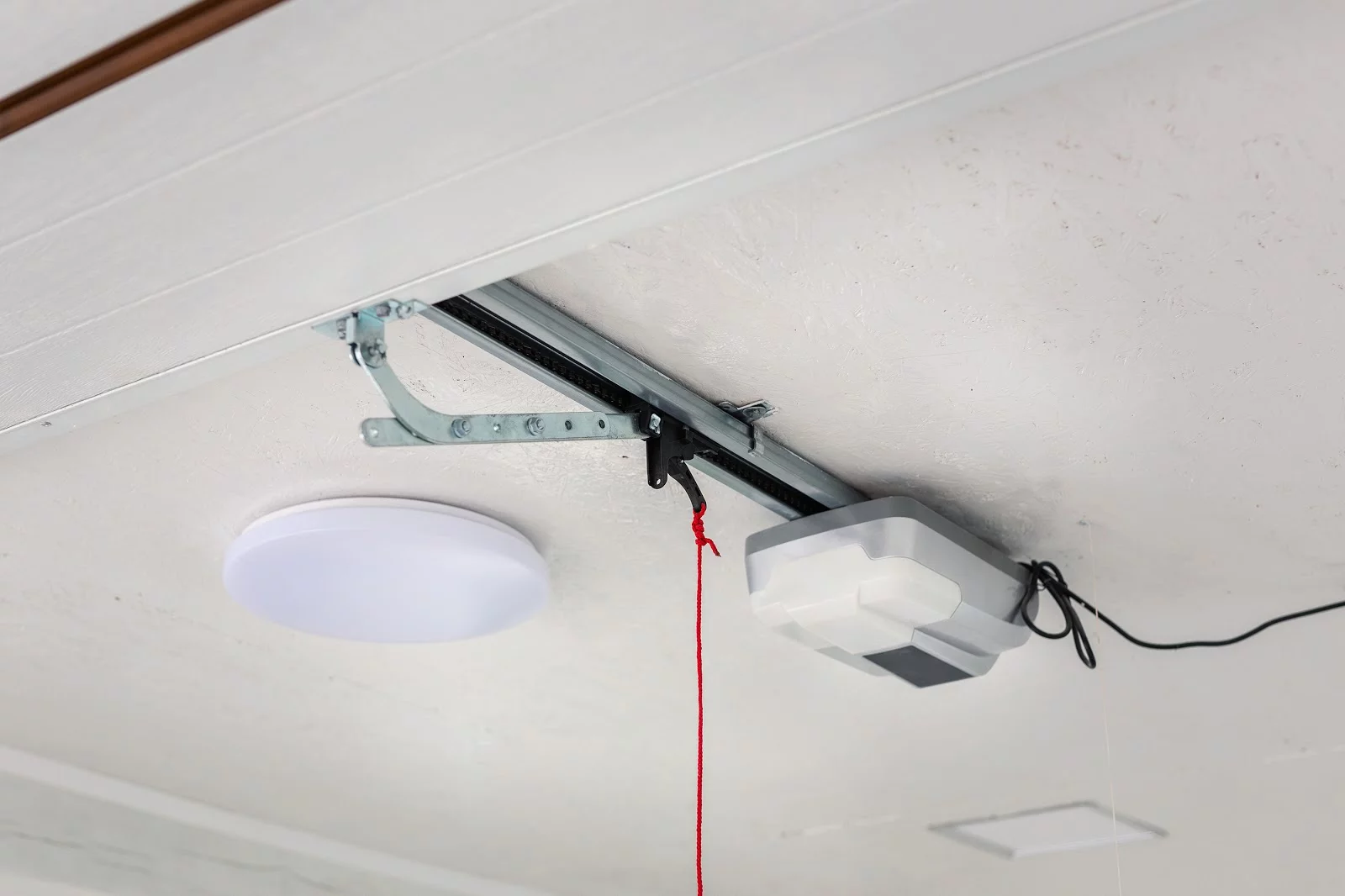
For opener-specific troubleshooting, see 5 Signs Your Garage Door Opener Is About to Fail.
You can also review the verified garage door opener repair service.
Tracks, Rollers and Hinges on Heavy Carriage-Style Garage Doors
Even a perfectly balanced door will not operate well if its rollers, hinges or tracks create resistance.
Garage Door Tracks
Sectional carriage-style doors use vertical tracks, curved sections and horizontal overhead tracks.
These tracks must remain appropriately aligned so the rollers can move smoothly.
A track can become bent from impact, loosen at its mounting points or shift relative to the door opening.
When the door is heavy, even a modest alignment issue may become more noticeable because the system is moving greater mass through the problem area.
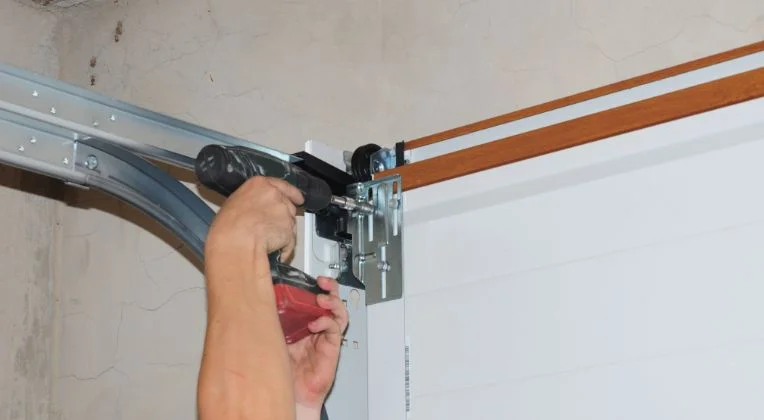
Garage Door Rollers
Rollers guide sectional doors through the track system. Worn bearings, damaged wheels, bent stems or seized rollers can create drag.
That drag is transferred through the door to the opener and other hardware.
The correct roller depends on the specific door and track configuration. The repair decision should consider roller diameter, stem design, bearing condition and compatibility rather than simply installing something marketed as heavy duty.
Functional Hinges
Interior hinges connect the sections of a sectional garage door and allow the door to bend as it transitions around the curved track.
Cracked hinges, elongated mounting holes, loose structural fasteners or damaged pivots can affect alignment.
Decorative Strap Hinges
Carriage-style doors often use decorative exterior strap hinges to create the appearance of swing-out doors.
These decorative parts may not carry the operating load.
Homeowners should therefore distinguish a loose decorative hinge from a failing functional hinge on the inside of the door.
Track Attachment to Older Structures
Older garages can have different framing conditions from newer construction.
Track brackets need sound support. If mounting material has deteriorated, simply tightening a loose bolt may not solve the underlying attachment problem.
Garage Door Alignment
A door can appear crooked because of cable imbalance, track movement, structural sag, roller problems or a combination of conditions.
The repair should identify why the alignment changed rather than forcing the door back into position without addressing the cause.
Panel Sag, Warping and Damage on Heavy Carriage Doors
A historic-looking garage door may be mechanically repairable but still have structural problems in the door itself.
Sectional Door Sag
Wide sectional doors can bow across the opening if panels lack adequate reinforcement or have been weakened by age or impact.
Sag may be especially visible when the door is overhead because a wide panel is spanning horizontally.
Cracked Wood
Wood can split around joints, decorative elements, hinge fasteners and reinforcement points.
Some localized damage may be repairable. Other damage can compromise the structural integrity of the section.
Warping
Wood or composite elements can distort over time. A warped section may rub against the jamb, interfere with seals or create uneven track movement.
An opener should not simply be adjusted to push harder against a warped door.
Rot or Moisture Deterioration
If wood has become soft or structurally deteriorated, surface refinishing alone may not be enough.
Pay particular attention to lower sections and areas where water repeatedly contacts the door.
Vehicle Impact
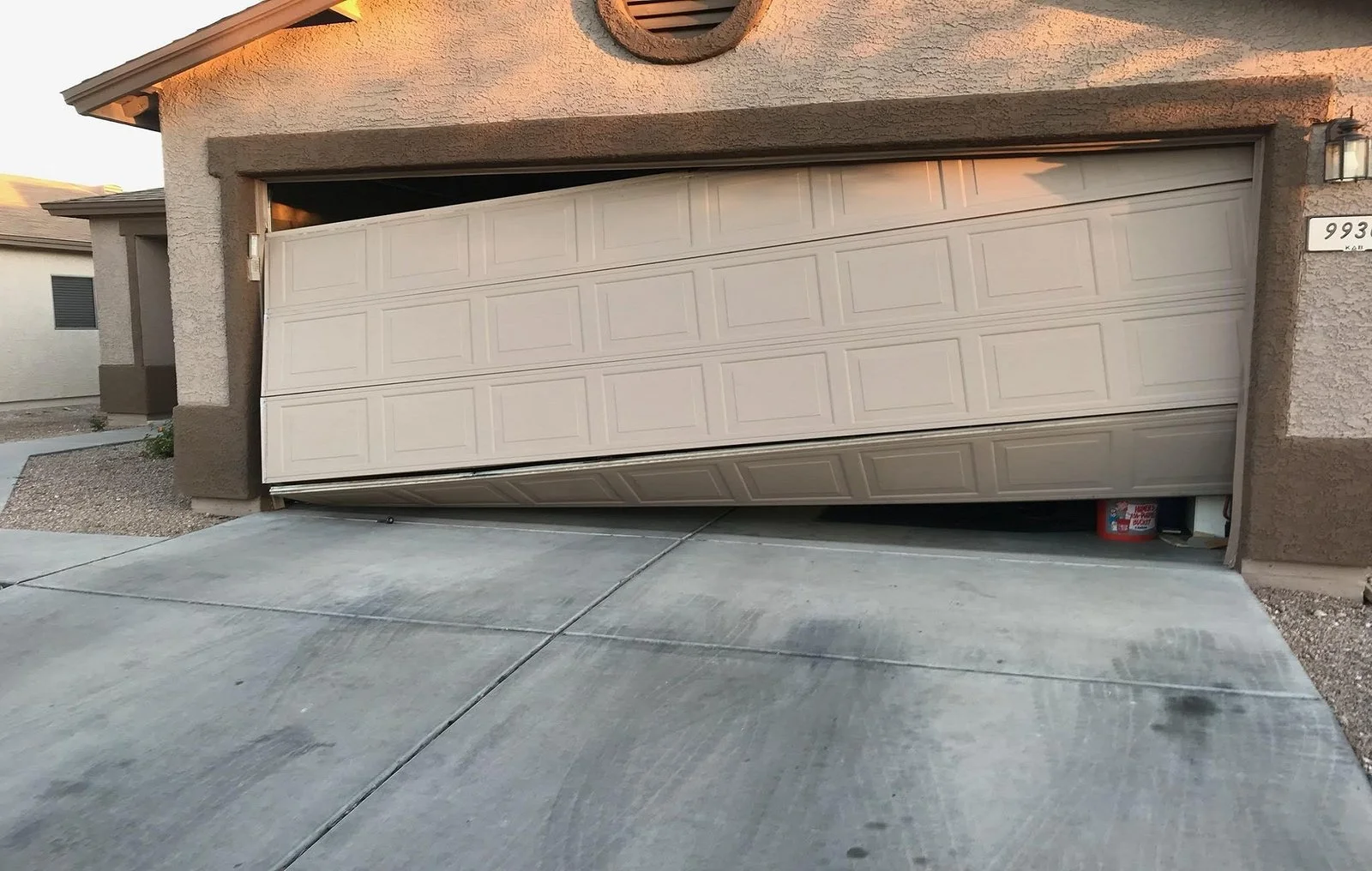
A heavy door hit by a vehicle can develop bent sections, displaced tracks, damaged rollers or hinge problems.
Operating the opener repeatedly after impact can worsen the misalignment.
Can One Section Be Repaired?
Sometimes. If damage is localized and compatible materials or sections are available, repairing or replacing one portion of a sectional door may preserve the rest of the system.
Appearance matching can be especially important on a carriage-style door. A structurally acceptable replacement panel may still look wrong if its pattern, grain, windows or proportions differ.
When Panel Damage Supports Full Replacement
Replacement becomes more practical when several sections are badly damaged, structural deterioration is widespread, the door no longer travels reliably or several other major components also need replacement.
Safe Homeowner Checks for a Heavy Carriage Garage Door
Homeowners can gather useful information without touching springs, loaded cables or unstable heavy panels.
What You Can Safely Look For
- Look above a sectional door for a visible gap in a torsion spring.
- Observe extension springs from floor level if present.
- Check whether the garage door appears level while closed.
- Observe whether one side begins rising before the other.
- Look for loose, hanging, frayed or visibly snapped lift cables.
- Look for a cable that appears displaced from its normal path.
- Check whether rollers appear to remain inside the tracks.
- Look for a visibly bent track from a safe distance.
- Look for track brackets that appear loose or displaced.
- Look for cracked functional hinges.
- Distinguish decorative exterior strap hinges from operating hinges.
- Look for panel bowing or sagging.
- Look for cracked or deteriorated wood.
- Check lower wooden sections for visible moisture damage.
- Check whether the bottom weather seal is torn or missing.
- Listen for grinding, popping, scraping or cracking sounds.
- Listen for an opener motor that suddenly sounds strained.
- Check whether the opener is plugged in.
- Check the wall button if the remote does not work.
- Check remote batteries if the door appears mechanically normal.
- Check keypad batteries when applicable.
- Look for obvious objects blocking the safety sensors.
- Observe sensor alignment from a safe distance.
- Check whether the garage door was manually locked.
- Check whether the emergency release was previously pulled.
- Take photos of the spring, tracks, panels and opener.
- Note whether the problem started suddenly or gradually.
- Note whether a loud bang occurred before the door became heavy.
- Note whether the problem occurs at the same point in the door's travel.
- Tell the repair company whether a vehicle is trapped.
What Homeowners Should Not Attempt
- Do not adjust or wind torsion springs.
- Do not remove loaded extension springs.
- Do not remove garage door bottom brackets.
- Do not pull, rewind or reposition lift cables.
- Do not loosen cable drums.
- Do not force a crooked garage door.
- Do not force an off-track garage door.
- Do not repeatedly press the opener when the heavy door barely moves.
- Do not stand underneath a damaged heavy door.
- Do not remove heavy wooden panels without appropriate support.
- Do not increase opener force to compensate for poor balance.
- Do not work on opener wiring without appropriate knowledge.
- Do not climb an unstable ladder to inspect overhead equipment.
- Do not manually overpower a door with a known broken spring.
- Do not disconnect structural hinges while the door is unsupported.
- Do not substitute random household fasteners for garage door hardware.
- Do not change spring geometry based on a general online video.
- Do not install heavy door sections without appropriate support and assistance.
- Do not ignore snapping, grinding or cable slack.
- Do not assume that a stronger opener makes an unsafe door safe.
Carriage Garage Door Problems: Repair and Replacement Comparison
| Problem or Situation | Common Signs | Likely Area to Inspect | Repair or Upgrade Option | DIY Risk | When to Call a Professional |
|---|---|---|---|---|---|
| Heavy door suddenly becomes difficult to lift | Opener strains, door barely rises, loud bang | Spring system and door balance | Spring diagnosis and correctly matched replacement when required | High | Stop forcing the opener and request spring inspection |
| Door rises unevenly | One side lifts first, cable slack, crooked door | Springs, lift cables, cable drums, rollers | Correct imbalance and damaged components | High | Stop operating the door |
| Wood section sags | Panel bows across width, especially overhead | Panel structure and reinforcement | Reinforcement, localized repair or section replacement | Moderate to high | Before sag affects track travel or structural safety |
| Door binds at one location | Opener stops at same height, roller hesitates | Track, rollers, hinges, panel alignment | Track correction, roller repair or structural diagnosis | Moderate to high | Before changing opener force or travel settings |
| Opener sounds strained | Slow movement, humming, grinding or stopping | Door balance plus opener drive system | Correct door resistance first; repair opener if still necessary | Moderate | When the symptom becomes repeatable |
| Loose decorative strap hinge | Exterior hardware moves | Decorative hardware | Secure or replace if appropriate | Low to moderate | If you are unsure whether it is structural |
| Cracked functional hinge | Section movement, noise, visible crack | Interior operating hinge | Correct hinge replacement and alignment inspection | Moderate | Before continued cycling enlarges damage |
| Localized wood damage | Crack, split or deteriorated area | Panel structure and finish | Localized repair when structure remains sound | Moderate | If damage reaches joints or hardware attachment points |
| Several damaged sections | Door is distorted or repeatedly binds | Complete door system | Compare major repair with replacement | High | Before continued operation |
| Old opener lacks desired features but works | Door operates normally | Opener compatibility | Optional opener upgrade without replacing door | Moderate | After confirming proper door balance |
| Homeowner wants lower-maintenance carriage appearance | Existing wood door needs frequent finish care | Replacement material and design | Compare steel, composite and overlay options | Low during planning | When measuring and designing replacement |
Repair, Tune-Up, Upgrade or Replace a Historic Carriage Door?
The best recommendation is not automatically the cheapest repair or the largest replacement project. It is the smallest practical solution that restores safe, reliable operation while respecting the homeowner's goals.
When a Tune-Up May Be Appropriate
A tune-up may make sense when the door still operates, structural components remain sound and the issues are minor.
A tune-up can involve evaluating door balance, tracks, rollers, hinges, appropriate lubrication points, sensors, opener travel and visible hardware.
It may also reveal a developing issue before it becomes a larger failure.
A tune-up does not repair a physically broken spring or severely damaged cable.
For preventive service, see the verified garage door tune-up service.
When Minor Repair May Make Sense
Localized repair may be appropriate when the rest of the door remains in good condition.
Examples can include a worn roller, damaged hinge, sensor problem, remote or keypad issue, weather-seal deterioration, modest track adjustment or isolated opener component problem.
When Major Repair May Be Needed
A broken spring, snapped cable, off-track door, damaged structural panel, badly bent track or significant opener drive failure can require a larger repair.
On a heavy carriage-style door, major repairs should account for the complete system rather than replacing parts independently without checking balance.
When a Spring Upgrade May Make Sense
If the door has been modified and the existing spring system no longer correctly balances the actual weight, properly specified spring changes may be appropriate.
The replacement should be based on the door, not on vague “heavy-duty” terminology.
When an Opener Upgrade May Make Sense
An opener upgrade may make sense if the current opener is genuinely failing, has multiple service issues or no longer meets the homeowner's functional preferences.
Door balance should be confirmed first.
When Panel Repair May Preserve a Valuable Door
A localized structural repair can sometimes preserve the exterior character of a door that would be difficult to reproduce.
This can be particularly attractive when one section is damaged but the rest of the door is sound.
When Complete Replacement May Be More Practical
Full replacement may become more practical when multiple sections are damaged, structural wood deterioration is extensive, the door repeatedly comes out of alignment, tracks and hardware are severely compromised or several major components require replacement simultaneously.
Replacement may also be a homeowner's choice when the goal is a lower-maintenance material, improved weather sealing, insulation, different appearance or new door design.
For replacement planning, see the verified new garage door page.
How to Preserve Historic Character Without Keeping Worn-Out Hardware
A historic-looking garage door creates two separate design questions: what should remain visible and what needs to function behind the scenes.
Preserve the Door When the Door Is Worth Preserving
If an existing carriage-style door remains structurally healthy, homeowners may be able to repair springs, rollers, tracks, cables or opener equipment without changing the exterior.
This can protect curb appeal while improving operation.
Do Not Preserve Failed Hardware Merely Because It Is Original
A cracked hinge, deteriorated cable, broken spring or damaged roller does not become safer because it dates from an earlier installation.
Mechanical parts should be judged by condition and suitability.
Match Proportions, Not Only Color
When replacement becomes necessary, homeowners often begin by matching paint or stain.
But the visual character of a carriage door also depends on section proportions, window size, muntin patterns, rail and stile widths, decorative hardware and overall depth.
A replacement can have the right color while still looking noticeably different from the original architecture.
Decorative Hardware
Modern sectional doors can use decorative exterior handles and strap hinges to reproduce a carriage-house appearance.
These features can sometimes provide the traditional look without changing the mechanical movement of the door.
Window Design
Windows can be particularly important on a front-facing garage.
Divided-light patterns, arches, rectangular panes and the relative height of the glass can change how well the door fits the architecture.
Glazing also becomes part of the completed door weight.
Wood-Look Alternatives
Some homeowners want the visual character of wood but prefer a different maintenance profile.
Steel or composite carriage-style doors may be worth comparing when replacement is already justified.
The selection should consider how convincingly the material reproduces the desired appearance, how the door will weather and how heavy the final assembly will be.
Keep the Architectural Goal in the Repair Conversation
Tell the garage door company at the beginning if preserving the door's appearance matters.
That can change the discussion from simply asking, “What is the fastest replacement?” to asking, “What can safely remain, what needs mechanical repair and what replacement options would preserve the proportions of the house?”
Maintenance Priorities for Heavy Wood and Carriage Garage Doors
Preventive maintenance matters on any garage door, but heavy doors can make increasing resistance more noticeable throughout the system.
Watch Wood Finishes
Exterior finishes help protect wood from weather exposure. Peeling or failed finish can allow moisture to reach the material.
Homeowners should follow appropriate care for the specific wood and finish used on the door.
Inspect Lower Door Sections
The bottom area can be exposed to water, debris and driveway moisture.
Look for soft wood, finish failure, swelling or deterioration near the lower sections.
Check Weather Seals
A deteriorated bottom seal can allow more water, dust and debris into the garage.
Weather-seal repair is typically a smaller maintenance issue than waiting until moisture contributes to other damage.
Listen to Rollers and Hinges
New squeaking, grinding or popping noises can indicate wear, lubrication needs, bearing problems, track resistance or another mechanical issue.
Do not assume every noise is solved by spraying lubricant on everything.
Watch the Door During Travel
A healthy sectional door should move consistently without dramatic shaking, leaning or jerking.
If a heavy door begins hesitating at one specific height, investigate tracks, rollers, hinges, cables and panels.
Monitor Opener Sound
A gradual change in opener sound can be an early sign of additional resistance.
If the motor sounds increasingly strained, check the door system before automatically replacing the motor.
Check Balance After Modifications
If decorative overlays, windows, reinforcement or replacement sections are added, the completed door weight may change.
Spring balance should be reassessed after meaningful weight changes.
Inspect Cables Visually
Look for fraying, corrosion, unusual slack or broken strands from a safe position.
Do not touch or reposition loaded cables.
Keep the Track Path Free
Stored items should not interfere with door movement or the safety sensor path.
A physical obstruction can cause reversal, track problems or damage.
Document Gradual Changes
Photos taken periodically can make panel sag, finish deterioration or hardware changes easier to recognize.
This is particularly helpful for landlords and property managers who may not see the door every day.
What Affects the Cost of Repairing a Heavy Carriage Garage Door?
There is no responsible single price for every carriage-door repair because the work can range from minor adjustment to spring replacement, panel repair or complete door replacement.
The useful question is what repair scope your specific door requires.
Door Weight
Heavy doors can require different springs and supporting hardware from lightweight doors.
Door Size and Height
A wide or unusually tall door may use different tracks, springs, cable drums or reinforcement.
Door Type
A sectional door, one-piece tilt-up door and true swing-out carriage door use different operating systems.
Material
Wood, steel, composite and overlay construction can affect repairability, door weight and replacement decisions.
Spring Type
Torsion springs, extension springs and other older configurations use different components and servicing procedures.
Number of Springs
Some doors use one spring and others use multiple springs.
Cable Condition
A spring repair with intact cables is different from a repair involving a snapped or frayed cable.
Track Damage
Minor alignment and major track replacement are different repair scopes.
Panel Damage
A small localized repair differs from replacing multiple structural sections.
Opener Condition
The opener may need no repair after spring balance is restored, or it may have its own motor, gear, trolley, belt or chain problem.
Accessibility
Low headroom, tight alley access, storage around the door or unusual garage construction can affect labor.
Custom or Older Systems
Older or custom carriage-door systems may require more diagnosis than a common modern sectional door.
Repair vs. Replacement
If several major components are deteriorated, comparing repair with replacement can be reasonable.
Customers should request a diagnosis-specific written estimate that explains what failed, what is being replaced, which parts and labor are included and why each recommendation is necessary.
Bixby Knolls and California Heights Garage Door Conditions
Older Long Beach neighborhoods can present garage-door conditions that differ from newer standardized developments.
Older Garage Openings
Headroom, side room, framing, floor level and opening dimensions may not match modern assumptions.
Replacement planning should therefore begin with measurements of the actual garage.
Detached Garages
Detached garages may have different framing, ventilation and access conditions.
If there is no convenient secondary entrance, a stuck garage door can create a more difficult access problem.
Alley-Access Garages
Some Long Beach properties rely on alley access with limited maneuvering room.
A heavy garage door stuck closed with a vehicle inside should not be forced merely because driveway access is inconvenient.
Tight Driveways
Limited driveway space can make installation, panel handling and service access more complicated.
Homeowners should explain these access conditions when scheduling.
Older Wood Doors
A wood door may have been painted, repaired, reinforced or modified multiple times over decades.
The current weight and mechanical condition matter more than assumptions about how the door was originally built.
Older Opener Systems
An older opener may have been installed when the door had a different spring configuration or before added overlays and reinforcement.
When opener strain appears, evaluate the current door balance before deciding that the motor alone is the problem.
Coastal Southern California Conditions
Bixby Knolls and California Heights are inland from Long Beach's waterfront neighborhoods, but the broader coastal environment can still influence wood finishes and metal hardware over time.
Properties nearer Belmont Shore, Naples, Alamitos Beach or Seal Beach may experience greater marine exposure, while inland garages can still experience ordinary humidity, age and corrosion.
Frequent Daily Use
Many households use the garage as their main entrance.
More cycles mean more repeated movement for springs, rollers, hinges, cables and opener components.
Rental and Property-Management Needs
A property manager may need to coordinate access with tenants, obtain approval remotely and preserve exterior design requirements.
Photos, written estimates and a component-specific diagnosis are particularly useful in these situations.
Neighborhood Character
When the garage door contributes significantly to the home's architecture, repair decisions may give more weight to preserving visible materials and proportions.
That does not change the safety standard for springs, cables or structural components—it simply means mechanical repairs and architectural goals should be discussed together.
Residential, Rental and Multi-Unit Carriage Door Considerations
Single-Family Homes
For a private residence, the main concerns are normally appearance, safe operation, vehicle access, noise, maintenance and long-term repairability.
A homeowner may value keeping an original or custom wood door even if a cheaper generic replacement exists.
Rental Homes
Landlords need to balance tenant access with property condition and repair cost.
If a tenant reports “the opener is broken,” the actual problem might involve a spring, cable or heavy-door imbalance. Ask for photos and a description of the symptom before approving a major replacement.
Condominiums and HOA Properties
Exterior design may be subject to community standards.
Mechanical repair can sometimes preserve the approved visible appearance while improving springs, rollers, cables or opener components.
Multi-Unit Garages
A shared garage may cycle much more frequently than a private residential door.
High-cycle use increases the importance of spring condition, rollers, cables, hinges, opener reliability and preventive maintenance.
Small Commercial Properties
If a heavy custom door serves a storefront, studio or mixed-use building, daily operating requirements may differ from a residential garage.
Commercial frequency of use and door configuration should be considered rather than applying a residential assumption to every property.
Routine, Same-Day or Urgent Heavy Garage Door Repair?
A minor squeak and a broken spring do not create the same level of concern.
Routine Scheduling May Be Reasonable When
- The door remains closed, stable and secure.
- Noise is minor and movement remains normal.
- The concern is primarily cosmetic finish deterioration.
- Decorative hardware is loose but not structural.
- The homeowner is planning future restoration or replacement.
- No spring, cable or track failure is visible.
Same-Day Service May Be Helpful When
- The heavy door is becoming increasingly difficult to operate.
- The opener repeatedly strains or stops.
- The garage is the household's main vehicle entrance.
- A landlord needs to restore tenant parking access.
- A frequently used shared door has become unreliable.
- The door is stuck closed but appears stable.
More Urgent Professional Attention May Be Appropriate When
- A spring is visibly broken.
- A lift cable has snapped.
- A cable is badly frayed or displaced.
- The heavy door is hanging unevenly.
- The garage door is partially off track.
- A roller has left the track.
- The door is stuck open and cannot be secured.
- A structural hinge or panel appears to be failing.
- The door drops or moves unpredictably.
- A vehicle is trapped behind a door that cannot safely move.
Call (424) 310-0074 and ask about current service availability. Describe the condition of the door instead of relying on a generic urgency label.
Questions Bixby Knolls & Cal Heights Homeowners Should Ask a Garage Door Company
- What type of carriage garage door do I actually have?
- Does the door swing out, tilt up or travel overhead in sections?
- What exactly failed?
- Can you show me the damaged component?
- Is the garage door structurally sound?
- Has the door sagged, warped or changed shape?
- Has added wood, glazing or reinforcement changed the door weight?
- Is the garage door correctly balanced?
- Does the spring system match the current door weight?
- Is a torsion spring broken?
- Does the door use extension springs or an older spring arrangement?
- How many springs does the door use?
- Are the lift cables intact?
- Are any cables frayed, loose, snapped or off a drum?
- Are the cable drums operating normally?
- Are the bottom brackets safe and intact?
- Are the rollers worn or binding?
- Are the tracks straight and securely mounted?
- Are any tracks moving because of framing problems?
- Are the functional hinges cracked or worn?
- Are the visible exterior strap hinges decorative or structural?
- Does the door need reinforcement?
- Is the opener actually damaged or merely strained by the door?
- Is the existing opener compatible with the door type?
- Can the opener be repaired instead of replaced?
- Would replacing the opener solve the actual underlying problem?
- Can the existing carriage door be preserved?
- Can one damaged section be repaired or replaced?
- If replacement is recommended, why is repair not practical?
- How will a replacement preserve the home's appearance?
- What material is proposed for the replacement door?
- How does replacement-door weight affect the spring system?
- What parts are included in the quote?
- Is labor included?
- Are additional repairs separately explained?
- Can I receive a written estimate before work begins?
- Will the door be balance-tested after spring work?
- Will cables and drums be inspected with spring work?
- Will the opener be tested after door balance is corrected?
- Will a complete open-and-close cycle be tested?
- If a warranty is offered, can I review the actual written terms?
Red Flags When Comparing Heavy Carriage Door Repair Recommendations
Warning Signs Worth Questioning
- The company never identifies what type of carriage door you have.
- A heavy wood door is treated exactly like a lightweight standard door without discussing weight.
- Replacement springs are selected without considering current door balance.
- An opener is replaced before spring balance is checked.
- A more powerful opener is recommended solely to overpower a heavy door.
- Loose or snapped cables are ignored.
- Bent tracks or binding rollers are ignored.
- The technician does not distinguish cosmetic hardware from functional hardware.
- Every older wood door is automatically declared unrepairable.
- A structurally deteriorated door is kept in service only because it is historic-looking.
- Panel sag is treated as an opener problem.
- Added overlay or reinforcement weight is ignored.
- Opener force is increased without identifying why the door is resisting movement.
- The company says everything needs replacement without showing why.
- No written estimate is provided before work.
- The quote changes substantially without a component-specific explanation.
- Parts and labor are not explained.
- A trapped vehicle is used to pressure immediate approval of unrelated upgrades.
- No final door-balance test is performed.
- No complete operating test is performed after the repair.
“Heavy Duty” Is Not a Complete Explanation
A spring, roller, hinge or opener can be marketed as heavy duty without necessarily being the correct component for your door.
Ask what makes the proposed part suitable for the specific door weight and configuration.
Do Not Replace an Opener to Fix a Broken Spring
If the spring has failed, the opener is no longer receiving normal counterbalance assistance.
A replacement motor does not repair that mechanical problem.
Do Not Replace the Complete Door Based Only on Age
An old door may need replacement, but the reason should involve its actual condition: structural deterioration, repeated failures, incompatible hardware, severe damage or other practical factors.
“It is old” is not a complete diagnosis.
Do Not Preserve Unsafe Hardware Solely for Authenticity
The opposite mistake is assuming every original component should stay in service.
A historic appearance can often be preserved while safety-critical hardware is repaired or replaced.
Why Consider Garage Door Repair Long Beach By On The Spot?
Garage Door Repair Long Beach By On The Spot is a local garage door repair company serving Long Beach and nearby communities from its Long Beach location.
For Bixby Knolls and California Heights homeowners, the company is worth considering when a heavy or historic-style garage door needs diagnosis involving springs, door balance, openers, cables, rollers, tracks, hinges, panels or replacement planning.
A useful heavy-door diagnosis should consider the complete system rather than automatically replacing the first worn component.
Heavy Door Diagnosis
Evaluation of door construction, weight, movement, balance and structural condition before deciding what needs service.
Garage Door Spring Repair
Inspection of spring systems when a heavy garage door becomes difficult to lift or suddenly loses balance.
Garage Door Opener Repair
Diagnosis of motor, gear, trolley, rail, belt, chain and control problems while considering whether the door itself is creating excess load.
Garage Door Cable Repair
Inspection of loose, frayed, snapped or displaced lift cables associated with uneven door movement.
Track & Roller Repair
Evaluation of rollers and tracks when a heavy sectional carriage door binds, jerks or travels unevenly.
Garage Door Hinge Repair
Diagnosis of functional hinges that are cracked, loose or interfering with sectional movement.
Garage Door Panel Repair
Evaluation of bent, sagging, cracked or structurally weakened door sections before full replacement is considered.
Garage Door Tune-Up
Preventive inspection of balance, moving hardware, tracks, rollers, hinges, sensors and opener operation.
Garage Door Replacement
Replacement planning when the existing door is structurally compromised or no longer fits the property's mechanical or appearance goals.
The company serves homeowners, landlords, renters coordinating repairs, property managers, real estate investors, HOA communities, apartment buildings, condo owners, local storefronts, small businesses and other properties throughout the Long Beach area.
Visit the Bixby Knolls & California Heights garage door repair page, explore garage door repair services in Long Beach, or contact a Long Beach garage door repair specialist.
Garage Door Service in Bixby Knolls, California Heights and Greater Long Beach
Garage Door Repair Long Beach By On The Spot serves customers in the communities below from its Long Beach location at 151 E 5th St, Long Beach, CA 90802.
These are service areas and nearby markets. They do not imply that the company operates a separate physical office in every neighborhood or city.
This article emphasizes Bixby Knolls and California Heights because the combination of established architecture, custom garage doors, wood doors and heavy carriage styling can create different repair and replacement decisions from a standard lightweight door.
Frequently Asked Questions About Carriage Garage Doors in Bixby Knolls & Cal Heights
Are carriage garage doors heavier than regular garage doors?
Some are. Solid wood, wood-overlay and heavily reinforced carriage-style doors can weigh substantially more than lightweight steel doors. Carriage styling itself does not determine weight, so the actual material, size, glazing, reinforcement and construction should be considered.
Why is my carriage garage door suddenly very heavy?
A sudden increase in door weight can indicate a broken or failing counterbalance spring. Look from a safe position for a visible torsion-spring gap, loose cables or uneven door position. Do not keep forcing the opener if the door has suddenly become extremely heavy.
Can an old carriage garage door be repaired instead of replaced?
Often, yes, if the door remains structurally sound and compatible repair parts are available. Springs, rollers, tracks, hinges, cables and opener components can sometimes be repaired without replacing the visible door. Severe structural deterioration or repeated failures may make replacement more practical.
What is the difference between a real carriage door and a carriage-style sectional door?
A traditional carriage door may swing outward on side hinges. A carriage-style sectional garage door travels overhead using horizontal sections, rollers and tracks but is designed to resemble traditional carriage doors from the exterior.
Does a heavy wood garage door need a stronger opener?
Possibly, but opener selection should come after confirming correct door balance. Springs should counterbalance much of the door's weight. Installing a stronger opener will not fix a broken spring, damaged cable, binding roller or bent track.
How do I know if the springs are wrong for my heavy garage door?
Possible clues include a door that is unusually heavy, does not remain properly balanced, strains the opener or changed behavior after substantial overlay, glazing, reinforcement or panel modifications. Spring evaluation should be performed professionally because the system stores significant mechanical energy.
Can I keep a historic carriage-door look if the garage door must be replaced?
Yes. Replacement sectional doors can use carriage-house-inspired panel patterns, windows, decorative hardware, wood, steel, composite or overlay construction. Pay attention to proportions and details if matching an older Bixby Knolls or California Heights home is important.
How do I request carriage garage door repair in Bixby Knolls or California Heights?
Call Garage Door Repair Long Beach By On The Spot at (424) 310-0074. Describe whether the door is sectional, one-piece or swing-out if known, whether it is wood or another material, whether it feels heavy or sags, and whether a spring, cable, track or opener problem is visible. Ask about current service availability.
Garage Door Repair Long Beach By On The Spot
Address: 151 E 5th St, Long Beach, CA 90802
Phone: (424) 310-0074
Email: office.onthespotgaragedoor@gmail.com
Customers can contact the company about carriage-style garage door repair, heavy wood garage doors, broken springs, spring replacement, opener repair, cables, tracks, rollers, hinges, panel damage, tune-ups and garage door replacement throughout Long Beach and nearby communities.
Need Help With a Carriage Garage Door in Bixby Knolls or California Heights?
If your carriage-style garage door has become heavy, crooked, noisy, slow, difficult to open or hard on the automatic opener, contact Garage Door Repair Long Beach By On The Spot to discuss the problem.
Tell the technician what type of garage door you have if known, whether it is wood or another material, whether it moves in sections or as one large panel, whether you heard a loud spring break, whether any cable appears loose and whether the opener is straining.
If preserving the existing carriage-door appearance is important, mention that as well. It can help frame the diagnosis around what can safely remain, what needs mechanical repair and when replacement actually makes sense.
The right solution should respect both sides of the garage door: the architectural side visible from the street and the mechanical system that safely moves the door's weight every day.