
5 Signs Your Garage Door Opener Is About to Fail — And What to Do Before It Strands Your Car
A garage door opener often gives warning signs before it stops working completely. Slower movement, intermittent operation, grinding or humming noises, unexpected stopping or reversing, and a motor that runs while the door barely moves can all indicate that something needs attention.
But there is an important catch: not every door that refuses to open has a bad opener. A broken spring, loose cable, bent track, worn roller, door-balance problem or sensor issue can make a functioning opener appear defective. Replacing the motor before diagnosing the complete garage door system can result in spending money on the wrong repair.
Garage Door Repair Long Beach By On The Spot serves homeowners, landlords, renters, property managers, HOA communities, multi-unit properties and local businesses throughout Long Beach, CA and nearby communities. This guide explains the five main warning patterns to watch for, what you can safely check yourself, when professional diagnosis makes sense, and how to decide between opener repair and replacement.
What Are the 5 Signs Your Garage Door Opener Is About to Fail?
Five common warning signs are: the opener becomes noticeably slower or hesitant, it begins making new grinding or humming noises, the door stops or reverses unpredictably, remotes or wall controls work intermittently, or the opener motor runs while the garage door does not move normally.
Those symptoms can involve the opener motor, internal gear, sprocket, trolley, belt or chain, travel settings, controls, wiring or sensors. However, they can also be caused by the garage door itself. A broken torsion spring, damaged extension spring, loose cable, binding roller, bent track or poor door balance can make a healthy opener appear weak.
Before replacing the opener, first determine whether the garage door can move correctly as a mechanical system. If the door suddenly became extremely heavy, a spring is visibly broken, cables are loose, the door is crooked or rollers have left the track, stop repeatedly operating the opener and have the door system inspected.
If the door remains mechanically sound but the opener has become inconsistent, noisy, unreliable or unable to transfer power to the door, professional opener diagnosis can identify whether the problem is repairable or whether replacement is more practical.
Why Early Garage Door Opener Diagnosis Matters in Long Beach
A garage door opener problem becomes especially inconvenient when it reaches complete failure at exactly the wrong time. The vehicle is inside the garage. The door will not lift. You need to leave for work, school or an appointment. The remote does nothing, the wall button only produces a click, or the opener motor runs while the door remains on the floor.
For many Long Beach households, the garage is more than storage space. It is a primary vehicle entrance and often one of the most frequently used ways into the home. Apartment buildings, condominiums, rental properties and small businesses may depend even more heavily on reliable garage access.
Recognizing early opener symptoms can give you an opportunity to diagnose the problem before complete failure. That does not mean every strange noise requires a new opener. It means changes in performance deserve attention, especially when more than one warning sign appears.
Opener Failure Is Often Gradual
Some opener components fail suddenly, but many develop problems gradually. An internal gear may wear over time. A trolley may become damaged. A chain may become unusually loose. A belt may deteriorate. Electrical connections can become inconsistent. Travel settings can drift or be disturbed. Photo-eye sensors can move out of alignment. The opener may also be compensating for a garage door that has gradually become harder to move.
The key is recognizing a change from normal behavior.
If your garage door has always opened smoothly in roughly the same way and suddenly begins slowing, jerking, humming or stopping halfway, that change deserves investigation.
Do Not Diagnose the Opener in Isolation
The automatic opener is only one part of the garage door system. The door also depends on torsion or extension springs, lift cables, cable drums, rollers, tracks, hinges and correctly aligned sections.
The spring system is particularly important because it counterbalances the physical weight of the door. When that balance is lost, the opener can appear to be failing even when its motor and drive system are still functional.
A good diagnosis therefore begins with two separate questions:
- Can the garage door itself move correctly and remain properly balanced?
- Can the opener reliably control and move that properly functioning door?
Separating those questions can prevent an unnecessary opener replacement.
Your Garage Door Opener Is Slower, Hesitant or Inconsistent
A noticeable change in operating speed is one of the easiest warning signs to recognize because you already know how your garage door normally behaves.
If the opener used to raise the door smoothly but now pauses before starting, moves more slowly, hesitates in the middle of travel or seems to struggle during certain parts of the cycle, something has changed.
Possible Opener-Related Causes
A slower or hesitant opener can involve the motor, internal gear system, trolley movement, drive chain or belt, rail condition, electrical supply or control electronics.
For a chain-drive opener, excessive slack, wear or binding can alter movement. For a belt-drive opener, deterioration or incorrect tension can affect how power reaches the trolley. A worn internal gear may allow the motor to run without efficiently transferring force.
The problem can also involve the trolley or carriage that connects opener movement to the garage door. If the trolley is damaged or failing to engage properly, the opener may move inconsistently.
Why Slower Movement May Not Be an Opener Failure
The opener should not be blamed until mechanical resistance is considered.
A worn roller can create drag. A bent track can make the door bind at a specific height. A hinge can become stiff. A cable problem can cause uneven movement. Most importantly, an improperly balanced door can place additional load on the opener.
If the door has gradually become heavier because the spring system is no longer providing the correct counterbalance, the opener may begin moving more slowly because it is working against an abnormal load.
What to Observe
- Does the door move slowly throughout its entire travel or only at one point?
- Does the opener hesitate before the door begins moving?
- Does the motor sound different from normal?
- Does the door jerk or bind at the same location every time?
- Does the door appear crooked while moving?
- Did the slower operation begin suddenly or gradually?
If the slowdown is accompanied by grinding, visible spring damage, cable slack, roller problems or track binding, the underlying cause may extend beyond the opener.
The Opener Starts Grinding, Humming, Clicking or Making New Noises
Garage door openers are not silent, but homeowners usually become familiar with their normal sound. A new grinding, humming, rattling, repeated clicking or slipping noise can indicate that the drive system is no longer operating normally.
Grinding
Grinding can be associated with worn internal gears, a damaged drive component, trolley problems or mechanical resistance from the door.
Some opener systems use internal gears designed to transfer motor power to the sprocket or drive assembly. As gear teeth wear, the motor may continue operating while the opener loses effective movement.
Grinding can also come from garage door rollers, hinges or tracks, so listening to where the sound originates can help narrow the diagnosis.
Humming
A humming opener that does not move the door can indicate that the motor is receiving power but the system is unable to start or transfer motion normally.
Possible causes range from opener components to a garage door that is mechanically stuck or too heavy because of a spring failure.
If the door suddenly became heavy after a loud bang, do not assume the humming motor is the primary problem.
Repeated Clicking
Clicking may involve controls, relays, electronics, safety systems or repeated attempts to activate the opener. If the opener light comes on but the motor does not run, that provides a different diagnostic clue from a motor that runs continuously while the door remains stationary.
Rattling or Slapping
A loose chain can create a rattling or slapping sound along the opener rail. Other hardware around the garage door can also rattle when fasteners or hinges become loose.
Do not attempt to tighten or modify the drive system randomly. Chain or belt adjustment should follow the opener's proper specifications.
The Garage Door Stops, Reverses or No Longer Travels to the Correct Position
An opener that stops before reaching the fully open or fully closed position can indicate a control, travel, sensor or mechanical problem.
Unexpected reversal deserves careful diagnosis because modern garage door openers are designed to respond to safety conditions and resistance. A reversing door does not automatically mean the motor is failing.
Safety Sensor Problems
Photo-eye safety sensors are normally positioned near the lower portions of the garage door tracks. If the beam is blocked, the sensors are misaligned or a wiring problem exists, the opener may refuse to close normally.
Dirt, stored objects, bicycles, trash containers, toys or other items can block the sensor path. A sensor may also be bumped out of alignment.
Checking for an obvious obstruction is a reasonable homeowner step because it does not require touching spring tension or opener wiring.
Travel Limit Problems
The opener uses travel settings to determine how far the door should move. If those settings are incorrect, the opener may stop too early or travel farther than intended.
For example, a closing door that reaches the floor and then immediately reverses may have a travel-related issue, though other causes are possible.
Do not repeatedly change travel or force settings without understanding why the behavior changed. Settings should not be used to overpower a mechanical obstruction.
Resistance From the Garage Door
If rollers bind in the track, a hinge is damaged, the door is crooked or a spring no longer provides proper balance, the opener can interpret excessive resistance as a reason to stop or reverse.
This is one reason a “door reverses” complaint should include both opener and door-system inspection.
Why Force Settings Should Not Be Used as a Shortcut
Increasing opener force can make the opener push harder against resistance, but that does not repair the underlying cause.
If the door is binding because a track is bent, increasing force may simply make the opener push harder against the bent track. If the spring is broken, increasing force asks the opener to compensate for missing counterbalance.
The cause of the resistance should be identified first.
The Remote, Keypad or Wall Button Works Only Sometimes
Intermittent controls are frustrating because the garage door may work perfectly one moment and appear completely dead the next.
The good news is that intermittent control does not automatically mean the entire garage door opener needs replacement.
Remote Problems
If one handheld remote stops working while the wall button continues to operate the garage door reliably, the problem may be limited to the remote, battery, programming or signal rather than the opener motor.
Try the second remote if one is available. Replace the remote battery with the correct type. Observe whether the problem occurs only from certain locations.
Keypad Problems
An exterior keypad can also have its own battery, programming or button problems. If the keypad fails while the wall control and remotes continue to work, the keypad should be considered independently.
Wall Button Problems
If the remote operates the door but the wall control does not, the issue may involve the wall control, wiring or a control setting.
Do not remove electrical wiring unless you understand the system and can do so safely.
When Every Control Becomes Intermittent
If the remote, keypad and wall button all behave inconsistently, the problem may be farther upstream in the opener, power supply, control electronics or wiring.
Document what works and what does not. A clear symptom pattern can make diagnosis much faster than simply saying “the opener is broken.”
Check Power Before Assuming Motor Failure
Make sure the opener is plugged in and determine whether the outlet appears to have power. If the opener has indicator lights or a display, note whether they are illuminated.
A tripped electrical circuit or interrupted power source can create a completely dead opener without any failure of the motor itself.
If the electrical problem appears to involve house wiring or a damaged receptacle rather than the opener, an appropriately qualified electrical professional may be necessary.
The Opener Motor Runs but the Garage Door Barely Moves — or Does Not Move at All
This is one of the strongest warning patterns because it shows a difference between motor activity and actual door movement.
You press the remote. The opener makes noise. The motor appears to run. Perhaps the trolley moves slightly. Yet the garage door remains closed, rises only a few inches or fails to follow the opener normally.
Several very different failures can produce this symptom.
Worn Internal Gear
The opener motor can run even when an internal gear has become too worn to transfer movement effectively. Depending on the opener design, internal drive components may be repairable.
The important question is whether repairing the part makes sense relative to the condition of the rest of the opener.
Damaged Trolley or Carriage
The trolley connects movement along the rail to the garage door arm. If the trolley fails or becomes disengaged, the opener may run without moving the door correctly.
Broken or Disconnected Belt or Chain
If the drive belt or chain is damaged or disconnected, motor operation may no longer be transferred through the rail in the expected way.
A visibly hanging chain or belt should be left alone until the opener is inspected.
Emergency Release Was Pulled
The emergency release cord can disconnect the garage door from the opener trolley so the door can be operated manually under appropriate conditions.
If the opener motor runs but the trolley is not connected to the door, the opener may appear to be malfunctioning even though the release simply needs to be correctly re-engaged.
However, do not manually operate a door that has a broken spring, loose cables or unsafe mechanical condition just because the opener has been disconnected.
Broken Garage Door Spring
This is the critical alternative diagnosis.
A broken torsion spring can make the garage door extremely heavy. The opener may begin pulling but fail to raise the door more than a few inches.
The problem in this case is not necessarily that the motor has become weak. The opener has lost the assistance that normally comes from the spring system.
When a Garage Door Opener Problem Is Actually a Spring, Cable, Roller or Track Problem
A homeowner may describe almost any garage door malfunction as an “opener problem” because the first symptom appears after pressing the remote. But the opener interacts with the complete door system, so failure elsewhere can change how the opener behaves.
Broken Spring vs. Bad Opener
If the garage door suddenly becomes extremely heavy, a torsion spring has a visible gap, or the problem began immediately after a loud bang, inspect the spring system before assuming the opener motor failed.
The spring is responsible for counterbalancing much of the garage door's weight. Without that assistance, even a functional opener may not be able to move the door normally.
You can learn more about this system on the verified garage door spring replacement Long Beach page.
Loose Cable vs. Opener Problem
A loose lift cable can cause the garage door to become uneven. If one side of the door rises while the other side lags behind, continuing to run the opener can make the door bind in the tracks.
A cable may become loose because the spring failed, the cable left the drum or another mechanical problem occurred.
Do not pull, rewind or attempt to reposition loaded cables yourself.
Worn Rollers vs. Weak Motor
A door with damaged or seized rollers can become difficult to move. The opener may sound strained because it is pulling against excessive friction.
Replacing the motor would not correct the roller resistance.
Bent Track vs. Travel-Limit Problem
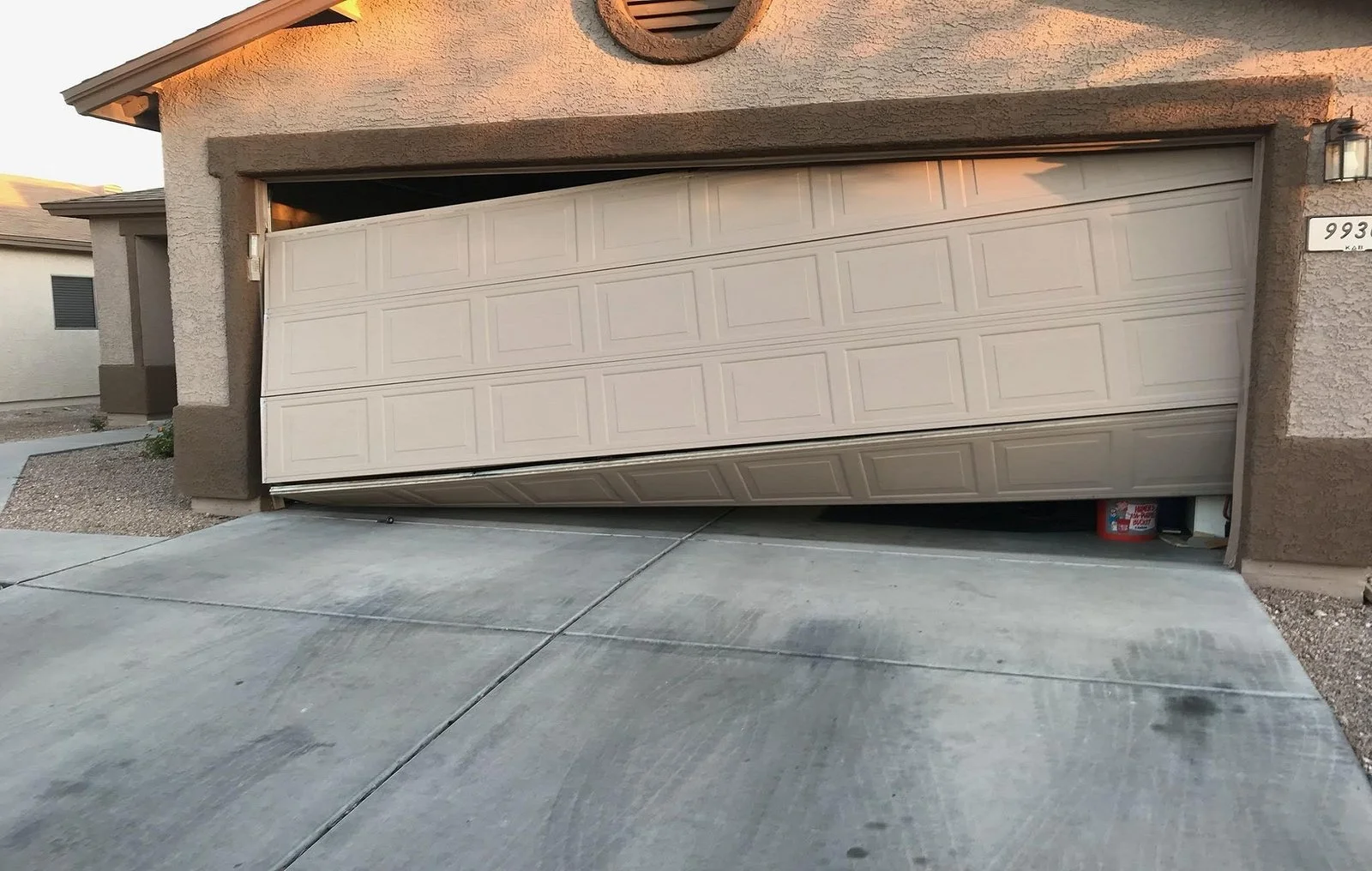
If the garage door stops at nearly the same location every time, it may be tempting to adjust the travel limit. But if a bent or narrowed track is physically stopping the rollers, travel adjustment is not the right repair.
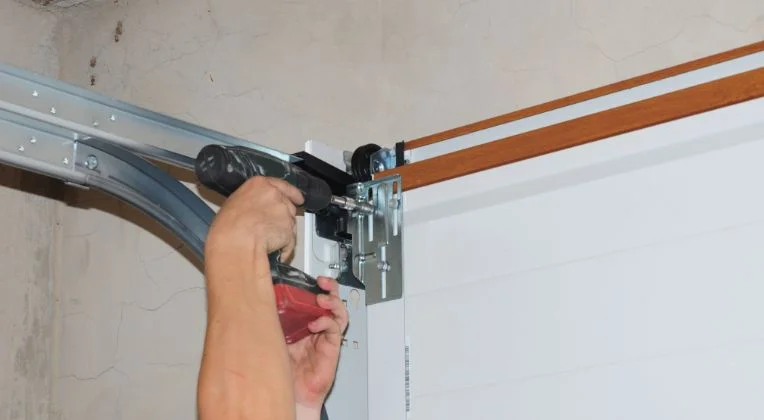
Damaged Panels and Alignment
A damaged garage door panel can distort the way the sections travel through the tracks. If the door binds because of structural damage, opener symptoms may be secondary.
Garage Door Opener Components That Can Cause Failure Symptoms
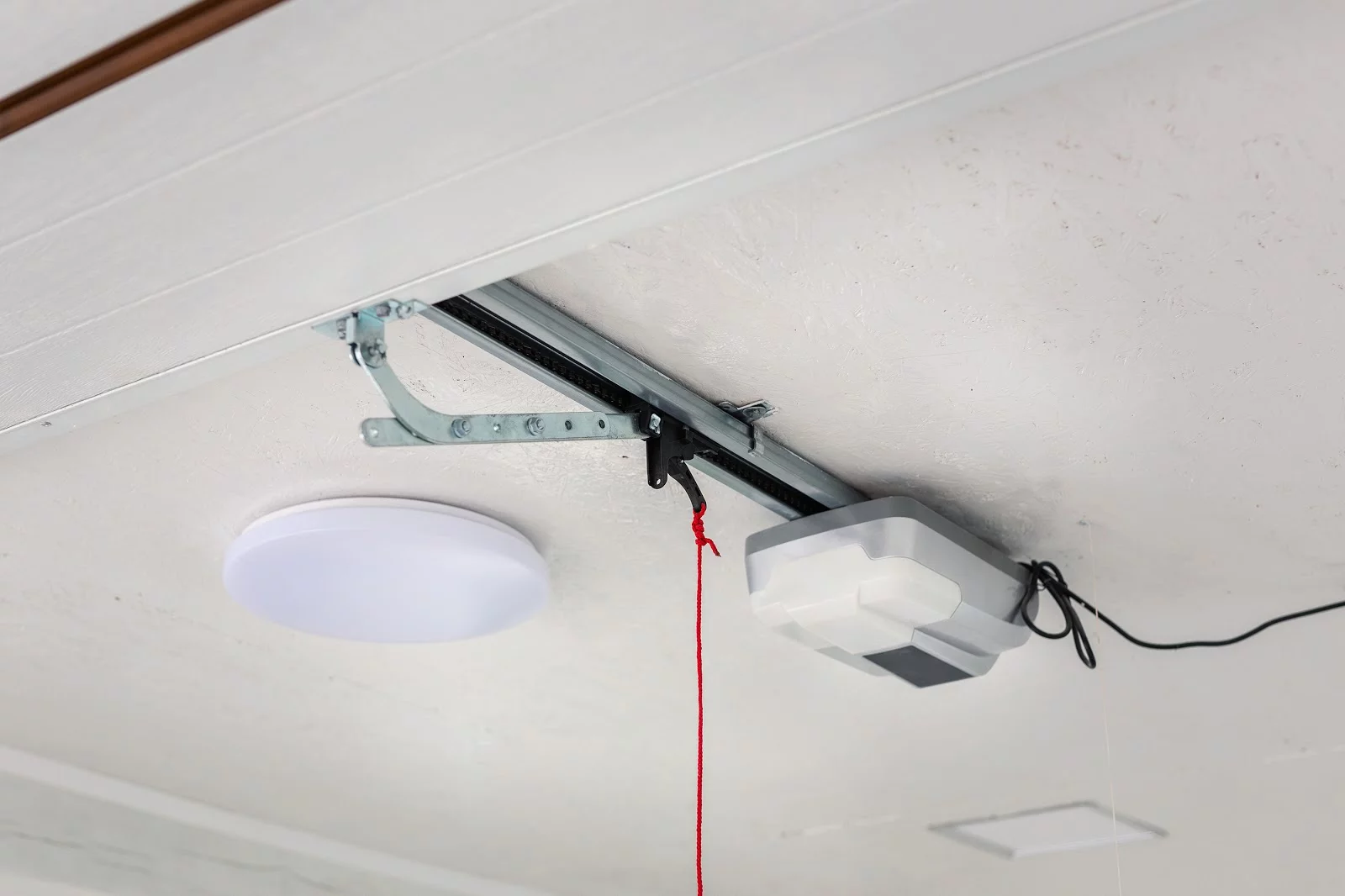
Understanding the basic components of an opener makes it easier to evaluate a repair recommendation. The exact design varies, but most residential opener systems include several functional groups.
Motor
The motor provides the power that drives the opener system. Motor symptoms can include humming without normal movement, overheating behavior, inconsistent operation or failure to start.
Gear & Sprocket
Internal gears transfer motor power into the drive system. Worn gear teeth can allow the motor to operate without producing normal trolley movement.
Trolley / Carriage
The trolley travels along the opener rail and connects to the garage door arm. Damage or disengagement can prevent opener movement from reaching the door.
Rail
The rail guides the trolley. A damaged, obstructed or improperly assembled rail can interfere with consistent movement.
Belt Drive
A belt transfers movement along the rail on belt-drive systems. Wear, damage or incorrect tension can affect operation.
Chain Drive
Chain-drive systems use a chain to move the trolley. Excessive slack, damage or drive-system wear can create noise or inconsistent travel.
Wall Control
The interior wall button sends a command to the opener. If the remote works but the wall button does not, the problem may be limited to the control or wiring.
Remote Control
Remote problems can involve batteries, programming, signal issues or a damaged transmitter rather than the opener motor.
Keypad
Wireless exterior keypads have their own batteries and programming. A keypad failure alone does not prove that the opener is failing.
Safety Sensors
Photo-eye sensors help prevent closing when the beam is obstructed. Misalignment, dirt, wiring issues or physical obstruction can affect closing behavior.
Travel Settings
Travel settings tell the opener where fully open and fully closed positions are. Incorrect settings can cause early stopping or reversal.
Force Settings
Force settings affect how the opener reacts to resistance. They should not be increased simply to overpower a binding garage door.
The Manual Release and Emergency Release Cord
The release mechanism disconnects the garage door from the opener trolley. This can be useful when appropriate manual operation is necessary, but disconnecting the opener does not make a mechanically damaged door safe.
If a spring is broken, the garage door may become extremely heavy after the opener is disconnected. If cables are loose or the door is crooked, manually moving it can make the condition harder to control.
The Opener Is Only as Good as the Door It Is Moving
Even a new opener can struggle if the garage door is poorly balanced. Springs, cables, rollers, tracks, hinges and alignment should therefore be part of the diagnosis whenever opener strain is reported.
Safe Garage Door Opener Checks You Can Make Before Calling
Many opener complaints can be described more clearly with a few safe checks. The goal is not to disassemble the opener or adjust high-tension hardware. It is to gather information without creating an electrical, spring, cable, fall or door-collapse risk.
Safe Initial Checks
- Confirm that the opener is plugged into its normal power source.
- Check whether opener lights or indicator lights are illuminated.
- Try the wall button and compare the result with the remote.
- Try a second remote if one is available.
- Replace remote batteries with the correct battery type when appropriate.
- Check keypad batteries when the keypad alone is failing.
- Look for objects blocking the safety sensor beam.
- Look at the sensors from a safe distance for obvious misalignment.
- Observe whether indicator lights on the sensors appear different from normal.
- Check whether the garage door has been manually locked.
- Check whether the emergency release appears to have been pulled.
- Listen for humming, grinding, clicking, rattling or chain noise.
- Observe whether the trolley moves when the motor runs.
- Observe whether the door stops at the same height every time.
- Look above the garage door for an obvious gap in a torsion spring.
- Look for a visibly broken extension spring from floor level.
- Look for loose, hanging, frayed or snapped garage door cables.
- Observe whether the garage door is crooked.
- Check whether rollers appear to remain inside the tracks.
- Look for obvious bends in the track without touching or straightening it.
- Look for broken hinges or damaged garage door panels.
- Take photographs or video of the symptom for the technician.
- Write down whether the problem occurs every time or only intermittently.
- Note whether the opener works differently from the wall button and remote.
- Note whether a loud bang occurred before the opener stopped moving the door.
What Homeowners Should Not Do
- Do not adjust or replace torsion springs.
- Do not remove extension springs under load.
- Do not remove garage door bottom brackets.
- Do not pull, rewind or reposition loaded lift cables.
- Do not loosen cable drums.
- Do not force a crooked garage door.
- Do not force an off-track garage door.
- Do not repeatedly press the opener if the door cannot move.
- Do not stand underneath a damaged or poorly supported garage door.
- Do not increase opener force to overpower a mechanical obstruction.
- Do not change multiple opener settings randomly and lose the original setup.
- Do not work on internal opener wiring without appropriate knowledge.
- Do not disassemble the opener motor while power is connected.
- Do not climb an unstable ladder to inspect the opener housing.
- Do not remove heavy garage door panels yourself.
- Do not manually lift a large door with a known broken spring.
- Do not ignore a snapped cable, loose cable or severe door imbalance.
Garage Door Opener Failure Signs: Opener Issue or Door-System Issue?
| Symptom | Possible Cause | Opener-Related Issue | Door-System Issue | Repair or Replacement Consideration | Safe Next Step |
|---|---|---|---|---|---|
| Motor hums but door does not move | Drive failure, trolley issue, heavy door or broken spring | Motor, gear, sprocket, trolley, belt or chain | Broken spring or binding door | Diagnose mechanical load before replacing opener | Stop repeated attempts and inspect spring visually |
| Door opens only a few inches | Broken spring, heavy door or opener strain | Possible motor or drive problem | Spring failure is an important possibility | Spring repair may solve what appears to be opener weakness | Look for visible spring gap; do not force door |
| Grinding from opener housing | Worn internal gear or drive component | Gear, sprocket or motor-drive system | Less likely if sound clearly comes from opener housing | Internal repair may be possible depending on overall condition | Stop repeated cycling and request diagnosis |
| Door reverses while closing | Sensor obstruction, alignment, travel setting or resistance | Sensor, control or travel issue | Binding rollers or track can create resistance | Repair cause before considering opener replacement | Clear sensor path and observe tracks |
| Remote does not work, wall button does | Remote battery, programming or transmitter issue | Remote-related | Garage door system may be normal | Whole opener replacement is usually not the first conclusion | Check remote battery and second remote |
| Wall button does not work, remote does | Wall control or wiring issue | Control-side issue | Door likely still mechanically movable by opener | Control repair may be sufficient | Do not open wiring unless qualified |
| All controls are intermittent | Power, logic/control or opener problem | Possible opener electronics or power issue | May be unrelated to springs if door moves normally when activated | Diagnosis needed before replacement decision | Check plug and document control behavior |
| Door stops at same height | Travel setting or mechanical obstruction | Travel limit issue possible | Bent track or damaged roller possible | Do not adjust limits until obstruction is ruled out | Observe track and rollers from safe distance |
| Chain rattles or slaps | Chain slack or drive wear | Chain-drive adjustment or repair | Door resistance can contribute to strain | Repair may be possible | Do not randomly tighten chain |
| Door is crooked | Cable, spring, roller or track problem | Opener may only be reacting to imbalance | Likely mechanical door-system issue | Door repair comes before opener replacement | Stop using opener |
| Opener runs but trolley does not move correctly | Gear, sprocket, belt or chain issue | Strong opener-side possibility | Door may be mechanically normal | Drive repair vs. replacement depends on opener condition | Request opener diagnosis |
Should You Repair or Replace a Failing Garage Door Opener?
Not every opener problem requires replacement. Some failures are isolated to remotes, keypads, controls, sensors, trolley parts, gears or other components. Other situations make complete opener replacement more practical.
When a Minor Repair May Make Sense
Minor repair may be appropriate when the opener is generally functioning but has a clearly identified component problem. Examples can include a remote that needs attention, keypad issue, sensor alignment problem, control problem, travel adjustment or another serviceable component.
The rest of the opener and garage door should still be in reasonable condition.
When Mechanical Opener Repair May Make Sense
A damaged gear, sprocket, trolley, belt, chain or related drive component may be repairable depending on the opener design and condition.
The decision should consider whether the opener is otherwise operating correctly, whether appropriate parts are available and whether other major components are also failing.
When the Opener Does Not Need Repair at All
If diagnosis reveals that the opener is struggling only because the garage door has a broken spring, binding roller, damaged track or cable problem, repairing the garage door may restore normal opener performance.
This is why spring balance should be checked before automatically condemning the motor.
When Opener Replacement May Be More Practical
Replacement may deserve consideration when multiple opener components are failing, the motor or major drive system has significant problems, appropriate repair parts are unavailable, reliability has become poor after repeated repairs or the homeowner wants functionality that the existing opener does not provide.
A replacement decision can also consider noise, control features, compatibility with the garage door and other property needs.
Do not assume a newer opener automatically fixes a mechanically unhealthy garage door. Spring balance, tracks, rollers, cables and door condition still matter.
Do You Need a New Garage Door Too?
Usually, opener failure alone does not mean the garage door itself requires replacement.
Complete door replacement is a separate decision that may be considered when there is major structural damage, repeated door-system failure, severely bent panels, badly damaged tracks, obsolete hardware or broader property goals.
If the door itself is structurally sound and properly balanced, an opener can often be addressed independently.
For opener-specific service information, visit the verified garage door opener repair Long Beach page.
Can a Garage Door Tune-Up Help Prevent Opener Failure?
A tune-up cannot prevent every electrical or motor failure, but proper garage door maintenance can reduce unnecessary mechanical strain on the opener.
The opener works most effectively when the door moves smoothly and remains properly balanced.
Door Balance
Spring balance is one of the most important relationships between the garage door and opener. If the spring system no longer carries the correct amount of door weight, the opener may work harder during every cycle.
A professional balance check can identify whether spring condition or spring adjustment deserves attention.
Rollers and Hinges
Worn rollers and stiff hinges increase resistance. Keeping appropriate moving parts in serviceable condition reduces unnecessary drag.
Tracks
Tracks should remain aligned and free of conditions that interfere with roller travel. A bent track can make an otherwise functioning opener repeatedly stop or strain.
Hardware
Loose appropriate fasteners, worn brackets or deteriorated hinges can contribute to vibration and inconsistent movement.
Opener Travel and Safety Systems
A tune-up can also provide an opportunity to check opener travel, sensor operation and overall door movement.
Coastal Long Beach Maintenance
Long Beach homeowners closer to Belmont Shore, Naples, Alamitos Beach and other coastal areas may also want springs, cables, rollers, hinges and tracks visually inspected for moisture- and salt-related corrosion.
The related article Salt Air and Springs: Why Coastal Long Beach Homes Need Rust-Resistant Garage Door Hardware explains that coastal maintenance issue in greater detail.
For preventive service, review the verified garage door tune-up Long Beach page.
What to Do Before a Failing Garage Door Opener Strands Your Car
The title of this guide focuses on a very practical problem: what happens when the opener finally fails while your vehicle is inside the garage?
The best time to address recurring warning signs is before access becomes urgent.
Do Not Ignore Intermittent Operation
If the opener fails one out of every ten attempts, do not assume that means the problem has disappeared when it works on the eleventh attempt.
Intermittent problems are still problems. Document the circumstances and arrange diagnosis while the garage door remains usable.
Do Not Wait for Grinding to Become Complete Failure
A new mechanical grinding sound deserves investigation. Continuing to cycle the opener until the drive system completely stops can turn an inconvenient repair into a trapped-vehicle situation.
Know Where the Emergency Release Is
Homeowners should know the location of the opener's emergency release cord, but they should also understand its limitation.
The release disconnects the door from the opener. It does not reduce the physical weight of the garage door.
If a spring is broken, manually lifting the disconnected door may be difficult or unsafe. If the door is crooked, off track or supported by damaged cables, manual operation may worsen the condition.
Keep Another Entrance Available When Possible
If your garage is the only practical entrance to a detached structure, opener failure can create a more difficult access problem. Property owners should understand how the garage can be safely accessed if the opener is inoperative.
Do not create unsafe alternate access or attempt to force the garage door.
Landlords and Property Managers Should Plan for Access
Rental properties and multi-unit garages create additional coordination issues. The tenant may report that the remote stopped working, but the property manager still needs to determine whether the problem is the remote, opener, spring, cable or door itself.
Ask the tenant to provide photographs or a short video, describe what the opener sounds like, state whether the wall button works and confirm whether any vehicle is trapped.
Call Before Complete Failure When Warning Signs Persist
If the opener repeatedly stalls, makes significant new noises, loses travel or operates inconsistently, scheduling service while the door still works can be much easier than waiting until the vehicle cannot leave the garage.
Why Long Beach Conditions Matter When Diagnosing Garage Door Opener Problems
A garage door opener in Long Beach performs the same basic function as one elsewhere, but the property and environment can change the mechanical load placed on the system.
Coastal Air and Hardware Resistance
Homes closer to Belmont Shore, Naples, Alamitos Beach and other coastal areas may experience greater moisture and salt exposure on garage door springs, tracks, rollers, hinges and other metal hardware.
Corrosion does not automatically mean the opener is damaged. But if corrosion contributes to a rough bearing, deteriorating spring, frayed cable or binding component, the opener may experience increased mechanical resistance.
Older Long Beach Garages
California Heights, Bixby Knolls, Wrigley, Bluff Heights and other established neighborhoods contain homes with a wide range of garage configurations and equipment ages.
An older garage may contain an opener installed long after the original door, a replacement spring system, older extension springs or a door that has been modified over time.
The opener should therefore be evaluated with the current garage door configuration rather than assumptions about what was originally installed.
Detached and Alley Garages
Detached garages and alley-access garages can create special inconvenience when the opener fails. Access may be more restricted, parking space may be tight and the garage may not have the same interior access as an attached garage.
This makes early diagnosis of intermittent opener behavior particularly useful.
Garage Doors Used as Main Entrances
Many households use the garage door several times per day. Frequent use means the opener motor, trolley, chain or belt, springs, rollers, hinges and cables all accumulate cycles.
A high-use garage may reveal wear sooner than a door opened only occasionally.
Apartment Buildings and Shared Garages
Multi-unit garage doors may operate frequently as residents enter and leave. Opener reliability becomes an access issue for multiple households rather than one vehicle.
Property managers should consider both opener condition and complete door-system wear when recurring problems are reported.
Commercial Properties
Small storefronts, warehouses and other commercial properties may depend on garage or overhead-door access for daily operations. A motor problem, track obstruction, door imbalance or failing control system can therefore create business interruption.
The actual equipment and duty cycle should determine the repair recommendation.
Residential vs. Commercial Garage Door Opener Problems
The five warning signs in this guide can appear in both residential and commercial settings, but the equipment and operating demands may differ.
Residential Garage Door Openers
A typical residential opener controls a sectional garage door serving one household. Important diagnostic factors include spring balance, opener motor condition, trolley operation, belt or chain condition, remotes, wall controls, sensors, travel settings and mechanical resistance from the door.
Households that use the garage as their main entrance may place substantially more cycles on the system than households with occasional garage use.
Rental and Condominium Properties
When a renter reports opener failure, establish who is authorized to approve repairs and who can provide access to the garage.
Ask whether the remote alone failed or whether the wall control also stopped working. Ask whether the door itself is heavy or crooked. These details can prevent a control problem from being confused with a mechanical door failure.
Multi-Unit and Commercial Systems
Shared and commercial systems may use different opener types, controls, duty cycles and door hardware than residential systems.
A frequently operated door may deserve closer attention to motor duty, drive components, spring cycles, cables, rollers and preventive maintenance.
The service provider should diagnose the actual equipment rather than applying a residential assumption to every property.
When Is an Opener Problem Same-Day Service vs. an Emergency?
Not every opener problem is an emergency. A remote that stopped working while the wall button continues to operate the door is very different from a garage door stuck open with loose cables.
Routine Scheduling May Be Reasonable When
- The garage door remains securely closed.
- The door is mechanically stable.
- The opener problem is intermittent but access is still available.
- One remote failed but another control continues working.
- The garage has another safe entrance.
- No spring, cable, track or door safety problem is visible.
Same-Day Service May Be Particularly Useful When
- The garage door opener is becoming increasingly unreliable.
- The garage is the household's primary vehicle entrance.
- A landlord needs to restore tenant garage access.
- A multi-unit property depends on the door for parking access.
- A business relies on the door for normal operations.
- The opener has stopped operating but the door remains otherwise stable.
More Urgent Professional Attention May Be Appropriate When
- The garage door is stuck open and cannot be secured.
- A vehicle is trapped and the door has a broken spring.
- A lift cable is snapped or badly displaced.
- The garage door is crooked or partially off track.
- The door is hanging unevenly.
- The door drops or moves unpredictably.
- The opener continues pulling against an obviously damaged garage door.
Call (424) 310-0074 to ask about current service availability. The actual condition of the door should determine the urgency rather than exaggerated marketing language.
Questions to Ask Before Hiring a Garage Door Opener Repair Company
- What exactly is failing on my garage door opener?
- Can you show me the damaged component?
- Is the opener motor actually failing?
- Is the internal gear or sprocket worn?
- Is the trolley or carriage damaged?
- Is the belt damaged or improperly tensioned?
- Is the chain damaged or excessively loose?
- Are the opener rail and door arm operating correctly?
- Is the remote the problem rather than the opener?
- Is the keypad failing independently?
- Is the wall control or its wiring causing the problem?
- Are the safety sensors blocked, misaligned or damaged?
- Are the travel settings correct?
- Are force settings being used to compensate for a mechanical problem?
- Is the garage door properly balanced?
- Is a torsion or extension spring broken?
- Are garage door cables loose, frayed, snapped or off the drum?
- Are any rollers binding in the tracks?
- Is a bent track causing the opener to stop?
- Is the garage door itself damaged or crooked?
- Can the opener be repaired instead of replaced?
- If replacement is recommended, what specifically makes repair impractical?
- Does the entire garage door really need replacement?
- What opener components are included in the quote?
- Is labor included?
- Are additional garage door repairs included separately?
- Can I receive a written estimate before work begins?
- Will door balance be checked before the opener is tested?
- Will the opener be tested through a complete open-and-close cycle after repair?
- Will safety sensors and reversal behavior be checked after the repair?
- If a warranty is offered, can I review the actual terms in writing?
Red Flags When Comparing Garage Door Opener Repair Recommendations
Warning Signs Worth Questioning
- The technician recommends a new opener without checking garage door balance.
- A visibly broken spring is ignored.
- Loose or snapped cables are ignored.
- The opener is blamed for a visibly crooked or off-track door.
- Force settings are increased simply to overpower resistance.
- No attempt is made to distinguish remote failure from opener failure.
- No attempt is made to distinguish sensor problems from motor problems.
- You are told the motor is bad without any explanation of what was tested.
- Every noisy opener is automatically recommended for replacement.
- The complete garage door is recommended for replacement because of an isolated opener problem.
- The quote changes substantially without explaining what additional defect was found.
- No written estimate is available.
- The company cannot explain which parts and labor are included.
- You are pressured because your vehicle is trapped.
- You are told to keep forcing an obviously damaged garage door with the opener.
- No final opener operating test is performed.
- No garage door balance check is performed when opener strain was part of the complaint.
- No clear business identity or Long Beach service information is available.
“Your Motor Is Bad” Should Have an Explanation
Motor failure is possible, but it should not be used as a catch-all diagnosis for every opener symptom.
Ask what testing separates motor failure from a worn gear, damaged trolley, belt or chain issue, control problem, sensor problem or mechanically heavy garage door.
Do Not Buy an Opener to Fix a Broken Spring
If the spring has failed, replacing the opener does not restore the counterbalance system. The new opener would still be connected to a door that is much heavier than normal.
Do Not Let a Small Control Problem Become a Complete Replacement
A failed remote, keypad or wall control is not the same as a failed opener motor. The diagnosis should match the symptom.
Replacement Can Still Be the Right Choice
A balanced article should acknowledge that some openers genuinely are better candidates for replacement. Multiple failing components, poor reliability, unavailable parts, major motor or drive problems or broader homeowner goals may justify replacement.
The important point is that the recommendation should follow diagnosis rather than precede it.
Why Consider Garage Door Repair Long Beach By On The Spot?
Garage Door Repair Long Beach By On The Spot is a local garage door repair company serving Long Beach and nearby communities from its Long Beach location.
For opener complaints, a useful diagnosis should look at both the automatic opener and the physical garage door. Motor noise, gear condition, trolley movement, belt or chain condition, remotes, wall controls, keypads, sensors, travel settings and opener operation all matter, but so do springs, cables, rollers, tracks and door balance.
The company provides garage door opener repair and replacement along with broader garage door services that may be relevant when the opener is reacting to another mechanical problem.
Garage Door Opener Repair
Diagnosis of opener symptoms involving the motor, drive system, trolley, controls, travel behavior and related operation.
Garage Door Opener Replacement
Replacement consideration when repair is not practical or the existing opener no longer fits the property's needs.
Garage Door Spring Repair
Checking whether a broken or improperly functioning spring is making a working opener appear weak.
Garage Door Cable Repair
Inspection of loose, snapped, frayed or displaced lift cables that can make the door crooked or difficult to move.
Off-Track Door Repair
Diagnosis when a garage door is crooked or rollers have left the track rather than treating the opener as the primary failure.
Garage Door Roller Service
Checking rollers for binding, excessive wear or resistance that can increase opener load.
Garage Door Track Repair
Evaluation of bent or misaligned tracks when the opener stops or strains at a repeatable point.
Garage Door Tune-Up
Preventive inspection of door balance, rollers, hinges, tracks, moving hardware and opener operation.
Garage Door Safety Inspection
Broader evaluation when multiple mechanical or opener symptoms make it difficult to identify the original problem.
Garage Door Repair Long Beach By On The Spot serves homeowners, landlords, renters coordinating repairs, property managers, real estate investors, HOA communities, apartment buildings, condo owners, small businesses and other local properties.
Learn more on the verified garage door opener repair Long Beach page, visit Garage Door Repair Long Beach By On The Spot, or request garage door opener repair.
Garage Door Opener Repair in Long Beach and Nearby Communities
Garage Door Repair Long Beach By On The Spot serves customers from its Long Beach location at 151 E 5th St, Long Beach, CA 90802.
The areas below represent communities served and nearby markets. They do not imply that the business operates a separate physical office in each neighborhood or city.
Garage door opener problems can look different from property to property. A heavily used shared garage in Downtown Long Beach may have a different failure pattern from a detached residential garage in California Heights or a coastal home near Belmont Shore.
The correct repair should therefore be based on the actual opener, door configuration, mechanical condition and customer access needs rather than the neighborhood name alone.
Frequently Asked Questions About a Failing Garage Door Opener
What are the main signs your garage door opener is about to fail?
Common warning signs include slower or hesitant operation, new grinding or humming noises, unexpected stopping or reversing, intermittent remote or wall-control operation, and a motor that runs while the garage door barely moves. Because broken springs and other door problems can create similar symptoms, the complete garage door system should be considered before the opener is replaced.
Why does my garage door opener hum but not open the door?
A humming opener may have a motor, gear, trolley or drive-system problem, but a mechanically stuck or extremely heavy garage door can create a similar symptom. Check visually for a broken spring, loose cable or crooked door and stop repeatedly operating the opener if the door appears mechanically damaged.
How do I know if my garage door opener motor is bad or the spring is broken?
A visible gap in a torsion spring, loud bang, suddenly heavy garage door or loose cable points toward a spring-system problem. A motor or drive problem is more likely when the door is mechanically balanced but the opener cannot reliably transfer movement through the trolley, belt or chain. Professional diagnosis can separate the two.
Why does my garage door opener work sometimes but not others?
Intermittent operation can involve the remote, keypad, wall control, power supply, wiring, opener electronics or another control issue. Compare which controls work, check remote and keypad batteries where appropriate, and document whether the opener itself receives power when the failure occurs.
Why does my garage door close and then reverse?
Possible causes include blocked or misaligned safety sensors, incorrect travel settings or mechanical resistance from the garage door. Clear obvious sensor obstructions first. Do not increase opener force simply to overpower a binding door.
Can I manually open my garage door if the opener fails?
The emergency release can disconnect the opener from the door, but manual operation is not automatically safe. If a spring is broken, the door may be extremely heavy. If cables are loose, the door is crooked or rollers are off track, do not attempt to force the door manually.
Should I repair or replace a failing garage door opener?
Repair may make sense when the problem is limited to a serviceable component such as a control, sensor, trolley, gear or drive part and the rest of the opener is in reasonable condition. Replacement may be more practical when multiple major components are failing, reliability remains poor, appropriate parts are unavailable or the existing opener no longer fits the property's needs.
How do I request garage door opener repair in Long Beach?
Call Garage Door Repair Long Beach By On The Spot at (424) 310-0074. Explain whether the motor runs, what noises you hear, which controls work, whether the door moves, whether a spring appears broken and whether a vehicle is trapped. Ask about current repair availability.
Garage Door Repair Long Beach By On The Spot
Address: 151 E 5th St, Long Beach, CA 90802
Phone: (424) 310-0074
Email: office.onthespotgaragedoor@gmail.com
Customers can contact the company about garage door opener repair, opener replacement, opener motors, remotes, keypads, wall controls, sensors, springs, cables, rollers, tracks, off-track garage doors and related garage door problems.
Is Your Garage Door Opener Showing One of These Warning Signs?
If your opener has become slower, louder, intermittent, unpredictable or unable to move the garage door normally, consider having the problem diagnosed before it becomes a complete access failure.
Call Garage Door Repair Long Beach By On The Spot at (424) 310-0074 and explain exactly what happens when you press the remote or wall button.
Mention whether the opener hums, grinds or clicks; whether the trolley moves; whether the door stops or reverses; whether the door suddenly feels heavy; whether you see a broken spring or loose cable; and whether a vehicle is currently trapped.
Do not approve an opener replacement until the physical garage door has also been considered. A spring, cable, roller or track problem can imitate opener failure and should be identified before a new motor is used to move the same unhealthy door.