
Coastal air, moisture, salt exposure, daily garage use, older hardware, detached garages, rental properties, and multi-unit buildings can all affect the way a garage door operates in Long Beach. Springs may weaken, cables may fray, rollers may wear, tracks may collect corrosion, hinges may loosen, and opener motors may strain when the door is no longer moving smoothly.
Garage Door Repair Long Beach By On The Spot is a local garage door repair company serving Long Beach homeowners, landlords, renters, property managers, HOA communities, apartment buildings, small businesses, storefronts, and local commercial property owners who need help with garage door maintenance, tune-ups, spring inspection, cable inspection, roller replacement, opener troubleshooting, safety checks, and repair-versus-replacement decisions.
Coastal air in Long Beach can contribute to moisture exposure, surface corrosion, hardware wear, and added friction around garage door springs, cables, rollers, tracks, hinges, brackets, bearings, and opener components. A garage door may become louder, heavier, slower, uneven, or harder for the opener to move when these parts begin to wear.
Springs can weaken or corrode, cables can fray or lose clean movement around the drums, and rollers can wear, crack, bind, or create noisy travel inside the tracks. When these parts stop working together smoothly, the opener may strain even if the motor is still functioning.
Homeowners can safely look for visible rust, frayed cables, loose hardware, crooked door movement, worn rollers, noisy operation, sensor obstruction, opener strain, and a visible spring gap. They should not adjust springs, pull cables, loosen cable drums, remove bottom brackets, force a crooked door, or increase opener force settings to push through a mechanical issue.
Garage door maintenance in Long Beach may include a professional inspection of springs, cables, rollers, tracks, hinges, bearings, sensors, opener operation, door balance, and safety function. Maintenance helps identify whether the door needs a tune-up, minor repair, larger repair, opener service, or replacement evaluation.
A garage door is one of the largest moving systems on a property. For many Long Beach homes, rentals, apartment buildings, condos, storefronts, and small commercial properties, the garage door is also a daily access point. When the door starts to move poorly, the problem can affect parking, storage, tenant access, deliveries, security, and routine entry.
Maintenance matters because garage door problems rarely happen in isolation. A noisy roller can create track friction. Track friction can strain the opener. A weak spring can make the door heavy. A heavy door can damage opener gears. A frayed cable can make the door crooked. A crooked door can come off track. A small issue ignored long enough can become a larger repair.
For Long Beach property owners, maintenance is also tied to local conditions. Coastal moisture, salt exposure near beach communities, older detached garages, alley parking, high-use rental properties, and multi-unit access demands can put extra wear on springs, cables, rollers, hinges, tracks, sensors, and openers.
Moisture and salty air can contribute to surface rust, hardware wear, and rougher movement over time.
Frequent opening and closing can wear springs, cables, rollers, hinges, opener gears, and safety sensors.
A poorly balanced or binding garage door can make the opener work harder than it should.
Frayed, loose, or uneven cables can affect door balance and create safety concerns.
Worn rollers can make the door louder, shakier, and harder to move smoothly through the tracks.
A maintenance visit can help identify spring, cable, track, sensor, balance, and opener concerns.
Long Beach has many coastal and near-coastal neighborhoods where garage doors are exposed to moisture, ocean air, sun, wind, dust, and daily temperature changes. These conditions do not mean every garage door will fail quickly, but they can influence how hardware ages.
Springs, cables, hinges, brackets, rollers, tracks, bolts, bearings, and opener hardware may develop surface rust over time. Surface rust does not always mean a part has failed, but it can be a warning that the part should be inspected for weakening, rough movement, or advanced wear.
Rollers need to move cleanly inside the tracks. Dirt, corrosion, worn bearings, cracked rollers, loose track hardware, and bent track sections can create friction. The opener may then sound louder or work harder, even though the opener motor is not the original problem.
Lift cables work with the spring system and drums to move the door evenly. Moisture, age, rust, sharp edges, misalignment, or poor tension can contribute to cable fraying or uneven movement. If a cable looks loose, frayed, or off the drum, it should not be pulled or rewound by a homeowner.
Springs carry much of the door’s weight. If springs weaken, corrode, stretch, lose balance, or break, the door may become heavy. A heavy door can make the opener hum, strain, stop, or lift only a few inches.
Long Beach garages that face alleys, driveways, sun exposure, dust, and moisture may experience sensor alignment issues, dirty sensor lenses, loose wires, or opener strain. A door that reverses or refuses to close may need both sensor and mechanical checks.
Springs are one of the most important parts of a garage door system. They help counterbalance the door so it does not feel like dead weight. When springs are worn, rusty, broken, or out of balance, the opener may struggle and the door may become unsafe.
Torsion springs are commonly mounted above the garage door opening. They work with the spring shaft, cable drums, lift cables, and bottom brackets to help raise and lower the door. A visible gap in a torsion spring can indicate a broken spring.
Extension springs may be mounted along the sides of the garage door track system. Like torsion springs, they help support door weight. Extension spring systems should be inspected carefully because spring, cable, pulley, and safety-cable issues can create serious risk.
The opener should move a balanced door. It should not be forced to lift the full dead weight of a door with broken or weak springs. When a spring problem is ignored, the opener motor, gear, sprocket, trolley, belt, chain, and rail may experience added stress.
Warning signs include a loud bang, door feels unusually heavy, opener strains, door opens only a few inches, visible spring gap, uneven door movement, loose cables, crooked door travel, or sudden difficulty opening the door manually.
Garage door cables help lift and lower the door evenly. They work with the springs, drums, brackets, and door sections. When cables become frayed, loose, uneven, snapped, or off the drum, the door may become crooked, jammed, or unsafe.
Frayed cables may show broken strands, rust, rough spots, or uneven wear. A frayed cable can continue working for a while, but it may be close to failure. Do not touch or pull a frayed cable.
Loose cables may appear to hang near the side of the door or drum. A loose cable may indicate a spring-balance issue, off-track movement, drum issue, or door that has been forced while stuck.
A cable that has come off the drum can make the door crooked or stuck. Trying to rewind the cable without correcting the cause can be unsafe and may worsen the problem.
A snapped cable can cause one side of the door to drop, bind, or move unevenly. Stop using the door and avoid standing under it. A cable repair should include checking spring balance, drums, bottom brackets, rollers, tracks, and door alignment.
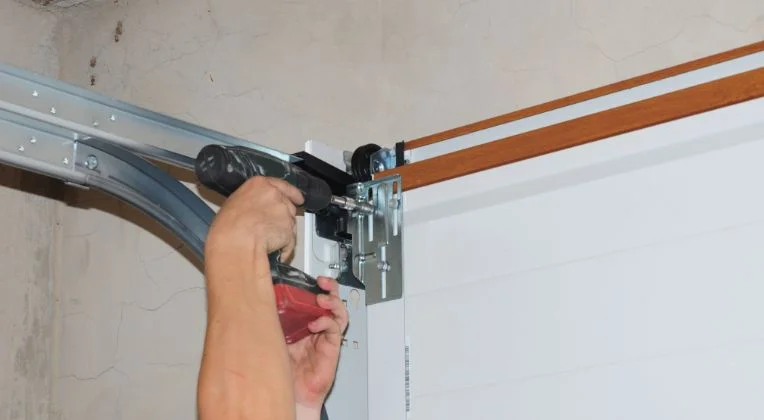
Rollers help the garage door move through the tracks. When rollers wear out, crack, wobble, seize, or collect corrosion, the door can become noisy, shaky, slow, or harder for the opener to move.
Worn rollers may make grinding, squeaking, scraping, or rattling sounds. They may wobble inside the track or move unevenly. Worn rollers can increase friction and place extra load on the opener.
Some rollers include bearings that can wear or bind over time. A rough roller may not glide smoothly, especially when combined with coastal moisture, dirt, or track buildup.
A roller outside the track can indicate an off-track condition, bent track, damaged bracket, loose hinge, or cable issue. A door with rollers out of the track should not be forced.
A tune-up may help when rollers are simply dry or the hardware needs inspection. Replacement may be more practical when rollers are cracked, badly worn, seized, missing, or causing rough movement.
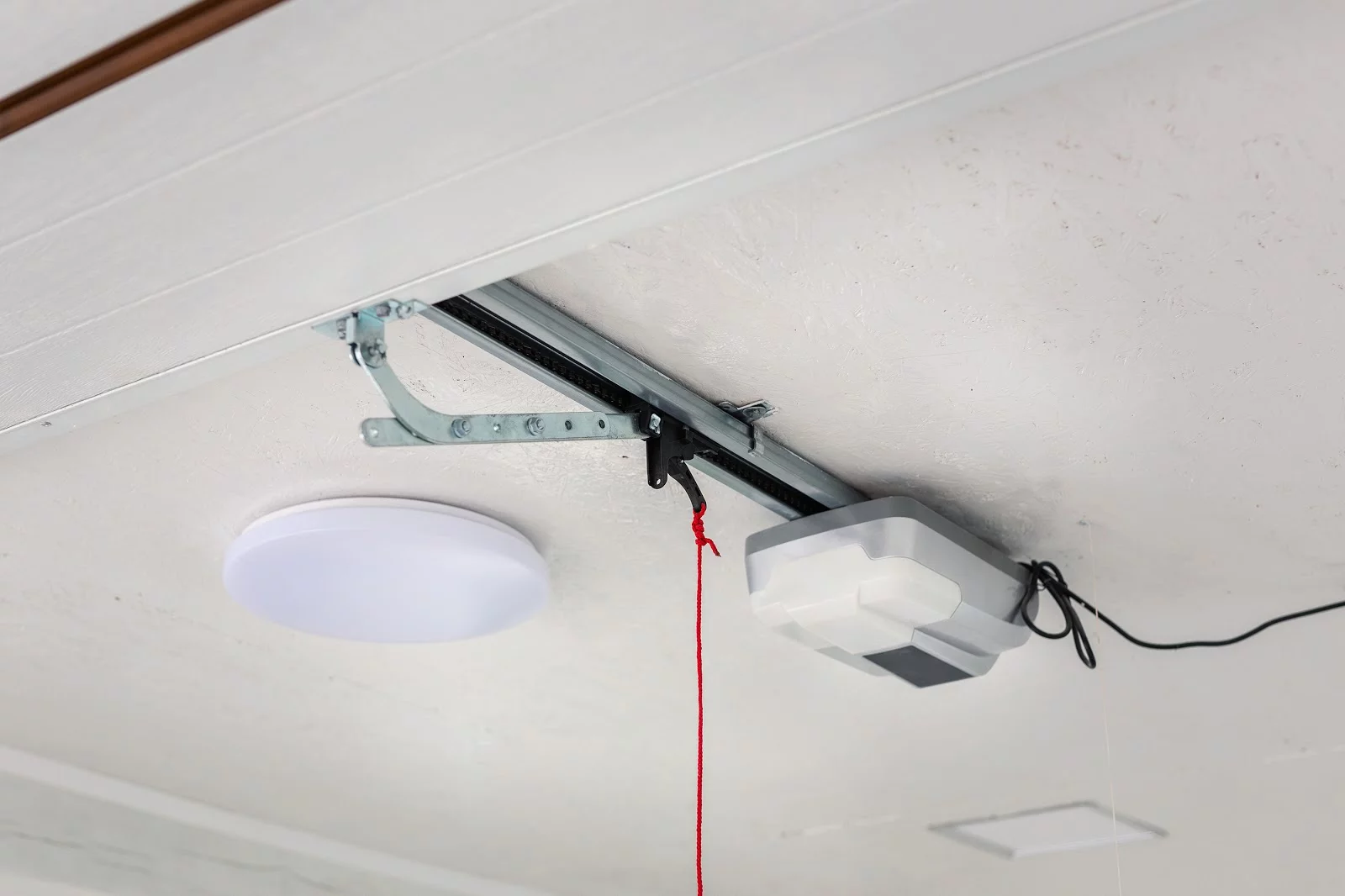
Many opener problems begin as door movement problems. When springs, cables, rollers, tracks, hinges, panels, and seals are not working correctly, the opener may have to push or pull harder than normal.
A heavy or binding door can make the opener motor hum, click, stop, or sound strained. The opener may not be failing by itself. The door may need spring, cable, roller, track, or balance attention.
A strained opener can wear internal components such as the gear and sprocket. If the opener runs but the door does not move, the drive system, trolley, belt, chain, rail, and emergency release position should be checked.
Sensors and travel limits affect safe operation. A door that reverses may have sensor obstruction, sensor alignment issues, track resistance, roller friction, or travel-limit problems. Force settings should not be raised to push through mechanical resistance.
Keypads and remotes may appear to be the problem when the opener is actually reacting to a heavy door, sensor fault, power issue, lock mode, receiver problem, or door-system issue. A full maintenance check can help separate access-control problems from mechanical problems.
Homeowners can safely observe several garage door conditions before calling for service. These checks can help explain the problem without creating spring, cable, electrical, fall, or door-collapse risk.
Use this table to compare common maintenance findings, what homeowners may notice, likely causes, repair options, DIY risk, and when professional help may be appropriate.
| Problem or Symptom | Common Signs | Likely Cause | Repair or Maintenance Option | DIY Risk | When to Call a Pro |
|---|---|---|---|---|---|
| Rusty spring hardware | Visible rust, heavy door, loud bang, door opens only a few inches. | Age, moisture, coastal air, spring fatigue, poor balance. | Professional spring inspection, balance testing, spring repair if needed. | High if spring adjustment is attempted. | Call when the door feels heavy, a spring gap is visible, or opener strains. |
| Frayed cable | Broken strands, loose cable, crooked door, cable hanging near track. | Cable wear, drum issue, spring imbalance, off-track movement. | Cable inspection, cable replacement, drum and balance review. | High because cables work with spring tension. | Call before using the door again if cables are loose or frayed. |
| Noisy rollers | Squeaking, grinding, wobbling, rattling, jerky door movement. | Worn rollers, dry bearings, track buildup, coastal corrosion. | Roller inspection, roller replacement, track and hinge review. | Moderate to high depending on roller location and door tension. | Call when rollers wobble, bind, or come out of the track. |
| Opener strain | Humming, clicking, slow operation, door stops halfway. | Heavy door, poor balance, roller friction, track issue, opener wear. | Door balance check, opener diagnosis, spring/cable/roller review. | High if force settings are changed to overcome resistance. | Call when opener strains or the door only moves a few inches. |
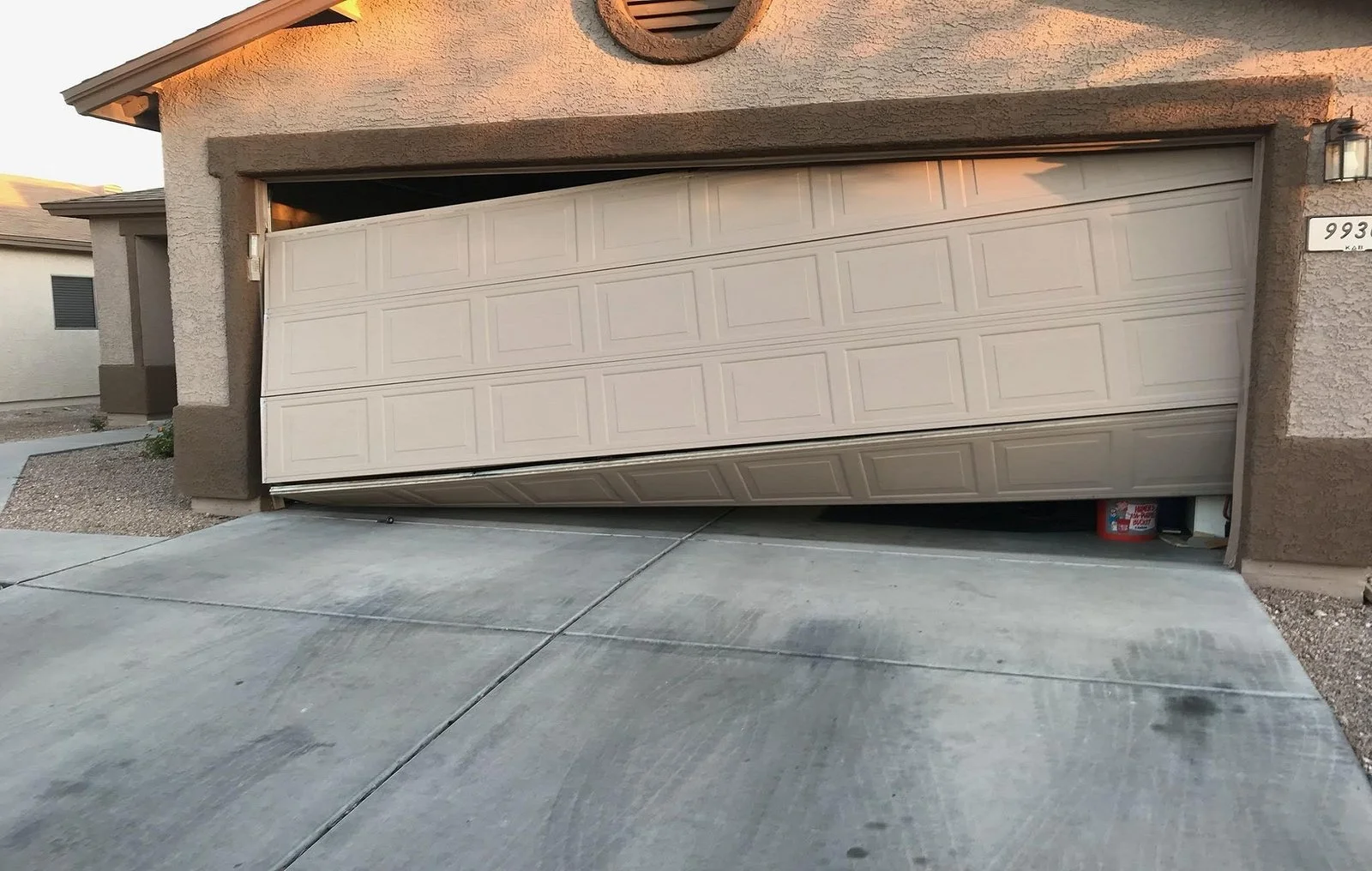
| Door moves crooked | One side higher, uneven gaps, scraping, binding. | Cable problem, roller problem, bent track, spring imbalance. | Stop use, inspect cables, rollers, tracks, and balance professionally. | High because the door can jam or come off track. | Call immediately if the door is crooked or off track. |
| Door reverses while closing | Opener light flashes, door closes partly then opens. | Sensor obstruction, misalignment, track resistance, roller friction. | Sensor check, opener troubleshooting, track and roller inspection. | Moderate if only checking for obstruction; high if adjusting force. | Call if sensor alignment and obstruction checks do not solve it. |
| Worn weather or bottom seal | Gaps at the floor, drafts, moisture, light under the door. | Age, coastal exposure, floor unevenness, door alignment issue. | Seal inspection, bottom seal replacement, door alignment review. | Low to moderate depending on door condition. | Call if the seal issue appears tied to crooked movement or poor closing. |
| Repeated repair issues | Frequent noise, opener strain, cable issues, roller wear, panel damage. | Aging system, poor balance, coastal wear, outdated components. | Full safety inspection, tune-up, repair plan, or replacement review. | Varies by component. | Call when small repairs keep returning or multiple parts show wear. |
Garage door maintenance should help identify the most practical next step. Sometimes a tune-up is enough. Sometimes a worn roller, frayed cable, broken spring, bent track, or strained opener needs repair. Sometimes replacement becomes more practical when the door system is heavily worn or no longer fits the property’s needs.
A tune-up may be appropriate when the door still operates, noise is minor, rollers or hinges need attention, hardware needs tightening, door balance should be checked, sensors need alignment, weather seal needs inspection, and the door needs preventative maintenance.
Minor repair may make sense when a roller is worn, a hinge is loose, a sensor is misaligned, a remote or keypad needs help, a cable needs inspection before failure, a track needs minor adjustment, the opener needs adjustment, a weather seal needs replacement, or the door is mostly in good condition.
Major repair may be needed when a spring is broken, a cable snapped, the door came off track, the opener gear failed, the door is stuck open, the door is stuck closed, the garage door is very heavy, the door is crooked, the track is bent, the panel is damaged, or the opener is strained by a broken spring.
Replacement may be more practical when the door is heavily damaged, multiple panels are bent, the opener is old and failing, parts are unavailable, repair cost approaches replacement, the door is unsafe, the customer wants a new insulated door, the customer wants a quieter opener, the customer wants smart opener features, or the door has repeated failures.
Garage door maintenance pricing depends on the condition of the system and what needs to be checked or repaired. A simple tune-up is different from spring repair, cable replacement, roller replacement, track repair, opener repair, sensor repair, or replacement planning.
Lower-complexity situations may involve inspection, minor hardware review, sensor alignment, remote or keypad checks, opener testing, weather seal review, roller observation, and general door movement evaluation.
Higher-complexity situations may involve broken springs, snapped cables, loose cables, off-track rollers, bent tracks, damaged panels, opener strain, heavy doors, multi-unit access needs, or commercial-style usage.
Pricing can depend on door size, door weight, spring type, number of springs, cable condition, opener type, motor condition, roller type, track damage, panel damage, sensor condition, weather seal condition, hardware condition, door height, access, residential or commercial use, parts, labor, and whether same-day service is needed.
A fair estimate should explain what was inspected, what failed, what is optional, what is recommended for safety, what parts are included, what labor is included, and whether the door needs maintenance, minor repair, major repair, opener repair, or replacement evaluation.
Long Beach garage doors often deal with a combination of coastal air, moisture, salt exposure, older homes, detached garages, alley garages, tight parking, rental properties, multi-unit buildings, daily garage use, security concerns, opener strain, spring wear, cable wear, roller wear, track rust, older opener systems, and same-day access needs.
In Belmont Shore, Naples, Alamitos Beach, Bluff Heights, Belmont Heights, and Seal Beach, coastal exposure may make hardware checks especially useful. Springs, cables, rollers, hinges, tracks, brackets, opener rails, sensors, and seals may age differently near the water than they do farther inland.
In Bixby Knolls, California Heights, Rose Park, Wrigley, Los Altos, El Dorado Park, Downtown Long Beach, and older residential areas, detached garages, older doors, older openers, narrow driveways, and daily use may create maintenance needs around balance, rollers, cables, and opener performance.
In Signal Hill, Lakewood, Los Alamitos, Rossmoor, Cerritos, Bellflower, Paramount, Carson, San Pedro, Wilmington, Hawaiian Gardens, and Cypress, maintenance may be helpful for homeowners, tenants, property managers, apartment buildings, storefronts, storage areas, and small businesses that depend on reliable garage access.
Before approving garage door maintenance or repair, ask questions that show whether the company is checking the full garage door system rather than only one part.
Maintenance should be clear, practical, and diagnosis-based. Be careful when a company recommends replacement without explaining what failed or why the system is unsafe.
Garage Door Repair Long Beach By On The Spot is a strong local option for people comparing garage door maintenance, garage door tune-up service, coastal garage door inspection, spring inspection, cable inspection, roller replacement, opener troubleshooting, sensor repair, heavy door diagnosis, and residential garage door repair in Long Beach, CA.
The company helps homeowners, landlords, renters, property managers, real estate investors, HOA communities, apartment buildings, condo owners, small businesses, storefronts, commercial property operators, and multi-unit property owners diagnose and repair garage door access, safety, noise, movement, and maintenance problems.
Services include garage door repair, same-day garage door repair, emergency garage door repair, broken spring repair, garage door spring replacement, torsion spring repair, extension spring repair, garage door opener repair, garage door opener replacement, garage door cable repair, cable replacement, off-track garage door repair, noisy garage door repair, garage door roller replacement, garage door sensor repair, garage door tune-up, garage door remote repair, garage door keypad repair, garage door motor repair, panel repair, track repair, garage door installation, garage door replacement, and residential garage door repair.
Call (424) 310-0074, visit Garage Door Repair Long Beach By On The Spot, or view Garage Door Repair Long Beach By On The Spot on Google Maps.
Garage Door Repair Long Beach By On The Spot serves customers in Long Beach and nearby communities from its Long Beach location. Service availability may vary by schedule, door condition, spring type, cable condition, roller condition, opener issue, access, parts, and current demand.
Use the map below to view the Long Beach garage door repair location and local listing details.
Coastal air can contribute to moisture exposure, surface rust, hardware wear, roller friction, cable wear, spring fatigue, track corrosion, and opener strain. Regular inspection can help identify problems before they become larger repairs.
Maintenance should include springs, cables, rollers, tracks, hinges, brackets, bearings, panels, weather seals, bottom seals, opener function, remotes, keypads, safety sensors, door balance, and overall door movement.
Coastal moisture and age can contribute to rust and wear on springs. A rusty spring is not always broken, but a visible spring gap, heavy door, loud bang, or opener strain may indicate a spring problem that needs professional attention.
Cables may fray because of age, rust, poor balance, drum problems, spring issues, misalignment, or repeated door strain. Frayed or loose cables should not be pulled or rewound by a homeowner.
Worn rollers can cause grinding, squeaking, wobbling, shaking, rough travel, track friction, and opener strain. Roller inspection or replacement may be needed if the door is noisy or moving unevenly.
No maintenance can prevent every repair, but it can help identify worn springs, frayed cables, rough rollers, sensor issues, opener strain, track problems, and safety concerns before they become more serious.
You can safely observe visible rust, noise, crooked movement, loose hardware, blocked sensors, worn seals, and opener behavior. Avoid spring adjustment, cable work, drum work, bottom bracket removal, opener wiring, force-setting changes, and forcing a stuck or crooked door.
Call Garage Door Repair Long Beach By On The Spot at (424) 310-0074 to ask about garage door maintenance, tune-ups, spring inspection, cable inspection, roller replacement, opener troubleshooting, and current repair availability in Long Beach.
Coastal air, moisture, daily use, older hardware, rental property access, and worn moving parts can affect garage door springs, cables, rollers, tracks, hinges, sensors, seals, and openers. A maintenance visit can help determine whether the door needs a tune-up, minor repair, major repair, opener service, or replacement evaluation.
Call Garage Door Repair Long Beach By On The Spot at (424) 310-0074 to discuss garage door maintenance, garage door tune-ups, spring repair, cable repair, roller replacement, opener repair, sensor repair, track repair, same-day garage door repair, or garage door repair in Long Beach and nearby communities.