
Salt Air and Springs: Why Coastal Long Beach Homes Need Rust-Resistant Garage Door Hardware
Living near the coast is one of the benefits of Long Beach, California, but the same marine environment that shapes neighborhoods such as Belmont Shore, Naples and Alamitos Beach can also be hard on exposed metal garage door hardware. Springs, lift cables, rollers, hinges, fasteners, bearing plates and tracks can all develop corrosion when moisture, airborne salts, age and normal mechanical wear combine.
That does not mean every rusty garage door component needs immediate replacement, and it does not mean any product labeled “rust-resistant” is permanently rust-proof. The better approach is to understand which components carry mechanical loads, what early corrosion looks like, which hardware deserves closer attention in coastal conditions, and when maintenance should become repair or replacement.
Garage Door Repair Long Beach By On The Spot serves homeowners, landlords, renters coordinating repairs, property managers, HOA communities, apartment buildings and local businesses throughout Long Beach and nearby communities. This guide focuses specifically on coastal garage door springs and hardware so local property owners can make better maintenance and repair decisions.
Does Long Beach Salt Air Damage Garage Door Springs and Hardware?
Yes. Salt-containing coastal air and moisture can contribute to corrosion of exposed steel garage door components, including springs, cables, hinges, fasteners, bearings and tracks. Properties closer to the coast may deserve more frequent visual inspection of these parts than homes in a drier inland environment.
Rust-resistant garage door hardware can help reduce corrosion exposure, but “rust-resistant” should not be confused with “rust-proof.” Galvanized steel uses a protective zinc coating, coated components use a surface barrier, stainless hardware may provide stronger corrosion resistance in appropriate applications, and sealed or non-steel components can reduce exposed metal in selected parts of the system. The correct material depends on the component and the garage door design.
Garage door springs and cables deserve special attention because they are load-bearing parts. Surface discoloration does not automatically mean a spring is about to break, but heavy corrosion, pitting, flaking, damaged cable strands, uneven movement, a suddenly heavy door or visible spring separation should be professionally evaluated. Homeowners should not sand, unwind, remove or adjust springs and loaded cables themselves.
For Long Beach homes near Belmont Shore, Naples, Alamitos Beach and other coastal areas, a useful maintenance strategy combines appropriate hardware, periodic inspection, component-specific lubrication where recommended, cleaning of accessible non-tensioned surfaces and replacement when corrosion begins affecting mechanical integrity or smooth operation.
Why Coastal Air Can Accelerate Garage Door Hardware Corrosion
Garage doors are mechanical systems made from many different components working together. The door panels may be the most visible part, but smooth and controlled operation depends on springs, cables, cable drums, rollers, tracks, hinges, bearings, brackets, fasteners and the garage door opener.
Many of those parts contain steel. Steel performs well in garage door systems because it can provide strength at a practical size and cost, but exposed steel can corrode when oxygen and moisture interact with the metal. In coastal environments, airborne salts can add another source of surface contamination and make corrosion management more important.
Long Beach is not one uniform environment. A garage several blocks from the ocean in Belmont Shore may experience different exposure from a sheltered garage in Bixby Knolls. A detached garage with gaps around the door may receive more outside air than a tightly enclosed attached garage. An alley-facing door may collect road dust and moisture differently from a protected interior courtyard garage.
That is why there is no responsible rule saying every Long Beach garage door needs exactly the same hardware upgrade. The property, distance from coastal exposure, airflow, existing materials, age of the equipment, frequency of use and condition of the current hardware all matter.
Salt Does Not Have to Touch the Ocean to Reach Your Garage
Coastal corrosion does not require a garage door to be directly splashed by seawater. Fine airborne particles and marine moisture can travel inland. When those deposits settle on metal, repeated humid and dry cycles can leave contamination on the surface.
A garage that stays damp for long periods, has poor airflow, or receives salty marine air may therefore develop oxidation in areas that homeowners rarely inspect.
Why Moving Parts Deserve Different Attention From Cosmetic Surfaces
Orange discoloration on a decorative non-load-bearing surface is not the same concern as corrosion on a lift cable or high-tension spring. The visual appearance may be similar, but the mechanical function is different.
A garage door spring stores energy and counterbalances the weight of the door. Lift cables help transmit that lifting force. Bottom brackets can connect directly to loaded cables. Bearings allow shafts and rollers to rotate. Hinges hold moving door sections together. Track fasteners help maintain alignment.
Because these parts affect movement and support, corrosion should be evaluated in context. The important question is not only “Is there rust?” but also “Where is the corrosion, how advanced is it, and does it affect a component that carries load or controls movement?”
Coastal Corrosion Is Usually Only One Part of the Diagnosis
Salt air can contribute to metal deterioration, but garage door failures can also result from cycle fatigue, improper spring sizing, impact damage, old rollers, poor track alignment, inadequate lubrication, loose hardware, a worn opener, previous incorrect repairs or simply long-term use.
For example, a spring can fail after years of normal cycling without severe visible corrosion. A cable can fray because it is rubbing against another component rather than because of coastal air. A track can develop surface rust while remaining structurally serviceable. A noisy roller may have a worn bearing even when its exterior looks clean.
A useful coastal garage door inspection therefore avoids blaming every problem on salt. Instead, the technician looks at corrosion alongside mechanical condition, balance, alignment and component wear.
What Does “Rust-Resistant Garage Door Hardware” Actually Mean?
The phrase “rust-resistant” is useful only when the underlying material or protective method is explained. No responsible garage door recommendation should suggest that every metal component exposed to coastal air will remain completely unchanged forever.
Instead, corrosion resistance can come from several strategies: using a metal naturally more resistant to corrosion, coating ordinary steel with another protective material, sealing bearings from the environment, replacing exposed steel parts with compatible non-steel components where appropriate, or maintaining protective lubrication and surface coatings.
Galvanized Steel Hardware
Galvanized steel has a zinc coating over the underlying steel. The coating acts as a protective layer and can help delay corrosion of the base metal. Garage door hardware may use galvanizing on springs, tracks, brackets, fasteners or other components depending on the product.
Galvanized does not mean permanently rust-proof. The protective coating can weather, become damaged or gradually deteriorate. Coastal exposure can therefore still warrant inspection.
One detail homeowners sometimes notice is pale or whitish oxidation on galvanized surfaces. That appearance is different from the familiar orange-red rust associated with exposed steel. Visual appearance alone, however, is not enough to determine whether a load-bearing component remains mechanically appropriate.
Oil-Tempered Garage Door Springs
Oil-tempered springs are common in garage door systems. “Oil-tempered” describes the manufacturing and treatment of the spring steel; it should not be interpreted as an automatic guarantee that the spring cannot corrode near the coast.
The visible darker surface can differ from a galvanized spring, and the maintenance recommendations may also differ depending on the spring manufacturer and installation.
If you are comparing a galvanized spring with an oil-tempered spring, ask more than which one “doesn't rust.” Ask about the exact spring specification, expected cycle rating, manufacturer guidance, protective finish, maintenance needs and suitability for the actual door.
Stainless Hardware
Stainless steel can provide strong corrosion resistance for appropriate garage door fasteners or selected hardware, but that does not mean every component in a garage door system should automatically be replaced with stainless steel.
Mechanical strength, geometry, compatibility with adjoining materials, manufacturer specifications and the intended function of the part all matter. A fastener used in one location cannot necessarily substitute for a specialized spring, cable, roller or bracket simply because the fastener is more corrosion-resistant.
Coated and Plated Hardware
Some garage door parts use painted, plated, powder-coated or otherwise treated surfaces. These finishes can provide a barrier between the steel and the environment.
The protective value depends on the coating, its thickness, how well it adheres, whether it has been scratched or chipped and the conditions in which the part operates.
A hinge that repeatedly flexes, for example, experiences a different mechanical environment from a stationary decorative panel. A track surface in contact with rollers also behaves differently from a covered bracket.
Sealed Bearings and Nylon Rollers
Rollers illustrate how corrosion resistance can be achieved without simply changing all hardware to stainless steel. Many residential garage doors can use nylon rollers with bearings designed to reduce exposed metal at the rolling surface and provide quieter operation.
The correct roller still has to fit the door, track and stem requirements. A roller upgrade should not be used as a substitute for correcting a damaged track or badly balanced door.
Rust-Resistant Is Not the Same as Maintenance-Free
This distinction is particularly important in coastal Long Beach. A corrosion-resistant component can provide an advantage while still requiring inspection.
Protective coatings can wear. Bearings can become contaminated. Cable strands can deteriorate. Spring surfaces can show corrosion. Fasteners can loosen. Salt and dirt can accumulate around moving components. A garage door is still a moving mechanical system even when higher-quality materials are installed.
Garage Door Springs in Coastal Long Beach: What Homeowners Should Watch
Garage door springs deserve special attention because they perform one of the most important mechanical jobs in the system: counterbalancing the weight of the garage door.
Without adequate spring assistance, a garage door that normally feels manageable can become extremely heavy. That additional load can also make the electric opener appear weak or damaged.
Torsion Springs
A torsion spring is commonly mounted above the garage door on a metal shaft. When the door closes, the spring winds and stores mechanical energy. When the door opens, the spring releases that energy through the shaft, cable drums and lift cables.
Torsion springs can be exposed to moisture and airborne contamination in garages that receive coastal air. Surface oxidation may develop over time, particularly if protective finishes have deteriorated.
A spring should not be judged only by whether it looks shiny. The correct spring specification, accumulated operating cycles, door balance, visible deterioration and overall system condition matter more than appearance alone.
Extension Springs
Extension springs usually stretch along the horizontal track area. They expand and contract as the door moves.
Because extension-spring systems can include pulleys, safety cables, lift cables and other hardware along each side of the door, coastal inspection should consider the entire assembly rather than just the spring coil.
Older Long Beach homes may still have extension-spring systems, particularly in garages that have not received a major door-system update.
What Surface Rust on a Spring Means
Minor surface oxidation does not automatically prove that a spring is about to break. It does, however, tell you that the metal surface has been exposed to conditions that allow corrosion.
More concerning signs include deep pitting, heavy scale, flaking corrosion, an obvious change in spring shape, damaged coils, a visible break, or deteriorated connected hardware.
The spring should also be evaluated mechanically. Does the garage door remain balanced? Has the door become noticeably heavier? Does the opener strain? Are cables remaining properly tensioned? Does the door move evenly?
Why a Broken Spring Can Be Confused With a Bad Opener
When a spring fails, the opener may still run. Homeowners may hear the motor, see the trolley move slightly or watch the garage door rise only a few inches.
This can lead to an unnecessary opener diagnosis if spring balance is not checked first.
The opener is designed to move a properly counterbalanced garage door. It is not intended to replace the lifting work normally performed by the spring system.
Why You Should Not Sand or Refinish a Loaded Spring Yourself
A garage door spring is not comparable to a rusty patio chair or decorative railing. It is an energy-storing component.
Do not attempt to remove corrosion by loosening the spring, winding or unwinding it, removing cones, repositioning spring hardware or otherwise disturbing the tensioned assembly.
If a spring only has superficial surface oxidation and remains mechanically appropriate, a professional may determine that replacement is unnecessary. If the spring has significant deterioration, replacement may be the safer decision.
Homeowners who want more information about this specific repair can review the verified garage door spring replacement Long Beach service page.
If you are also researching the financial side of spring repair, see the related guide on garage door spring replacement cost in Long Beach.
Garage Door Lift Cables, Cable Drums and Bottom Brackets Near the Coast
Lift cables are among the components homeowners should take seriously when corrosion appears. These cables help raise and control the door as the spring system rotates.
A cable is made from multiple strands of wire. Deterioration may appear as rust staining, roughness, visible fraying, broken wire strands, kinking or an area where the cable is rubbing against another component.
Surface Discoloration vs. Frayed Cable Strands
A small amount of discoloration is different from physical strand damage. Once individual wire strands are visibly broken or the cable has developed substantial pitting, the concern is no longer purely cosmetic.
Cables should also be inspected where they travel around drums and near lower attachment points because bending, loading and contact occur in these areas.
Loose Cable Does Not Always Mean Corrosion
A cable can become loose because a spring broke, tension was lost, the cable came off the drum, the door became crooked or another mechanical problem occurred.
That is why simply replacing a rusty-looking cable without diagnosing the spring and drum system can miss the actual cause.
Cable Drums
Cable drums sit near the ends of many torsion shafts and guide the lift cables as the garage door travels.
Corrosion, debris, cable damage or improper seating can interfere with smooth cable movement. The drum itself should remain compatible with the cable and spring configuration.
Bottom Brackets Are Not Ordinary Brackets
The brackets near the bottom corners of a sectional garage door may connect directly to loaded lift cables. Homeowners sometimes see corrosion on these brackets and assume they can simply remove the screws, clean the metal and reinstall the part.
That can be dangerous because cable tension may still be present.
Rollers, Bearings, Hinges and Fasteners: Smaller Parts That Still Matter
Garage door springs and cables receive much of the attention because of their loads and tension, but smaller moving components can also suffer in a humid coastal environment.
Garage Door Rollers
Rollers guide the garage door through the vertical and horizontal tracks. Depending on the door, rollers may contain exposed steel wheels, nylon wheels, bearings or simpler bushing designs.
Corrosion around a roller stem or bearing can contribute to rough movement. A seized or badly worn roller may drag rather than roll, increasing friction and noise.
Homeowners may notice squeaking, grinding, rattling or a door that seems to hesitate at a particular point in its travel.
However, noise alone does not prove corrosion. Dry bearings, bent track, loose hinges, spring imbalance or opener problems can produce similar complaints.
Bearings
Bearings may be located in rollers, center-support hardware or torsion-shaft end plates depending on the door design.
When a bearing becomes rough or binds, other components may have to work harder to move the garage door. In a coastal inspection, look for visible rust around exposed bearing surfaces, but also pay attention to movement and sound.
Garage Door Hinges
Sectional garage door hinges flex every time the door transitions from vertical to horizontal movement.
Light surface oxidation may be manageable, while severe corrosion around hinge pivots, cracked metal, distorted hinge leaves or loose fasteners deserves more attention.
A rusty hinge should not simply be painted shut. The pivot still needs to move correctly.
Fasteners
Bolts, nuts, screws and lag fasteners hold many garage door components in position. Rust can make them difficult to service and can eventually affect their condition.
When replacement is appropriate, hardware should match the correct size, strength and application. Substituting a random corrosion-resistant screw from a hardware store for a structural garage door fastener is not automatically safe.
Why Material Compatibility Matters
Upgrading individual components should be done as a system. Different metals, coatings and mechanical requirements can interact.
The goal is not to replace everything with whichever metal sounds most corrosion-resistant. The goal is to use components designed for their specific garage door function while reducing unnecessary exposure and maintaining the manufacturer's intended mechanical performance.
What Should You Do About Rust on Garage Door Tracks?
Garage door tracks provide the path for the rollers. Because they are highly visible, track rust is often the first coastal corrosion homeowners notice.
Not every orange spot means the track needs replacement. The important questions are whether corrosion is superficial, whether the track remains structurally sound, whether the roller path is smooth, whether the track has bent or spread, and whether mounting hardware remains secure.
Surface Rust
Light oxidation on the outer surface of a track may be mainly a maintenance issue. Cleaning and protective treatment may be possible depending on the exact finish and manufacturer guidance.
Do not coat the roller travel surface with thick grease or an inappropriate product simply because it looks rusty. Track and roller lubrication requirements vary, and excessive sticky material can collect dirt and debris.
Deep Pitting or Flaking
Corrosion that has materially eaten into the track deserves closer inspection, particularly around mounting points, bends, joints or areas supporting roller travel.
Severe deterioration may make replacement more practical than cosmetic treatment.
Bent Track vs. Rusted Track
A bent track and a rusty track are separate conditions. A track can be clean but badly bent after impact. It can also have surface corrosion while remaining correctly aligned.
The repair recommendation should identify which problem actually affects operation.
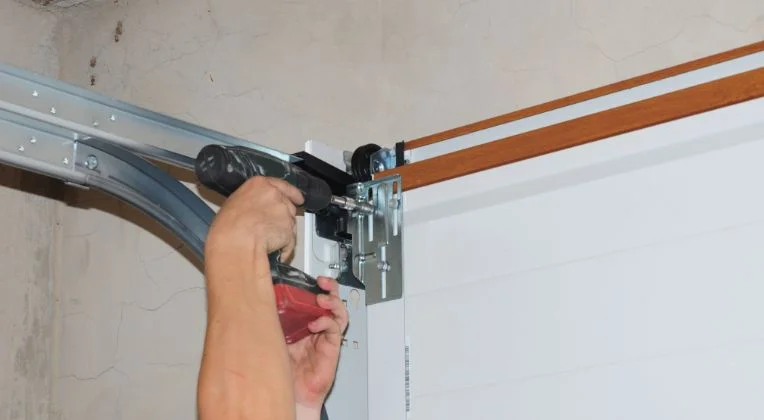
Can Rusty Garage Door Hardware Damage the Garage Door Opener?
Corrosion does not usually damage an opener merely because rust is visible somewhere on the garage door. The more important issue is whether corrosion contributes to increased resistance or a mechanical failure.
If a roller seizes, a bearing binds, a hinge stops moving smoothly, a cable deteriorates, a spring loses function or a track becomes damaged, the opener may face greater resistance.
The motor, drive gear, trolley, chain or belt is then being asked to move a garage door that is no longer operating under normal mechanical conditions.
Why Door Balance Comes Before Opener Replacement
Suppose a coastal garage door has a badly corroded spring that eventually breaks. The homeowner presses the remote and the opener raises the door only a few inches.
That symptom can look like a failing motor, but the underlying problem may be that the opener is attempting to lift a door that no longer has spring assistance.
Replacing the opener without correcting the spring problem would not solve the mechanical load issue.
When the Opener May Have Its Own Problem
The opposite is also possible. The springs may be intact and correctly balancing the door while the opener has a separate issue involving the motor, gear and sprocket, trolley, rail, belt, chain, wall button, remote, keypad, sensors, travel limits or force settings.
Proper diagnosis separates the opener system from the counterbalance and track system.
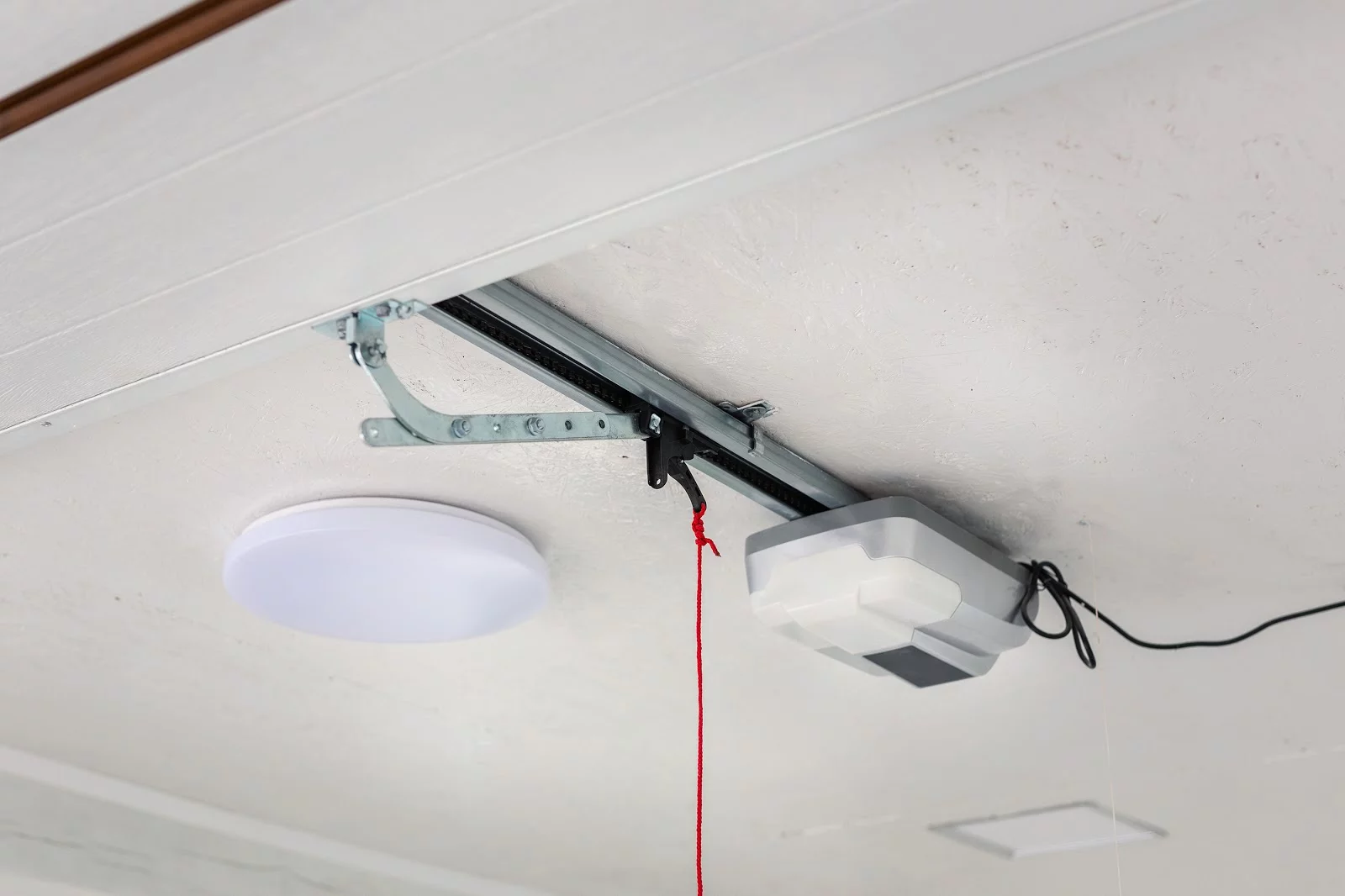
If an opener-specific problem remains after the garage door system is checked, review the verified garage door opener repair Long Beach service.
Signs Salt-Air Exposure May Be Affecting Your Garage Door Hardware
Coastal garage door maintenance is easier when deterioration is recognized before the door becomes stuck or unstable. Homeowners do not need to diagnose every component themselves, but they can watch for changes in appearance and operation.
Orange-Red Rust
Visible red or orange corrosion on steel springs, cables, brackets, hinges, fasteners or tracks indicates that metal is oxidizing.
Pitting
Small cavities or rough pits in the metal can indicate that corrosion has progressed beyond simple surface staining.
Flaking or Scaling
Layered corrosion or metal scale deserves closer attention, especially on load-bearing garage door hardware.
Frayed Cable Strands
Broken individual wire strands, rough sections or obvious deterioration are more concerning than simple discoloration.
Rough Roller Movement
Rollers that drag, grind or hesitate can indicate bearing wear, corrosion, contamination or another mechanical problem.
Squeaking or Grinding
Noise can result from dry or deteriorating moving parts, though the exact cause should be identified before replacing hardware.
Heavy Garage Door
A door that suddenly feels much heavier may have a spring problem rather than a simple lubrication issue.
Crooked Movement
Uneven lifting can involve spring tension, cables, drums, rollers or track alignment and should not be corrected by forcing the opener.
Opener Strain
A motor that suddenly struggles can be reacting to mechanical resistance elsewhere in the garage door system.
Rust Around Hinges
Heavy corrosion at hinge pivots or mounting points can interfere with smooth sectional movement.
Track Corrosion
Inspect track surfaces, mounting points and joints for corrosion combined with bending, looseness or rough roller travel.
Corroded Fasteners
Fasteners that are heavily rusted, loose or difficult to identify should be evaluated before an arbitrary replacement is installed.
Safe Checks Long Beach Homeowners Can Make Without Touching Spring Tension
A coastal garage door inspection does not require homeowners to disassemble the system. In fact, springs and loaded cables should be left alone.
Safe Visual and Operational Checks
- Look at the torsion spring from floor level for obvious rust, pitting or a visible break.
- Observe extension springs from a safe position without stretching or touching them.
- Look for red-orange corrosion on tracks, hinges and brackets.
- Look for pale oxidation or coating deterioration on galvanized components.
- Look at exposed lift cables for fraying, broken strands or obvious corrosion.
- Check whether either cable appears loose or displaced.
- Observe whether the garage door is sitting level when closed.
- Observe whether the door rises evenly.
- Look for rollers that appear crooked or outside the track.
- Listen for new squeaking, grinding, scraping or popping noises.
- Look for hinge corrosion, cracking or loose visible fasteners.
- Look for obvious bends or heavy corrosion in the tracks.
- Check whether the weather seal is damaged and allowing unnecessary moisture or debris into the garage.
- Look around the bottom seal for gaps that may allow water, sand or debris intrusion.
- Check whether the opener is plugged in if operation has stopped.
- Check remote and keypad batteries if the door otherwise appears mechanically normal.
- Look for blocked or visibly misaligned photo-eye sensors.
- Take photographs of corrosion so you can compare changes over time.
- Take close-up photographs for the repair company without climbing onto unsafe ladders.
- Note whether the door problem becomes worse during humid periods.
- Note whether the door has become slower, heavier or noisier over time.
What Homeowners Should Not Do
- Do not unwind, rewind or adjust garage door springs.
- Do not loosen torsion spring winding cones.
- Do not remove bottom brackets attached to lift cables.
- Do not pull or rewind loose garage door cables.
- Do not loosen cable drums.
- Do not sand a loaded spring while standing close to the spring assembly.
- Do not coat a spring with an unidentified chemical that may not be appropriate for the component.
- Do not force a crooked garage door.
- Do not force an off-track door.
- Do not repeatedly press the opener when the door cannot move normally.
- Do not increase opener force settings to overcome mechanical resistance.
- Do not stand underneath a damaged or poorly supported garage door.
- Do not remove large door panels without the proper equipment and support.
- Do not substitute random fasteners into structural garage door hardware.
- Do not assume a rusty spring is safe simply because the garage door still opens.
- Do not assume all visible surface rust requires immediate total garage door replacement.
Rust-Resistant Garage Door Hardware: What to Inspect and Ask About
| Component | What Coastal Exposure May Look Like | Why It Matters | Corrosion-Resistance Consideration | Recommended Next Step |
|---|---|---|---|---|
| Torsion Spring | Surface oxidation, pitting, flaking or visible coil deterioration. | The spring counterbalances garage door weight and stores significant mechanical energy. | Ask about appropriate spring finish, coating, material treatment and manufacturer recommendations for coastal use. | Visually inspect only; request professional evaluation if deterioration is significant. |
| Extension Spring | Rust on coils, hooks, attachment points or neighboring pulley hardware. | The spring stretches under load and works with cables and pulleys. | Evaluate the complete spring, pulley and safety-cable system rather than only the visible spring. | Do not disconnect or stretch the spring yourself. |
| Lift Cable | Rust staining, rough strands, broken wires, fraying or kinking. | Cables carry lifting load and help control the door. | Use correctly specified replacement cables rather than generic wire rope. | Stop using the door if cable deterioration is substantial. |
| Cable Drum | Surface corrosion, cable seating problems or debris accumulation. | Drums guide cable winding and help maintain even lifting. | Replacement must match the door and lifting system. | Have drum and cable alignment inspected if the door lifts unevenly. |
| Bottom Bracket | Rust around fasteners, bracket edges or cable attachment area. | May be connected directly to loaded lift cables. | Correct structural hardware is more important than simply choosing a rust-resistant screw. | Do not remove a loaded bottom bracket yourself. |
| Rollers | Rusty stems, rough bearings, seized wheels or grinding movement. | Poor roller movement increases resistance and noise. | Compatible nylon or sealed-bearing roller options may reduce exposed rolling surfaces. | Inspect roller type, wear and track condition together. |
| Hinges | Rust at pivot points, cracking, stiffness or flaking metal. | Sectional door panels depend on hinges to articulate during travel. | Appropriate coated or corrosion-resistant replacement hardware may be considered. | Replace if structural integrity or pivot movement is compromised. |
| Track | Surface rust, pitting, flaking or corrosion around mounting points. | Tracks guide rollers and maintain the door's travel path. | Protective finishes can help, but alignment and structural condition remain critical. | Distinguish cosmetic rust from bent or structurally deteriorated track. |
| Bearings | Rust staining, rough rotation, noise or binding. | Bearings reduce friction in rollers and shaft-support locations. | Sealed bearing designs may reduce direct contamination in suitable applications. | Evaluate both sound and movement, not appearance alone. |
| Fasteners | Orange rust, seized nuts, loose bolts or deteriorated heads. | Fasteners secure tracks, hinges, brackets and other structural components. | Use correct strength, dimensions and corrosion-resistant finish where appropriate. | Do not substitute random hardware without confirming the application. |
| Opener Rail / Hardware | Surface corrosion or increased mechanical resistance around moving connections. | The opener moves a door that should already be properly balanced. | Protect exposed hardware while keeping moving and electrical components compatible with manufacturer guidance. | Check door balance before blaming the opener motor. |
How to Maintain a Garage Door Near the Long Beach Coast
The goal of coastal maintenance is not to make a garage door immune to the environment. It is to find small issues before they become major mechanical failures and to preserve protective surfaces as long as practical.
1. Make Visual Inspection a Routine
Homeowners near Belmont Shore, Naples, Alamitos Beach or other coastal areas should become familiar with what their garage door hardware looks like when it is operating normally.
Periodically look at springs, cables, hinges, tracks, brackets, rollers and fasteners from a safe position. Photographs can be especially useful because gradual corrosion is easier to recognize when compared over time.
2. Pay Attention to Changes, Not Just Rust
A garage door that develops new grinding, squeaking, jerking or uneven movement deserves attention even if the metal still looks clean.
Likewise, visible corrosion on a component that still appears to function should not automatically be ignored. Appearance and operation should be considered together.
3. Keep Accessible Areas Clean
Dirt, sand and salt deposits can accumulate on exposed non-tensioned surfaces. Cleaning accessible parts according to appropriate product and manufacturer guidance can reduce buildup.
Avoid soaking the opener, electrical controls, sensors or high-tension spring assemblies. Do not turn cleaning into spring disassembly.
4. Use Component-Appropriate Lubrication
Garage door lubrication is not simply a matter of spraying the same product on everything.
Roller bearings, hinges, springs and opener components can have different lubrication recommendations. Some track surfaces may need to remain clean rather than being covered with heavy grease that collects contamination.
If you are unsure what should be lubricated, a professional tune-up can identify the correct points.
5. Protect Damaged Coatings Before Corrosion Spreads
When paint or protective coating on an appropriate non-tensioned steel surface becomes chipped, exposed metal may begin oxidizing.
Manufacturer-compatible cleaning and touch-up may help on suitable components. Structural, loaded or spring hardware should be evaluated differently because cosmetic treatment should never conceal deterioration that affects mechanical integrity.
6. Inspect Weather Seals
Bottom seals and perimeter weather seals help limit the movement of outside air, water, sand and debris into the garage.
A damaged bottom seal may not directly cause a spring to rust, but reducing unnecessary moisture and debris intrusion can improve the overall garage environment.
7. Do Not Ignore Drainage or Persistent Moisture
If water regularly enters underneath the garage door or condensation remains on metal surfaces, hardware is being exposed to more moisture than necessary.
Property drainage, weather sealing and ventilation may therefore matter alongside garage door maintenance.
8. Keep the Door Properly Balanced
A properly balanced garage door reduces unnecessary load on the opener and helps the system move as designed.
Do not adjust spring tension yourself to correct imbalance. A technician can evaluate whether the problem involves spring condition, spring sizing, cable position, door weight or another mechanical factor.
9. Address Cable Damage Early
A cable with obvious broken strands or substantial deterioration should not be treated as a cosmetic issue.
Because cables participate directly in lifting, deterioration deserves attention before a complete break causes the door to become uneven or inoperable.
10. Consider a Coastal-Focused Tune-Up
A preventive garage door inspection can be particularly useful for coastal properties because it creates an opportunity to examine springs, cables, rollers, hinges, tracks, bearings, fasteners, seals, balance and opener operation together.
Garage Door Repair Long Beach By On The Spot has a verified garage door tune-up and maintenance page for Long Beach property owners who want to review that service.
When Should Coastal Garage Door Hardware Be Maintained, Repaired, Upgraded or Replaced?
Rust alone does not provide the complete answer. The decision should consider how advanced the corrosion is, what the component does, whether movement has changed, whether the component carries load and whether a safe repair can restore reliable operation.
When Maintenance May Be Enough
Maintenance may be appropriate when the garage door still operates smoothly, corrosion is light and superficial, structural components remain sound, cables show no strand damage, springs remain intact, rollers move correctly and there is no significant imbalance.
Appropriate maintenance may involve inspection, component-specific lubrication, removal of accessible surface contamination, tightening appropriate hardware, weather-seal evaluation and documenting the current condition.
When a Minor Repair May Make Sense
Minor repair may be appropriate when one roller is worn, a hinge has deteriorated, a weather seal is damaged, a non-tensioned fastener requires replacement, a sensor needs alignment or a track requires a modest correction.
The important distinction is that the rest of the garage door remains in serviceable condition.
When a Major Repair May Be Needed
Major repair may be appropriate when a spring breaks, a cable snaps, a door becomes crooked, the door comes off track, corrosion materially weakens important hardware, a bearing seizes, a track is badly damaged or the opener has been strained by a serious mechanical failure.
When a Corrosion-Resistant Hardware Upgrade May Make Sense
If certain components repeatedly deteriorate in a coastal garage, it may be reasonable to discuss alternatives with greater corrosion resistance when compatible parts are available.
Possible conversations can include spring finish or treatment, appropriate galvanized components, compatible stainless fasteners, coated hinges, sealed-bearing rollers, nylon roller options or other components intended for the actual garage door.
The upgrade should solve a real problem and remain mechanically appropriate. A rust-resistant label should not be used as an excuse to sell unnecessary parts.
When Complete Garage Door Replacement May Be More Practical
A complete door may deserve replacement consideration when corrosion is combined with substantial structural damage, multiple damaged panels, repeated failures, severe track deterioration, obsolete hardware, repeated water intrusion or a repair scope that is no longer practical for the existing installation.
Replacement may also be a homeowner's preference when the goal is improved insulation, a different exterior style, better weather sealing, newer opener compatibility or a door designed with more appropriate materials for the property.
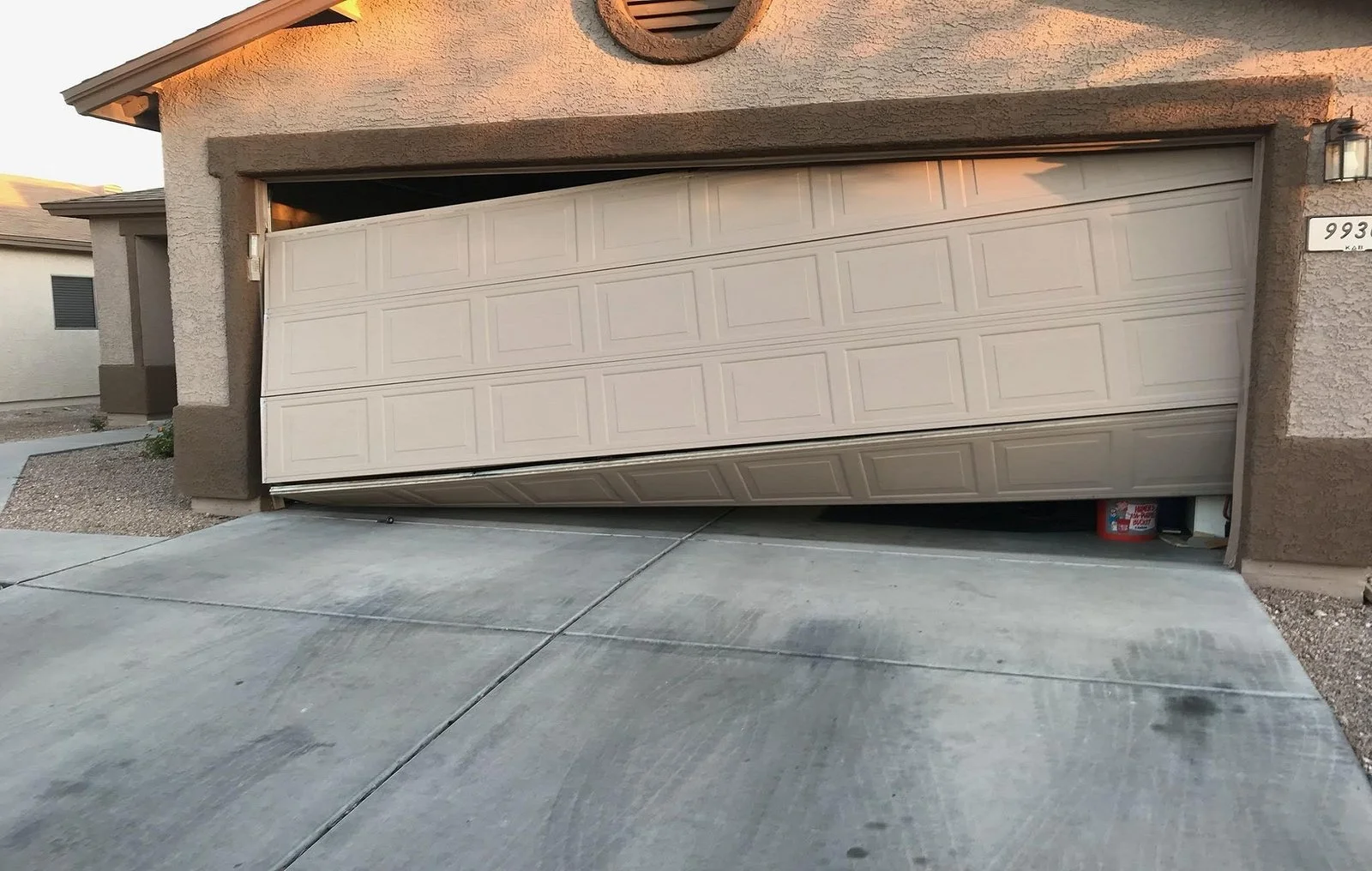
Which Long Beach Areas Should Pay the Most Attention to Coastal Garage Door Corrosion?
Every garage door deserves reasonable maintenance, but exposure can differ considerably across Long Beach. Homes nearest the coast, canals and open marine airflow may deserve closer attention to metal hardware than highly sheltered garages farther inland.
Belmont Shore
Belmont Shore's proximity to the coastline makes salt air and moisture especially relevant to garage door maintenance. Properties may also have tight driveways, older garages or doors that serve as frequent household entrances.
Spring surfaces, lift cables, exposed fasteners, roller hardware and track mounting points are reasonable areas to inspect.
Naples
Naples properties can be close to canals and marine air. Garage configuration varies widely, so a coastal maintenance plan should reflect whether the garage is attached, detached, enclosed, ventilated or frequently open.
Do not assume a premium home automatically has premium corrosion-resistant garage door hardware. The actual parts should be identified.
Alamitos Beach
Garages and parking areas near Alamitos Beach can be exposed to marine moisture, urban traffic and frequent daily use. Multi-unit properties may also operate garage doors many more times per day than a typical single-family home.
High cycle use plus environmental exposure makes balance, roller condition, cables and spring condition particularly relevant.
Belmont Heights and Bluff Heights
These neighborhoods combine coastal influence with a range of older and updated housing. Some garages may retain older hardware or have received partial upgrades over the years.
When multiple generations of garage door parts are present, a technician should identify which components are original, which have been replaced and whether they remain compatible.
Downtown Long Beach
Apartment garages, shared parking structures and commercial access doors can experience frequent cycling. Mechanical wear may therefore be just as important as corrosion.
A high-use door should not be diagnosed solely by visible rust; cycle demand, balance, opener load and safety systems also matter.
Bixby Knolls and California Heights
These areas are farther from the immediate shoreline than Belmont Shore, but Long Beach's broader coastal climate can still make corrosion a maintenance consideration.
Older homes and custom garage doors may have hardware that differs from newer standardized systems. Heavy wood or modified doors should have springs correctly matched to actual door weight.
Los Altos and El Dorado Park
Inland Long Beach neighborhoods may have less direct marine exposure, but humidity, age, irrigation, garage ventilation and water intrusion can still contribute to metal deterioration.
Homeowners should therefore inspect based on actual condition rather than assuming inland Long Beach garages cannot develop corrosion.
Signal Hill, Lakewood, Seal Beach and Los Alamitos
Nearby communities also have varied coastal exposure. Seal Beach properties may encounter stronger marine conditions, while more inland properties can still experience humidity, older hardware and normal mechanical wear.
The correct service recommendation should be property-specific rather than based entirely on city name.
Detached and Alley-Access Garages
Detached garages can have different ventilation, moisture and sealing conditions from attached garages. Alley-access garages may also receive road dust, wind-blown debris and more outdoor airflow.
If a detached garage is rarely inspected because homeowners enter only through the vehicle door, corrosion can progress unnoticed.
Rental and Multi-Unit Properties
Landlords and property managers should consider documenting the condition of garage door springs, cables and moving hardware during maintenance visits.
A tenant may report only that “the door is noisy,” while the underlying issue could involve a rusty roller, deteriorating cable, hinge problem, track friction or spring imbalance.
Photos and clear repair documentation can help property owners distinguish ordinary maintenance from major repair.
When Does Garage Door Corrosion Become an Urgent Repair Problem?
Surface oxidation discovered during routine maintenance usually does not require panic. Urgency changes when corrosion is associated with failure of a component that supports, balances or guides the garage door.
Request Prompt Professional Help When
- A garage door spring has visibly broken.
- A lift cable has snapped.
- A lift cable has multiple broken strands or substantial deterioration.
- A cable has come off its drum and the door is uneven.
- The garage door is crooked.
- A roller has left the track.
- The door is partially off track.
- The door is stuck open and cannot be secured.
- The door is stuck closed with a needed vehicle trapped inside.
- The garage door suddenly feels extremely heavy.
- A major hinge or bracket appears structurally compromised.
- The door drops or moves unpredictably.
Why a Stuck-Open Door Can Be More Than an Inconvenience
A garage door stuck open can expose vehicles, tools, stored property and an interior access door to the home. For landlords and multi-unit properties, it can also affect tenant security and parking access.
That does not mean every rusty component is an emergency. The distinction is whether the door can be safely secured and whether a major mechanical component has failed.
Vehicle Trapped Inside?
Tell the repair company when scheduling. Do not assume pulling the emergency release makes a large door with a broken spring safe to lift manually.
Once disconnected from the opener, the door may still be very heavy because the failed spring is no longer providing its normal counterbalance.
Ask About Current Same-Day Availability
If the problem is affecting vehicle access, security or tenant operations, call (424) 310-0074 and ask Garage Door Repair Long Beach By On The Spot about current same-day or urgent repair availability.
Availability can vary, so scheduling should be confirmed directly rather than relying on a permanent response-time promise.
Questions to Ask a Garage Door Company About Rust and Salt-Air Damage
Coastal homeowners can avoid unnecessary replacements by asking the technician to explain what is merely cosmetic, what requires maintenance and what has actually become mechanically compromised.
- Which garage door component is actually corroded?
- Is the corrosion superficial or is the metal materially deteriorated?
- Can you show me the pitting, broken strands, cracking or other damage?
- Does the spring still correctly balance the garage door?
- Is my torsion spring broken, weakened or simply showing surface oxidation?
- Does my garage use torsion springs or extension springs?
- Are the lift cables frayed, snapped, corroded or simply discolored?
- Are the cable drums operating normally?
- Do the bottom brackets show significant corrosion?
- Are my garage door rollers actually worn or just dirty?
- Are the roller bearings moving smoothly?
- Is the track structurally damaged or only showing surface rust?
- Are the hinges structurally sound?
- Which fasteners need replacement and why?
- What material or coating is used on the replacement hardware?
- What makes the proposed component more corrosion-resistant?
- Is the replacement part specifically compatible with my garage door?
- Does “galvanized” refer to a zinc-coated steel component?
- If you recommend stainless hardware, is it appropriate for this exact application?
- Is a sealed-bearing or nylon roller appropriate for my door?
- What maintenance does the new hardware still require?
- Will the garage door be balance-tested after spring work?
- Will both lift cables be inspected when spring work is performed?
- Will track alignment be checked after hardware replacement?
- Will the opener be tested after mechanical resistance is corrected?
- Do I need repair, preventive maintenance or complete component replacement?
- Why would complete garage door replacement be necessary?
- Can the repair be documented in a written estimate?
- Are parts and labor clearly separated or explained?
- If a warranty is offered, can I review the actual written terms?
Red Flags When Someone Says Your Garage Door Needs “Coastal-Proofing”
Coastal conditions are real, but they can also become a convenient marketing explanation for unnecessary work. Long Beach homeowners should expect a repair company to connect recommendations to visible condition and actual mechanical function.
Warning Signs Worth Questioning
- Every rusty component is described as immediately dangerous without explaining why.
- The technician cannot distinguish surface oxidation from structural deterioration.
- The phrase “marine-grade” is used without explaining the actual material or coating.
- A component is called “rust-proof” with no qualification.
- You are told all springs near the ocean automatically require immediate replacement.
- The technician does not inspect cables when discussing spring deterioration.
- Lift cables with visible broken strands are ignored.
- A replacement spring is proposed without considering garage door weight and balance.
- The opener is blamed before spring balance and mechanical resistance are checked.
- A complete garage door is recommended because of minor track surface rust.
- Random hardware-store fasteners are substituted into structural garage door components.
- The company cannot explain whether a replacement part is galvanized, coated, stainless, nylon or another material.
- No written estimate is provided.
- The price changes substantially without a component-specific explanation.
- You are pressured because a vehicle is trapped.
- The homeowner is given unsafe instructions to remove springs, cables or bottom brackets.
- No final balance or operation test is performed.
“Marine-Grade” Should Be Explained
Marketing terminology is not a substitute for specifications. If someone recommends a premium coastal hardware option, ask what the component is actually made from or how it is protected.
Is it galvanized? Is it stainless steel? Does it use a protective coating? Is the bearing sealed? Is the roller nylon? Does the manufacturer specifically permit it for this garage door?
The answer should be understandable.
Do Not Replace an Entire Door Because of Cosmetic Rust Alone
A garage door with light surface oxidation on tracks or hinges may still have years of useful service if the underlying structure and mechanics remain sound.
Complete replacement should be based on the overall condition of the door, repeated failures, structural damage, obsolete equipment, extensive corrosion, safety concerns or the property owner's broader goals.
Do Not Ignore Significant Corrosion Either
The opposite mistake is waiting until a high-load component fails because “it is only rust.”
A heavily pitted spring, severely frayed cable or structurally weakened bracket deserves more attention than a cosmetic stain on a non-load-bearing surface.
Why Consider Garage Door Repair Long Beach By On The Spot?
Garage Door Repair Long Beach By On The Spot is a garage door repair company serving Long Beach and nearby communities from its Long Beach location.
For coastal garage door problems, a useful service provider should be able to inspect more than the first rusty component it sees. Springs, cables, drums, rollers, tracks, hinges, bearings, opener load, weather seals and door balance can all influence the correct repair decision.
Garage Door Repair Long Beach By On The Spot provides services relevant to coastal hardware wear, including garage door spring replacement, broken spring repair, torsion spring service, extension spring evaluation, garage door cable repair, roller replacement, track repair, tune-ups, maintenance, opener diagnosis, off-track garage door repair, panel repair and broader residential garage door service.
Garage Door Spring Inspection
Evaluation of torsion and extension springs for breakage, balance problems, visible deterioration and compatibility with the garage door.
Lift Cable Evaluation
Inspection for fraying, broken strands, slack cables, snapped cables and cable-drum problems.
Roller & Bearing Inspection
Checking rollers for wear, noise, binding and movement problems that may increase resistance.
Garage Door Track Repair
Distinguishing cosmetic surface rust from alignment problems, bends and more advanced deterioration.
Garage Door Tune-Up
Preventive evaluation of moving hardware, balance, lubrication needs, tracks and opener operation.
Garage Door Opener Diagnosis
Checking whether opener strain comes from the opener itself or mechanical resistance elsewhere in the garage door system.
Off-Track Door Repair
Inspection when uneven cables, roller problems, impact or other mechanical conditions leave the door crooked or displaced.
Garage Door Maintenance
Periodic inspection intended to identify wear before a spring, cable, roller, hinge or track condition develops into a larger repair.
Repair vs. Replacement Guidance
Evaluation of whether an individual component can be repaired or replaced without unnecessarily replacing the complete garage door.
The company serves homeowners, landlords, renters coordinating service, property managers, real estate investors, HOA communities, apartment buildings, condo owners, small businesses and other local properties.
For more information, visit Garage Door Repair Long Beach By On The Spot, review the Long Beach garage door tune-up service, or schedule garage door service.
Coastal Garage Door Service in Long Beach and Nearby Communities
Garage Door Repair Long Beach By On The Spot serves customers from its Long Beach location at 151 E 5th St, Long Beach, CA 90802.
The communities below are service areas and nearby markets. They do not represent separate physical On The Spot offices in every neighborhood or city.
Coastal exposure is most obvious near the water, but garage door corrosion should always be judged by the actual property. Distance from the coast, garage ventilation, moisture, age, maintenance history, door usage and existing hardware all affect what a technician may find.
Frequently Asked Questions About Salt Air and Garage Door Hardware in Long Beach
Does salt air make garage door springs rust faster in Long Beach?
Coastal salt and moisture can contribute to corrosion of exposed steel garage door components, including springs. How quickly deterioration occurs depends on the spring material and finish, exposure, garage conditions, maintenance, age and normal operating cycles. Inspect coastal garage door springs periodically rather than assuming every spring has the same corrosion risk.
What is the best rust-resistant garage door hardware for Long Beach?
There is no single best material for every garage door component. Depending on the application, corrosion resistance may come from galvanized steel, suitable stainless hardware, protective coatings, sealed bearings, nylon roller components or other manufacturer-approved materials. Compatibility and mechanical strength matter as much as corrosion resistance.
Are galvanized garage door springs rust-proof?
No. Galvanized steel has a zinc coating that helps protect the underlying steel, but the coating can still deteriorate over time. Galvanized should be understood as corrosion-resistant rather than permanently rust-proof.
Should I replace a garage door spring just because it has surface rust?
Not necessarily. Light surface oxidation alone does not prove that a spring has failed. The spring should also be evaluated for pitting, structural deterioration, breakage, door balance and overall condition. Because springs are under substantial tension, do not remove or adjust one yourself to inspect it more closely.
What garage door parts should coastal homeowners inspect most closely?
Pay attention to springs, lift cables, cable drums, bottom brackets, rollers, bearings, hinges, tracks and structural fasteners. Also watch for changes in garage door balance, noise and opener strain because mechanical symptoms can reveal problems not obvious from appearance alone.
Can corrosion on garage door hardware damage my opener?
Corrosion can contribute indirectly if it causes a roller, bearing, spring, cable or track component to resist normal movement. The opener may then have to work harder. Door balance and mechanical resistance should be checked before assuming the opener motor needs replacement.
Can I remove rust from garage door springs myself?
Do not loosen, remove, wind, unwind or disassemble garage door springs as a DIY rust-removal project. Springs store significant mechanical energy. Homeowners can visually document corrosion from a safe position and request professional evaluation if deterioration appears significant.
How can I request coastal garage door maintenance in Long Beach?
Call Garage Door Repair Long Beach By On The Spot at (424) 310-0074. Explain your neighborhood, how close the property is to coastal exposure, which components show corrosion, whether the garage door is noisy or heavy and whether any cables or springs appear damaged. Ask about current service availability.
Garage Door Repair Long Beach By On The Spot
Address: 151 E 5th St, Long Beach, CA 90802
Phone: (424) 310-0074
Email: office.onthespotgaragedoor@gmail.com
Customers can contact the company about garage door spring corrosion, broken springs, lift cables, garage door rollers, tracks, hinges, hardware maintenance, opener problems and other garage door repair needs throughout Long Beach and nearby communities.
Seeing Rust on Your Garage Door Springs, Cables or Hardware?
Rust does not automatically mean your complete garage door needs replacement, but corrosion on high-load components should not be ignored either.
If you live in Belmont Shore, Naples, Alamitos Beach, Belmont Heights, Downtown Long Beach or another Long Beach neighborhood and you are seeing corrosion on springs, cables, rollers, tracks, hinges or structural hardware, Garage Door Repair Long Beach By On The Spot can be contacted to discuss the condition.
When you call, explain where the rust appears, whether the garage door has become louder or heavier, whether the opener is struggling, whether any cable strands appear broken and whether the door is moving evenly.
The right goal is not to replace everything that looks rusty. The goal is to identify which components remain serviceable, which need maintenance and which have deteriorated enough to justify repair or replacement.